The Whole Law

During the apostolic era, Christians were viewed as members of a Jewish sect, a subset of Judaism; the Twelve Apostles and their disciples were passionately Torah-observant (Ac 21:20), including the Apostle Paul. (24) As the Holy Spirit lead them to delight in Torah as the law of God (Ro 7:22), the early church remained Torah-centered; except for their love for Messiah, they looked and acted Jewish.

The distinct religion which we now call Christianity began to emerge late in the 1st century, distinguishing itself from Judaism by rejecting Torah as God’s Law. Though Christ plainly warns against this (Mt 5:17-18), and though Paul anticipates this type of apostasy (2Ti 4:3-4), desperation to escape the devastating Fiscus Judaicus, the additional tax imposed by Rome upon all Torah-keepers, beginning shortly after the destruction of the temple in 70 CE and continuing for hundreds of years, opened the door wide to deception. The relentlessly crippling financial burden — imposed simply for being Torah-observant — drove post-apostolic leadership to wrest key Pauline passages (2Pe 3:16) to decouple the burgeoning, predominantly lower-class gentile Christian population from its biblical foundation. (Ps 11:3)

Since no reasonable soul would believe all of Torah has been abolished, especially laws such as Do Not Kill, Do Not Commit Adultery, etc., key figures such as Justin Martyr and Ireneus began to arbitrarily partition Torah into moral and civil or ceremonial laws, claiming ceremonial commands were temporary shadows fulfilled by Christ and civil laws were only for Jews. They started encouraging believers to cease sabbath observance, abandon God’s feasts, ignore dietary laws, leave their children uncircumcised, etc. Conveniently, as it turns out, they began teaching precisely what suffering believers were desperately wanting to hear: how to stop being identified as Jewish and avoid debilitating taxation without renouncing their faith in Christ.

Thus the “itching ears” predicted by Paul a few decades earlier played itself out in the churches (2Ti 4:3-4), corrupting the faith and starting yet another false religion. The burdensome tax continued right up until just before this new religion, Christianity, was officially recognized as the state religion under Constantine (380 CE). Evidently, this is no coincidence, but calculated extortion and deception. In retrospect, we should expect as much; as God further reveals Himself (1Co 2:8) Satan strategically creates the clever counterfeit. (2Co 11:13-15)

Yet the trained soul perceives that dismissing parts of Torah as civil or ceremonial openly contradicts the plain teaching of Christ Himself (Mt 5:17-18) and changes the very definition of sin (1Jn 3:4), amounting to a radical departure from the faith which was once delivered onto the saints. (Ju 3) We know Torah is spiritual (Ro 7:14); it is all good if we use it lawfully. (1Ti 1:8) Rejecting this arbitrary partition of Torah collapses the entire superstructure of Christian dogma like the proverbial house of cards and exposes Christianity as a massive fraud. (Mt 7:26-27)

Even so, most Christians accept this artificial classification of Torah as a given, mentally substituting whatever definition of the law they happen to prefer in any biblical context. They instinctively dismiss the parts of Torah they despise while thinking they are respecting God’s law as a whole, and they do not even seem to realize they are doing so. (I certainly didn’t.) Pointing it out and challenging this key step might be a gamechanger for the elect: challenge them to show from scripture where and how God partitions His laws like this. When we stop doing so, Torah-relevance becomes an all-or-nothing proposition (Mt 22:40), as it should be (Is 8:20), exposing biblical objections to Torah observance as inherently inconsistent: they simply cannot stand. (2Ti 3:16-17)

The reality is that deliberately and routinely breaking any part of Torah defines one as a lawbreaker. (Ja 2:10-11) Intentional, willful disobedience is the defining characteristic of Satan and his own. (1Jn 3:8)

Yet God’s mercy towards sins of ignorance (1Ti 1:13) is evidently graciously extended to those who remain blinded by the enemy (2Co 3:14), who literally cannot see what they are doing. It is no small thing to acknowledge this level of deception and repent; it effectively amounts to following another Jesus, a very different one, evidence that the Jesus preached in Christianity since the 2nd century is not the Jesus of the Bible. The same language is used, but the actuality is quite different.

Preaching Christ as Messiah offering to save us from breaking Torah, equipping and enabling us to live in obedience to Torah (Ro 8:4), reveals who is willing to receive the true King and who is content to follow the counterfeit. (Ro 8:6) The foundation of God stands sure, having this seal: Jesus Christ knows those who are His (2Ti 2:19), and He is saving us from our breaking of Torah. (Mt 1:21)
articles  ♦  blog

As In a Glass

Torah’s role in spiritual life has always been controversial, swinging between extremes; we’re either abusing it trying to earn right standing with God (Ro 10:3) or claiming it’s largely obsolete, fulfilled (abolished) by Christ.

The reality is the entirety of Mosaic Law, “the ministration of death, written and engraven in stones”, is so glorious unregenerate souls cannot bear to look deeply and honestly into it (2Co 3:7a); the god of this world has blinded their minds (2Co 4:4) such that they cannot yet see Christ’s glory in Torah. (2Co 3:14a)

In other words, the beauty of Torah is hidden, or veiled, to those whose hearts have not yet turned to God. (15) Once we receive Christ, Who is the perfect embodiment of Torah, as He truly is the veil or blindness is healed and this covering over our heart is taken away (16), such that we can now enjoy Christ’s glory through Torah. (14b)

Torah by itself, though it is powerless to make anyone righteous (Ro 8:3), being the ministration of condemnation, is unfathomably glorious (2Co 3:9a); God’s righteous standard is spectacular, amazing, breathtakingly desirable (Ps 119:20), more precious than gold. (Ps 19:10)

Even so, the Gospel is even more glorious than Torah. (2Co 3:10) Torah was never intended as a means of salvation; rather, in showing us how God requires us to live, Torah exposes our sin and condemns our carnal mind, revealing our desperate need of redemption. (Ga 3:24) Though Torah will become obsolete (2Co 3:11) in the new Earth, until then (Mt 5:18) it gloriously reveals the nature and character of God so we may be transformed into His likeness. (Ps 119:35)

Redemption and salvation are discovered in God’s New Covenant as He writes Torah into our hearts (He 8:10), ministering true righteousness into us, which is even more glorious than Torah alone. (2Co 3:9b) Since our unregenerate mind is enmity against God, unwilling to submit to His Law (Ro 8:7), He must supernaturally give us new minds and hearts which delight in Torah (Ro 7:22); this is the miracle of the new birth, and it is by means of Torah (1Pe 1:23), through which God saves our souls. (Ja 1:21)

Thus, the glory of the Gospel itself enhances and extends the glory of Torah by creating the practical reality of it within us (Ep 2:10); the New Covenant enables us to keep Torah in spirit and in truth, to obey it from the heart such that the righteous requirements of the law are actually fulfilled in us as we walk after the Spirit. (Ro 8:4)

God works His righteousness into us over time as the Spirit transforms us into the image of Christ through Torah (Ps 19:7a), grafting Torah into us as we behold the glory of Christ’s character and essence embodied in Torah (Ps 119:18); Torah serves as the glass or mirror reflecting God’s nature into us by the Spirit. (2Co 3:18)

If Christ were preached as He truly is, honoring the entire Torah (Mt 22:37-40), offering to save us from our tendency to violate Torah (in other words, to  sin – 1Jn 3:2), by supernaturally engrafting Torah into our hearts and minds (He 10:16), transforming us so we will love His laws and meditate on them all day long (Ps 119:97), even ranking us eternally based on how we honor it all (Mt 5:19), and threatening to trample underfoot all who will not submit to Torah (Ps 119:118), who would receive Him?

As it turns out, those who will not receive this Christ, who willfully persist in despising Torah and discounting it (He 10:26-27), are indeed following another Jesus whom Paul did not preach (2Co 11:4a); they’ve received another spirit (2Co 11:4b), a seducing spirit (1Ti 4:1), not the Holy Spirit; they’re accepting another gospel (2Co 11:4c), one promising freedom from Torah rather than giving us repentance and engrafting Torah into the core our being, making it an integral part of us.

Most who think they’re safe in Christ are not (Mt 7:21-22); they’re still on the wide road to destruction (Mt 7:13-14), heedless of their fate, only in the end to hear from Christ Himself the most dreadful of all pronouncements: “I never knew you, depart from Me, you who work iniquity (practice lawlessness).” (23) Unlearned and unstable, they wrest the words of Paul, as they do also the other scriptures, unto their own destruction. (2Pe 3:16)

articles      blog

Great in the Kingdom

audio

Jesus tells us there’s a hierarchy in Heaven, a ranking or metric whereby some believers are counted great and others least in God’s kingdom. (Mt 5:19) Though salvation is by grace and not by works (2Ti 1:9), works are evidently very important. (Ro 2:9)

Jesus Christ explains the standard by which He will measure us all to define this eternal ranking in His kingdom; He lays it out very plainly: “Whosoever therefore shall break one of these least commandments, and shall teach men so, he shall be called the least in the kingdom of heaven: but whosoever shall do and teach them, the same shall be called great in the kingdom of heaven.” (Mt 5:19) Jesus is talking about Torah, the Mosaic Law; (17-18) He will evaluate everyone in His kingdom based on how we have respected Torah, His Law, the Law of God. Did we do our best to keep all of it as a manner of life and teach others to do so? Or did we break certain parts of it and encourage others to do so? 

So, Jesus will give every one of His saints a grade in Heaven based on how we keep His Law, even the least of His commandments: the seemingly obsolete and obscure laws He laid out for us in the Old Testament in Exodus, Leviticus, Numbers and Deuteronomy. Do we love them (Ps 119:97), delight in them (Ro 7:22), and try our best to love and honor Him in keeping them? (Jn 14:21) Or do we ignore some or all of them? (Ro 2:8-9)

Jesus mentions two grades in His Kingdom: Great and Least: in other words, we’re evidently either getting an A+ or an F.

Clearly, those trying to convince us God’s Law is just for Jews, if they’re in God’s kingdom at all, are ignorantly aiming for an F, and they want us at the bottom as well. Not smart.

We don’t even know what sin is apart from Torah (Ro 7:7); how can we strive against sin (He 12:4) if we have no clue what it actually is?

Jesus’ focus on obedience to the least of His commandments tells us they’re all important. He wasn’t careless or arbitrary in giving us His Law; if we break any of His commandments on purpose, we expose ourselves as lawbreakers (Ja 2:10), those who despise His Law and trample Him underfoot. (He 10:28-29)

Those who don’t yet know Jesus Christ as Judge, don’t yet know Him as He is. (He 10:29-31) Those of us who do, serve Him with fear and rejoice with trembling. (Ps 2:11, Php 2:12)

articles    posts

By the Scriptures

The thought that Christ came to start a new religion, which we now call Christianity, evidently lies at the heart of Christianity itself as a distinct religion. Christians claim to follow Christ, to believe in Him and worship Him, find their salvation in Him, and believe their unique practices and beliefs are what Christ Himself has commanded of them. For these divine instructions they rely exclusively upon the New Testament.

There is, however, a very basic problem with this understanding: Christ Himself never taught this, that He came to start a new religion, neither did any of His apostles. Both Christ and all of His apostles, including the Apostle Paul, believed the one true faith (Ep 4:4) was an old one, largely lost in Judaism yet embodied within the Tanakh, what we now call the Old Testament, which they referred to as the scriptures. (Jn 5:29) There was no concept of a New Testament (NT) scripture during the lifetime of Paul or the Twelve Apostles; they never based any of their teachings on anything but the Tanakh. They had no other scriptural authority, and scriptural authority was all they truly had. (Ac 17:11)

Both Christ (Jn 3:10) and the Apostles taught that the true and correct religion (Ju 3), the way to be in right relationship with God, was the historic faith embodied in the Tanakh, the Old Testament. (Ro 16:25-26) Christ’s work and message didn’t alter this in any way, shape or form. (Ps 19:7-9) This is, in fact, how Christ Himself frames His entire ministry: He affirms that His message and redemptive work are grounded in, explained by and perfectly consistent with the Tanakh. (Mt 5:17-19)

While it is evident (at least to me) that the NT writings are just as inspired as the Tanakh, it is also evident that if we’re not properly grounded in the Tanakh we can easily misread, misinterpret, and misapply the NT, particularly the writings of Paul. This is, I believe, the fundamental problem with Christianity as a whole, and it is not a recent problem; it traces as far back as the early second century CE and includes nearly everything which makes Christianity a distinct religion, such as Sunday worship, the Eucharist (the Lord’s Supper), a belief that Christ has abolished or annulled Torah, and a variety of corruptions of the gospel which are deeply inconsistent with the Tanakh. Though considered fundamentals of Christian faith today, such beliefs were foreign to the early Church.

In the earliest days of the Faith, during the Apostolic Age, the disciples of Christ were considered a Jewish sect, The Way (Ac 9:2), a subset of Judaism; gentile believers were largely indistinguishable from their Jewish brothers and sisters in their worship and practice. (Ga 2:14) This sect was distinct from traditional Judaism in two fundamental ways: [1] a return to justification by faith (rejecting Judaism’s legalism) and [2] recognizing salvation was available to gentiles even if they didn’t become Jewish proselytes and observe Jewish customs and man-made traditions (as required in Judaism). Apart from these two key differences, the early Church was essentially identical to Judaism; the Church simply corrected the errors of Judaism in these two key areas where she had departed from the way of truth defined in the Tanakh.

It wasn’t until after the death of the apostles, as persecution of the Jewish people become more intense, that a move began to distance the churches from Judaism and from the Tanakh, to redefine the Faith as distinctly non-Jewish. Deceitful workers found plenty of fuel in the Pauline epistles (2Co 11:13), inventing another Jesus, another gospel, and fabricating an entirely new religion. (1Co 11:4)

Peter himself warns us about this, that some of what Paul writes is hard to understand and easy to misinterpret, such that those who are unlearned and unstable typically wrest Pauline statements, as they do also the Tanakh, unto their own destruction. (2Pe 3:16) And Paul himself warned that soon after his departing grievous wolves would enter into the Church, not sparing the flock. (Ac 20:29)

To the degree any Christian sect strays from the Tanakh it will be in error, and when the lies are couched in the very language of scripture, those who are deceived in them are exceptionally difficult to reach, since the words and many of the key concepts are already accepted and believed, but incorrectly, out of context.

This is particularly true of the gospel itself; very few (if any) Christian presentations of the gospel are based on the Tanakh, and what most Christians actually believe about salvation cannot be found within it. In fact, most Christians believe Christ actually came to change the way we’re saved, such that we’re now saved in a different way than those in the old dispensation. Nothing could be farther from the truth, or more eternally dangerous.

As it was for me personally, Christians may indeed find themselves inoculated against the true faith of God, thinking they’re eternally safe when they aren’t, hoping they have spiritual life when they’re still dead in sin. (Re 3:1) It is sobering to realize that many, perhaps most of those complacent in their Christianity will fail to make their calling and election sure (2Pe 1:10), and will be lost in the end, as Christ Himself predicts. (Mt 7:21-23)

Given this tendency to misinterpret and misapply the NT, and the eternal danger this poses, a good litmus test for any Christian teaching about the nature of God or Man (Ro 3:10), or about our duty to God or Man, or about how to be rightly aligned with God and in fellowship with Him (Ro 4:3), is that it must be grounded solidly in the Tanakh. (2Ti 3:16-17) This is following the example of Christ and His apostles; it is exactly what they did. (14-15)

So, if our understanding of the gospel, the ground of our salvation, is not firmly established within the Tanakh (Ro 4:16), and perfectly consistent with it (Ps 119:115), we need to keep seeking and praying until we find God in truth. (Lk 16:27-31) Inundated by counterfeit gospels, the Tanakh makes us wise unto salvation, teaching us what faith in Christ looks like and how to obtain it (1Ti 3:14-15); we cannot afford to be amiss here. (Mt 26:16)

And if any other teaching or doctrine cannot be derived primarily from the Tanakh (Ro 15:4), being only reinforced and supported in the NT, we should hold it loosely, with a bit of suspicion and caution, at arm’s length as it were, and not close to the heart. And, certainly, if any doctrine contradicts or dismisses any part of Torah in any way, we may safely discard it as darkness. (Is 8:20)

articles    blog

Circumcision is Nothing

audio

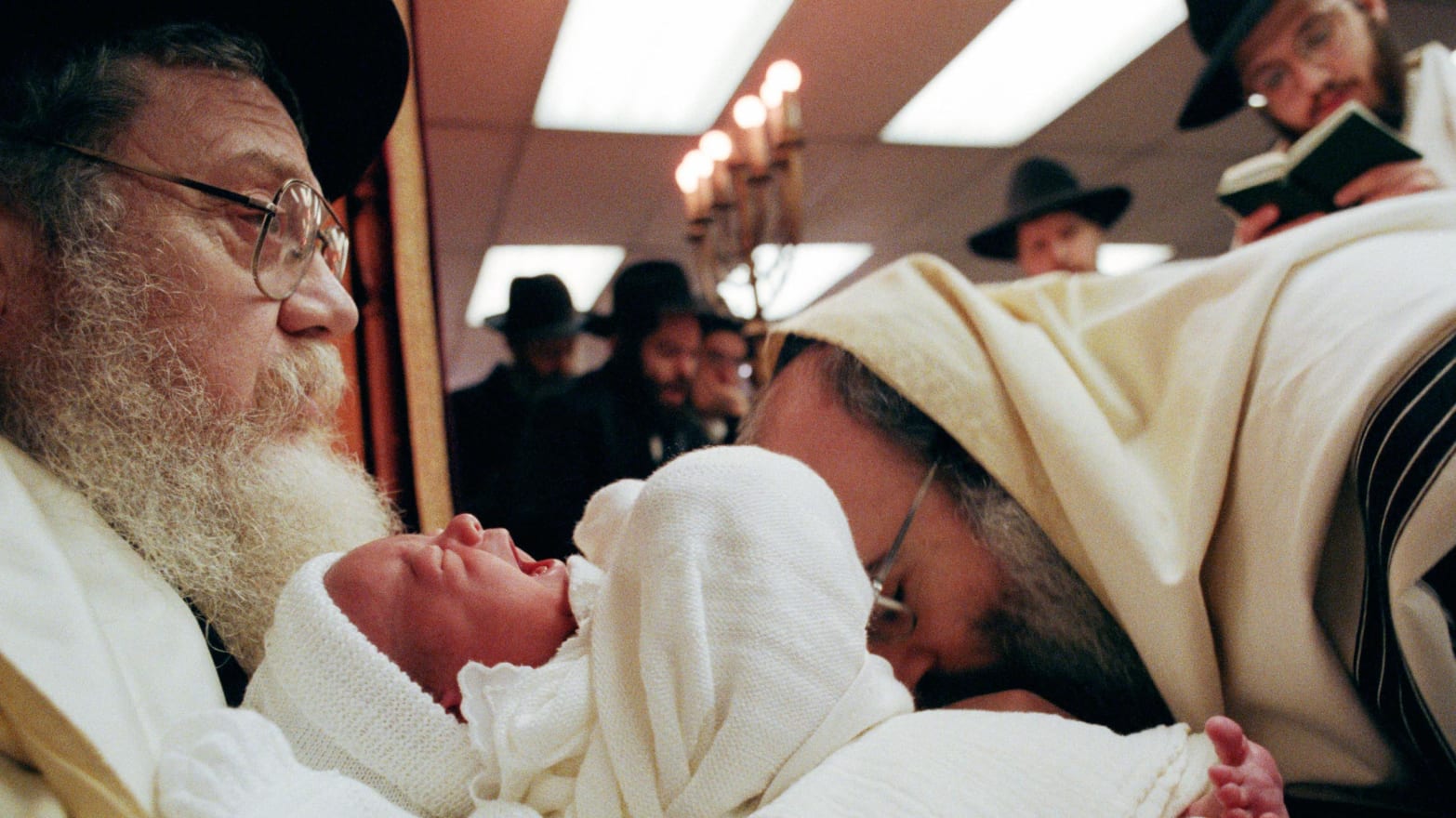
The Apostle Paul faced a severe dilemma in the early days of the Church; circumcision, commanded by God (Ge 17:10) as an expression of saving faith (Ro 4:11), and obediently observed by Abraham and the patriarchs, had also come to represent ritual conversion to Judaism (Ac 15:1), a religion teaching legalism: salvation by works (Ga 5:4), entirely contrary to justification by faith. (2-3)

Should Paul discourage obedience to one of God’s core commands (Mt 5:19) now that it’s been twisted into the foremost expression of rejecting God’s salvation? symbolic of earning salvation by works? (Ro 10:3) How could he neglect a plain command of God in good conscience, knowing saving faith establishes the law? (Ro 3:31) Yet how could he encourage obedience here without compromising the gospel? (1Co 9:22-23)

Paul circumcised Timothy (Ac 16:3), evidently not as a convert to Judaism, but to fulfill Torah as a good testimony to the Jews in his community, since Timothy would be a constant, faithful fellow worker with Paul throughout his ministry. (1Co 4:17)

However, when Titus was being pressured into ritual conversion to Judaism Paul objected fiercely, understanding this as a direct denial and corruption of the gospel. (Ga 2:3-5) Making a severe and costly break with the legalistic traditions of his people (5:11), Paul concluded those pushing Judaism on the Gentile saints as a condition of salvation were unsaved and cursed (1:10); he even wanted God to kill them. (5:12)

Paul clearly taught that those who converted to and depended on Judaism for salvation were not trusting Christ and were unsaved. (Ga 5:2-3) However, though he was accused of teaching the Jews to forsake circumcision (Ac 21:21), both by his public example (24) and testimony (25:8) it is clear Paul never did teach it was appropriate to neglect physical circumcision as an act of obedience to God.

If Paul didn’t discourage Jewish believers from circumcising their children, he wouldn’t have discouraged Gentiles from doing so either; circumcision was not a particularly Jewish thing (Jn 7:22); it existed in Abraham, the father of us all (Ro 4:16), long before the Jewish people.

So, Paul encourages circumcision in the context of obedience to God’s Law and forbids it when it is embedded in the larger context of ritual conversion to Judaism. Further, Paul teaches it is unnecessary for Jews to renounce their Jewishness by undergoing a formal act of becoming uncircumcised (1Co 8:18a), and encourages Gentiles to retain their ethnic and national identity rather than becoming Jewish. (18b) Effectively, he sees national identity as irrelevant in the context of defining a right relationship with God (19a); what’s important is staying true to the gospel while faithfully keeping God’s commands. (19b)

articles  ♦  blog

The Law of Christ

There are many references to “the law” in Scripture; most of these are references to Torah, the Law of Moses. But Scripture also speaks of the law of Christ. (Ga 6:2) What is this law of Christ? How is it different from Torah?

The Chosen

It seems reasonable to define the law of Christ as the set of commands Christ gave throughout His ministry, yet most all of these don’t appear to be new or unique, merely inferences from Torah, what we should understand from meditating on God’s Law and fleshing out what it means to obey it. In this sense, Christ’s Law would be identical to Torah, unless He added something which can’t be found in Torah. Did He?

Yes. Christ did, in fact, at the end of His earthly ministry, introduce a command He explicitly identified as new, a law which isn’t found in Torah: “A new commandment I give unto you, That ye love one another; as I have loved you, that ye also love one another.” (Jn 13:34)

Now, the command to love each other certainly isn’t new; it’s embedded in the very foundation of Torah. (Mt 22:40-41) What is evidently new here is: as I have loved you; Christ has given us the perfect, timeless example of what it means to love one another, which we didn’t have before.

Christ is evidently not so much telling us to love here, but how to love; He is modeling what real agape love looks like. He loved us all during His earthly life, and His example is certainly new and unique, different from all who came before … or after. (Jn 15:24) Christ Himself has Personally demonstrated what He is commanding us to do, and He is telling us to follow His example. (1Pe 2:21)

So, is this command new or not? Well, when John comments on this, he first says it isn’t new at all, but an old commandment we’ve always had. (1Jn 2:7), However, he then in the same breath admits it evidently is new. (8-9) So, in one sense, we have always had the law of love, so it isn’t new; yet in another sense we’ve not understood the implications of this command in light of Christ’s perfect example, which essentially enlightens us to it’s true meaning, which isn’t actually a new meaning, just new to most of us.

In fact, before Christ, it was common for Torah teachers to actually encourage us to hate our enemies (Mt 5:43), but Christ dismisses this as darkness: it flatly contradicts the obvious nature of God. (44-45) Darkness claims malicious hatred is consistent with love, but the Light, which makes this lie obsolete (Jn 8:12), is even now shining. (1Jn 4:8b)

So, in light of Christ’s new command, if someone thinks they’re in the light, united with Christ, yet they still hate someone else, anyone else, we know they’re deceived, still in the dark: this isn’t Christ. (1Jn 4:9,11) If we claim to love God and hate another, Christ’s new command exposes us as liars (4:20); we can’t love God while failing to love who He loves, in the same way He loves.

And as we carefully ponder Christ’s new command, we find there’s nothing in it which actually contradicts or dismisses any part of Torah. This is to be expected, for Torah itself is the perfect Law of Liberty (Ja 1:25), the definition of love (Ro 13:10), just as Christ is. One can’t add to or take away from perfection and make it any better.

In fact, the Law of Christ itself commands us all to not think He has abolished Torah (Mt 5:17); we should be both keeping it, and also teaching others to do so. (19)

It appears then that the Law of Christ actually is Torah itself, understood and applied in light of God’s heart … nothing more, and nothing less.

articles    blog

Put Apart Seven Days

Certain commands in Torah relating to uncleanness appear cumbersome, inconvenient, and obsolete today, yet this concept of uncleanness is repeated in the New Testament as if it were eternally relevant. (Ep 5:3) As with many of God’s laws, the benefits of observing them are not easily understood.

As an example, laws regarding menstruation require a woman on her period be put apart for a week. (Le 15:19) If this is a quarantine, requiring the woman to be physically isolated and left alone whenever she’s on her monthly cycle, this may seem cruel, unnecessary, and terribly inconvenient for both the woman and the rest of her family.

However, the Hebrew word for apart is נדּה (niddâh), the same word for the menstrual fluid (Le 19:24), so the word itself evidently doesn’t require the woman be physically separated from others, simply identified as being on her period: set apart from others in this sense. This is actually helpful to the woman; others in the family understand she’s under additional physical and emotional stress and give her additional space and mercy.

Additionally, the law specifies that everything the woman sits or lies on during this time becomes unclean, tainted or polluted, and that anyone touching these objects must bathe and wash their clothes and is unclean the rest of the day.

Without access to recent advancements in feminine hygiene, from what we know scientifically, this practice of actually separating objects potentially contaminated with menstrual discharge seems very healthy for preventing disease, and providing a separate physical space for the woman during this time certainly helps contain the uncleanness.

Yet even with advanced hygiene it’s not generally an imposition for all in the home to bathe and/or shower daily and to wash the bedsheets and clothes as the cycle ends. Nothing here is terribly onerous, needlessly inconvenient or necessarily troublesome.

Toward the end of the immediate context, comprising similar laws relating to bodily discharges, we see the ultimate and primary application: when we’re interacting with the physical presence of God in the earthly temple, this kind of uncleanness can be lethal. (Le 15:31)

We may infer from this what we will, but the implication seems to be that we all become unacceptably unclean in just living life in this filthy world and are in constant need of purification. To followers of Christ, this is no surprise: we’re in continual need of cleansing and forgiveness. (1Jn 1:8-9) Perhaps these kinds of laws are given partly as a cyclical physical reminder of God’s holiness (Is 64:6) and of our innate uncleanness apart from Him. (Is 6:5)

Apart from the earthly temple, the impact of uncleanness evidently vanishes in the ceremonial context; what remains is simply physical hygiene, the spiritual lessons we might infer from this, and respecting God’s commands as well as we can because we love Him and delight in His laws. (Ro 7:22)

Becoming ceremonially unclean isn’t sinful; after all, the human body is simply functioning according to God’s perfect design. What is sinful is neglecting to take appropriate steps to manage the uncleanness and limit its impact in our family and community, thereby promoting unnecessary uncleanness and exposing others to harm. (Ep 5:5) This violates the law of Love. (Ro 13:10)

All of God’s laws are faithful (Ps 119:86), truth (151), and righteousness (172); in keeping them as intended there is great reward. (Ps 19:11)

articles    blog

Non-Pauline NT References to the Law

The following are all of the non-Pauline verses which refer to “law” or “the law”; 5 of 56, or about 9%, are evidently references to Torah. Adjective phrases are highlighted where relevant.

Click here for Pauline references to the law.

Verse Non-Pauline uses of “the law” or “law” Not Referring to Torah
Mt 05:40 And if any man will sue thee at the law, and take away thy coat, let him have thy cloke also.
Mt 10:35 For I am come to set a man at variance against his father, and the daughter against her mother, and the daughter in law against her mother in law.
Lk 12:53 The father shall be divided against the son, and the son against the father; the mother against the daughter, and the daughter against the mother; the mother in law against her daughter in law, and the daughter in law against her mother in law.
Jn 18:13 And led him away to Annas first; for he was father in law to Caiaphas, which was the high priest that same year.
Ac 19:38 Wherefore if Demetrius, and the craftsmen which are with him, have a matter against any man, the law is open, and there are deputies: let them implead one another.


Verse Non-Pauline uses of “the law” or “law” Referring to Torah
Mt 05:17 Think not that I am come to destroy the law, or the prophets: I am not come to destroy, but to fulfil.
Mt 05:18 For verily I say unto you, Till heaven and earth pass, one jot or one tittle shall in no wise pass from the law, till all be fulfilled.
Mt 07:12 Therefore all things whatsoever ye would that men should do to you, do ye even so to them: for this is the law and the prophets.
Mt 11:13 For all the prophets and the law prophesied until John.
Mt 12:05 Or have ye not read in the law, how that on the sabbath days the priests in the temple profane the sabbath, and are blameless?
Mt 22:36 Master, which is the great commandment in the law?
Mt 22:40 On these two commandments hang all the law and the prophets.
Mt 23:23 Woe unto you, scribes and Pharisees, hypocrites! for ye pay tithe of mint and anise and cummin, and have omitted the weightier matters of the law, judgment, mercy, and faith: these ought ye to have done, and not to leave the other undone.
Lk 02:22 And when the days of her purification according to the law of Moses were accomplished, they brought him to Jerusalem, to present him to the Lord;
Lk 02:23 (As it is written in the law of the Lord, Every male that openeth the womb shall be called holy to the Lord;)
Lk 02:24 And to offer a sacrifice according to that which is said in the law of the Lord, A pair of turtledoves, or two young pigeons.
Lk 02:27 And he came by the Spirit into the temple: and when the parents brought in the child Jesus, to do for him after the custom of the law,
Lk 02:39 And when they had performed all things according to the law of the Lord, they returned into Galilee, to their own city Nazareth.
Lk 05:17 And it came to pass on a certain day, as he was teaching, that there were Pharisees and doctors of the law sitting by, which were come out of every town of Galilee, and Judaea, and Jerusalem: and the power of the Lord was present to heal them.
Lk 10:26 He said unto him, What is written in the law? how readest thou?
Lk 16:16 The law and the prophets were until John: since that time the kingdom of God is preached, and every man presseth into it.
Lk 16:17 And it is easier for heaven and earth to pass, than one tittle of the law to fail.
Lk 24:44 And he said unto them, These are the words which I spake unto you, while I was yet with you, that all things must be fulfilled, which were written in the law of Moses, and in the prophets, and in the psalms, concerning me.
Jn 01:17 For the law was given by Moses, but grace and truth came by Jesus Christ.
Jn 01:45 Philip findeth Nathanael, and saith unto him, We have found him, of whom Moses in the law, and the prophets, did write, Jesus of Nazareth, the son of Joseph.
Jn 07:19 Did not Moses give you the law, and yet none of you keepeth the law? Why go ye about to kill me?
Jn 07:23 If a man on the sabbath day receive circumcision, that the law of Moses should not be broken; are ye angry at me, because I have made a man every whit whole on the sabbath day?
Jn 07:49 But this people who knoweth not the law are cursed.
Jn 07:51 Doth our law judge any man, before it hear him, and know what he doeth?
Jn 08:05 Now Moses in the law commanded us, that such should be stoned: but what sayest thou?
Jn 08:17 It is also written in your law, that the testimony of two men is true.
Jn 10:34 Jesus answered them, Is it not written in your law, I said, Ye are gods?
Jn 12:34 The people answered him, We have heard out of the law that Christ abideth for ever: and how sayest thou, The Son of man must be lifted up? who is this Son of man?
Jn 15:25 But this cometh to pass, that the word might be fulfilled that is written in their law, They hated me without a cause.
Jn 18:31 Then said Pilate unto them, Take ye him, and judge him according to your law. The Jews therefore said unto him, It is not lawful for us to put any man to death:
Jn 19:07 The Jews answered him, We have a law, and by our law he ought to die, because he made himself the Son of God.
Ac 05:34 Then stood there up one in the council, a Pharisee, named Gamaliel, a doctor of the law, had in reputation among all the people, and commanded to put the apostles forth a little space;
Ac 06:13 And set up false witnesses, which said, This man ceaseth not to speak blasphemous words against this holy place, and the law:
Ac 07:53 Who have received the law by the disposition of angels, and have not kept it.
Ac 13:15 And after the reading of the law and the prophets the rulers of the synagogue sent unto them, saying, Ye men and brethren, if ye have any word of exhortation for the people, say on.
Ac 13:39 And by him all that believe are justified from all things, from which ye could not be justified by the law of Moses.
Ac 15:05 But there rose up certain of the sect of the Pharisees which believed, saying, That it was needful to circumcise them, and to command them to keep the law of Moses.
Ac 15:24 Forasmuch as we have heard, that certain which went out from us have troubled you with words, subverting your souls, saying, Ye must be circumcised, and keep the law: to whom we gave no such commandment:
Ac 18:13 Saying, This fellow persuadeth men to worship God contrary to the law.
Ac 18:15 But if it be a question of words and names, and of your law, look ye to it; for I will be no judge of such matters.
Ac 21:20 And when they heard it, they glorified the Lord, and said unto him, Thou seest, brother, how many thousands of Jews there are which believe; and they are all zealous of the law:
Ac 21:24 Them take, and purify thyself with them, and be at charges with them, that they may shave their heads: and all may know that those things, whereof they were informed concerning thee, are nothing; but that thou thyself also walkest orderly, and keepest the law.
Ac 21:28 Crying out, Men of Israel, help: This is the man, that teacheth all men every where against the people, and the law, and this place: and further brought Greeks also into the temple, and hath polluted this holy place.
Ac 22:03 I am verily a man which am a Jew, born in Tarsus, a city in Cilicia, yet brought up in this city at the feet of Gamaliel, and taught according to the perfect manner of the law of the fathers, and was zealous toward God, as ye all are this day.
Ac 22:12 And one Ananias, a devout man according to the law, having a good report of all the Jews which dwelt there,
Ac 23:03 Then said Paul unto him, God shall smite thee, thou whited wall: for sittest thou to judge me after the law, and commandest me to be smitten contrary to the law?
Ac 23:29 Whom I perceived to be accused of questions of their law, but to have nothing laid to his charge worthy of death or of bonds.
Ac 24:06 Who also hath gone about to profane the temple: whom we took, and would have judged according to our law.
Ac 24:14 But this I confess unto thee, that after the way which they call heresy, so worship I the God of my fathers, believing all things which are written in the law and in the prophets:
Ac 25:08 While he answered for himself, Neither against the law of the Jews, neither against the temple, nor yet against Caesar, have I offended any thing at all.
Ac 28:23 And when they had appointed him a day, there came many to him into his lodging; to whom he expounded and testified the kingdom of God, persuading them concerning Jesus, both out of the law of Moses, and out of the prophets, from morning till evening.
Ja 1:25 But whoso looketh into the perfect law of liberty, and continueth therein, he being not a forgetful hearer, but a doer of the work, this man shall be blessed in his deed.
Ja 2:08 If ye fulfil the royal law according to the scripture, Thou shalt love thy neighbour as thyself, ye do well:
Ja 2:09 But if ye have respect to persons, ye commit sin, and are convinced of the law as transgressors.
Ja 2:10 For whosoever shall keep the whole law, and yet offend in one point, he is guilty of all.
Ja 2:11 For he that said, Do not commit adultery, said also, Do not kill. Now if thou commit no adultery, yet if thou kill, thou art become a transgressor of the law.
Ja 2:12 So speak ye, and so do, as they that shall be judged by the law of liberty.
Ja 4:11 Speak not evil one of another, brethren. He that speaketh evil of his brother, and judgeth his brother, speaketh evil of the law, and judgeth the law: but if thou judge the law, thou art not a doer of the law, but a judge.
1Jn 3:04 Whosoever committeth sin transgresseth also the law: for sin is the transgression of the law.

articles  ♦  blog

A Matter of Wrong

Our innate response to sin is telling; we understand the concept of right and wrong, and we understand justice — that wrongdoing must be punished appropriately. (Ac 18:14) This instinct reveals the gospel through deductive reasoning.

If someone has wronged us:

  1. Then we acknowledge a moral standard. This standard is revealed in our instinct to find fault with others whether they agree with us or not; we impose an expectation of right behavior which is independent of human opinion.
  2. Then there must be a moral law Giver Who created this moral standard. Nature can’t create such a standard (since it’s metaphysical, spiritual), and Man can’t create it (since it’s independent of Man’s opinion). Therefore God created it (there are no other options).
  3. Then God will hold us accountable for violating this moral standard. A moral standard presumes a divine evaluation of human behavior, as well as a divine reaction for our obeying or violating this standard: a moral standard is meaningless otherwise.
  4. Then God has openly revealed this moral standard to Man. It is unjust for God to hold us accountable for violating His moral standard if we have no way of knowing what His standard is. We may think we know it apart from divine revelation, but this is effectively indistinguishable from making it up as we go, since our sense of goodness is impaired and compromised by selfishness. (De 4:6)
  5. Then this standard is Mosaic Law. Torah is credibly claimed to be revealed by God to Man through Israel, His chosen people; there is no other remotely credible claim here. (Is 8:20) One may argue that Israel could conceivably have created Torah on their own, but once we deduce that God has openly revealed His Law to Man, Torah is our only viable option.
  6. Then we have all violated this standard. We have not loved God with all our heart, soul and might (De 6:5), nor have we loved our neighbors as ourselves. (Le 19:18) We are all guilty of breaking God’s Law (Ro 3:19), and we’re without excuse. (Ro 1:20)
  7. So, in the same way we require just punishment for those who wrong us, God must justly punish our sin against Himself. Our instinct for justice generates anger instinctively; we’re created in His image, so we should expect this in God (Ro 2:8-9), but in a perfect way: there will be ultimate justice for God. (Ro 2:2)
  8. Yet the punishment we deserve is infinite: we can never pay it in full. Since our sin against God is entirely unjustified, offending One Who is perfectly holy, infinitely worthy of obedience and worship (Re 14:11) we’re all in a desperate case, with no alibi or escape, and there’s nothing we can do about this unless God mercifully intervenes on our behalf.
  9. So, we need a Savior to deliver us, not only from the punishment we deserve, but also from our very nature which deserves it. Seeing our need, God has kindly provided us just such a Savior (Mt 1:21), offering to deliver us not only from the punishment we deserve, but also from our very nature which deserves it. (Tit 2:14)

We can know all this by carefully observing ourselves and others. So, how shall we escape the wrath of God if we neglect so great salvation? (He 2:3) If we think this through as we should, we will see our need, repent and run to God for deliverance. (Ac 16:29-30)

articles  ♦  blog

The Law of Jehovah

When someone is challenging us on our moral beliefs, accusing us of hatred, racism, xenophobia, homophobia, gynophobia and/or whatever, I find it helpful to pause for a moment and ask them to explain their moral standard.

Those who are unfamiliar with God’s ways generally find them offensive and troublesome. They may come after us in fear, resentment and/or hatred for disagreeing with their claims; they may feel condemned, offended and even harmed by our mere unwillingness to approve their manner of life. Even if we’re personally very kind toward them and pose no direct harm, our mere lack of agreement may be deeply threatening to them.

But it seems to me that few have taken the time to ask themselves how and why they’re so convinced they’re right: they have no explicit moral standard to reference, and I expect most have neglected to give this the attention it deserves.

This is likely the root cause behind their defensiveness: when all we have to support our behavior is blind emotion, feeling intimidated is perfectly natural when we’re challenged. Pointing this out can be extremely powerful and disarming in the midst of heated conversation.

For example, when a transgender male (thinking he’s female) accosts us for not referring to him as “she”, we may simply ask, “Can you please tell me what your moral standard is? How do you decide what’s right and wrong?”

Clearly, these folk have a VERY strong sense of morality, but they’re evidently making it up as they go. Their feelings are so powerful that questioning and challenging their emotions is unthinkable.

Yet if we can engage them in civil dialogue, we might be able to point out that simply because we happen to want something to be true doesn’t make it so. They would likely agree with this (else, they should concede that all other opinions are as valid as theirs).

Then, observe with them that they’re already instinctively acting this way; in rejecting our feelings and treating our opinions as invalid, they’re claiming the existence of a universal moral standard, independent of human opinion, which we should all obey. They can’t intelligently disagree with this; no one can.

Since they’re already doing this right in front of us, acting as if they’re passionately following a universal moral standard, ask them to explain this standard so you can study and understand it. Ask them where it came from and who revealed it.

Point out that any universal moral standard, being independent of any and all human opinion, must by definition be a divine standard, revealed to Man by God Himself: Nature cannot create such a standard. Ask them what evidence they have that their moral standard is inspired by God.

The point is this: those decrying hate may hate Jehovah’s standard and trash it all day long, but without an explicit, divinely inspired moral standard, they’re being fundamentally inconsistent. No one can live as if there’s no universal moral standard: we can’t just make it up as we go; it’s not how we’re designed. Doing so creates emotional imbalance, intellectual dishonesty and personal instability.

The law of Jehovah, His perfect standard (Ps 19:7), is the only one which has any remotely credible claim to being divinely revealed (De 4:6-8), and it’s right. (Ps 19:8) Asking those who hate it to tell us about theirs might be a good first step forward in helping them see.

articles  ♦  blog