Not With Meats

audio

God’s dietary law seems to draw inordinate resistance from the carnal mind. (Ro 8:7) “Why does God care what we eat? Why’s He meddling with our food?” As I heard one casually say, “He can have everything else; just don’t mess with my stomach.”

Yet wasn’t Jehovah God’s very first command, not eating of the forbidden Tree, dietary law? Maybe this resistance isn’t just post-apostolic error: it’s as old as humanity itself.

What if God’s interested in our appetite because in some ways we are what we eat. Perhaps then it isn’t good to ignore any of God’s laws, especially kashrut, the dietary ones. (Mt 5:19)

Then again, some of us thrive on such external restrictions and leverage them for self-exaltation, imposing artificial barriers in addition to God’s dietary law (1Ti 4:1-3) to differentiate and commend ourselves for our self-restraint. (Co 2:20-23) But basing our identity on our own self-will seems a bit circular, pointless really.

And let’s be real, some of us just get bored with Torah so we start looking for something fresh, something different, something new, heaping to ourselves teachers, having itching ears. (2Ti 4:3) Yet we end up being carried off by divers and strange teachings (He 13:9a), tossed to and fro like little boats in the storms of life (Ep 4:14), deceiving and being deceived (2Ti 3:13), “ever learning, and never able to come to the knowledge of the truth.” (2Ti 3:7)

So how do we ground ourselves in such complex spiritual realities? Where should our hearts and minds be resting, finding strength and stability? (Is 26:3) Different is not necessarily better, and focusing on anything such as diet, as an end in itself, certainly isn’t the answer: it’s grace. (He 13:9b)

Yet, being precise in our definition here (which is simply game-changing, paradigm-shifting), we find that grace is not mercy or lenience; God’s unconditional forgiveness isn’t the rock on which our soul should rest. Being forgiven of the eternal consequences of our sin is essential, certainly, but it won’t get us very far all by itself: we need to be delivered from sin’s power as well, set free from the stranglehold it has in our minds and hearts. (2Ti 2:25-26) That’s where grace comes in.

Grace is divine enablement (2Co 12:9), it’s the power to obey Torah, to overcome sin and stop sinning. So, God’s grace is indeed the answer: what should ground our hearts in spiritual reality is God’s ability and willingness to transform us into the image of His Son. (Ju 24) We should not glory in anyone or anything else. (2Co 10:17)

Earthly food won’t make us spiritual; spiritual food is what we need: the Bread of God, the Bread of Life. (Jn 6:33)

articles    posts

Thy Word Is Settled

audio

The scripture says of itself that it’s settled in Heaven forever. (Ps 119:89) The word “settled” (nāṣab) means “stands firm,” “is established,” or “is fixed in place.” Heaven is the seat of God’s throne and absolute authority—nothing there can be altered by earthly powers, time, or circumstance.

In other words, God’s Word is not temporary or provisional—it is forever (lə·‘ô·lām, “to perpetuity”). It originates from and is anchored in God’s unchangeable nature and throne in Heaven. No earthly opposition, cultural shift, human opinion, or historical event can overturn, revoke, or nullify what God has spoken. (Ps 12:7)

So, how does this fact this inform the KJV-Only debate, which is evidently a singularly unique one (there’s no ESV-Only or NIV-Only debate).

What’s actually being debated is whether any biblical translation at all should be received as fully inspired of God. The objective in opposing implicit trust in the KJV is to dethrone anyone’s implicit trust in any version of the bible, the KJV in particular.

The first question to ask in such encounters is, “By what standard are we claiming a given translation is imperfect?” The claim itself implies a perfect standard by which to make the claim. So, what is this standard? Where is it, and how do we access it?

Yet no such standard is ever offered, since the actual claim is that no such standard exists. Yet this claim lacks any sort of proper grounding. How does one prove a perfect translation does not exist?

By definition, we can’t prove such a claim; we can only disprove it.

What we are actually encountering are axiomatic claims: accepted as true or false a priori. No proof is required or even offered. We call such claims assumptions.

We can assume there is a perfect translation of the bible, in a language we can understand today, or we can assume there is not. These are our only choices.

We navigate such scenarios using proof by contradiction: if an assumption leads us to contradiction, then it is false.

Assumptions about the existence of a perfect, trustworthy translation of the Bible reveal underlying beliefs about the purpose of biblical inspiration itself, and about God’s ability to achieve this purpose. Either God has a purpose in inspiring the Bible, or He doesn’t. If He does have a purpose, He either intends to achieve it, or He doesn’t.

If there is no perfect translation of the Bible, then either God had no purpose in inspiring it in the first place, or He has no interest in actually preserving this quality of His Word across the boundaries of time and language in order to achieve this purpose.

What does the Bible say? It says God inspires His Word to fully equip believers to live the spiritual life. (2Ti 3:16-17) To achieve this purpose God must preserve this inspired quality of His Word across the boundaries of both time and language, so He has. This formally ends the debate. We’re done.

The only remaining question is, which Bible can I implicitly trust as God’s inspired Word? For me, the answer is straightforward. It’s the only one being attacked so we will not implicitly trust it: it’s the KJV.

What harm is done to me by not trusting any Bible as inspired? I then have no faultless ground for my faith: this is eternally catastrophic.

What harm is done to me by implicitly trusting the KJV as inspired? I must endure the mild disdain of a few who won’t. I can live with that.

articles    posts

Any Likeness of Any Thing

audio

The 2nd command in the Decalogue forbids making unto ourselves any image of God, or even any likeness of God. (Ex 20:4) It also forbids worshipping any object resembling or representing God, treating any physical likeness of God with special reverence as if it were God, to honor or respect it as an embodiment or depiction of God. (5) Any such image or likeness can become an idol: all who worship or revere the object as a god become idolaters (2Co 10:7), and have no part in the kingdom of God. (1Co 6:9-10)

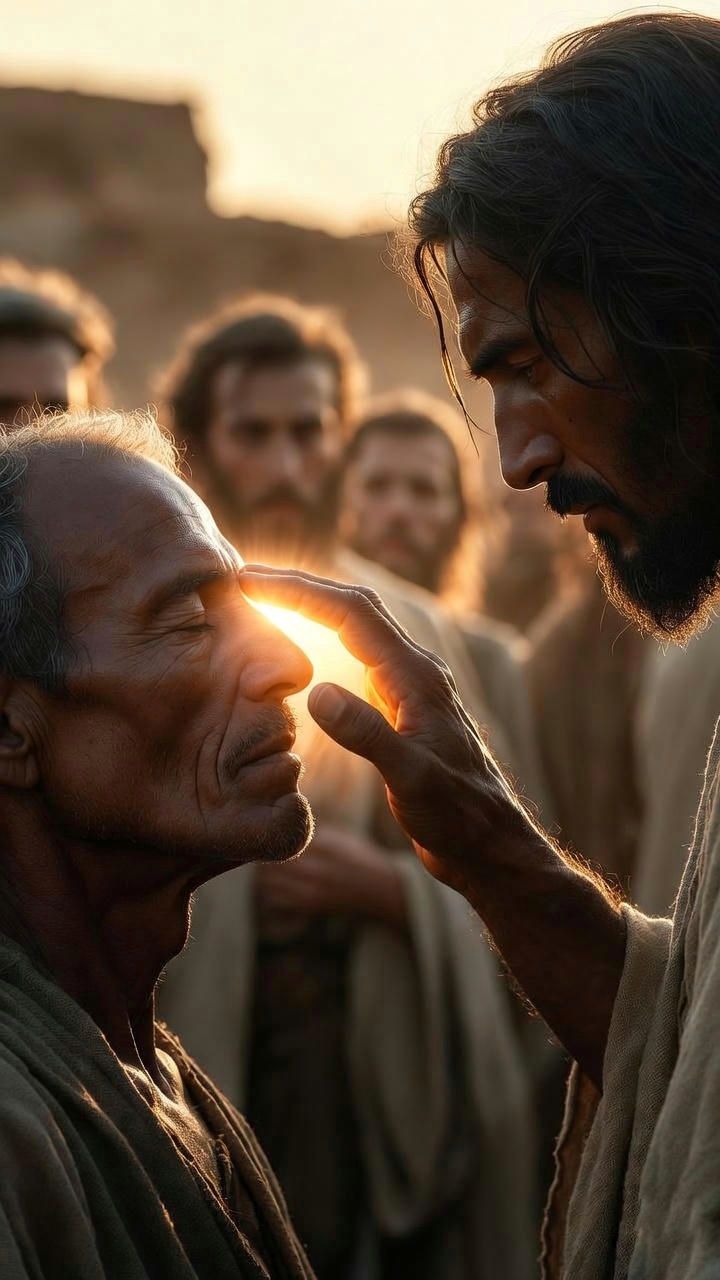
So, does this command forbid making a movie about Jesus to share the Gospel story? as a way to tell others about Christ, to try to reveal who He is, to help others understand what He is like and what He has done for us? Is it wrong to paint a scene of Jesus in the act of ministry? or suffering on the cross, dying for our sins?

Such artistic creations are indeed representations of God by definition; they depict Him explicitly, even though they’re not generally intended to embody God, or to be reverenced as if they are God, to take His place or supplant Him. So, we might be tempted to think it’s OK to develop such art. Yet God doesn’t provide any exceptions to His command: there’s no acceptable motive for creating any likeness of Himself.

Even though the intent is generally to point others to God, to make Him known more widely and effectively through engaging modes of communication, it doesn’t justify breaking God’s command. Similar to telling a story or giving an illustration, a picture, likeness or image can indeed be worth a thousand words, but are such images actually helpful? or do they do more harm than good?

Those who interpret such art forms as if they were God Himself are evidently immature and misguided, yet once an image of God is created, we have no control over how people will respond to it; those who are weaker in their spiritual understanding or disposition will invariably treat such images with special reverence or even worship, while the more mature may merely treat the object with elevated respect, deference or importance. In any case, disrespecting such objects is generally considered sacrilegious because of what they represent, and this is to be expected.

Any physical object associated directly with God, even in a cursory manner, becomes holy or sacred (Nu 16:37); the very name of God is holy and ought not to be abused, spoken irreverently or casually. (Mt 6:9) How much more careful then should we be with any supposed likeness of God? If it’s natural to treat it with reverence and respect, even if we don’t worship it, doesn’t this inform our application of God’s 2nd command? He clearly says not to create such likenesses, evidently, because He doesn’t want us awkwardly engaging with sub-optimal, inaccurate images of Himself.

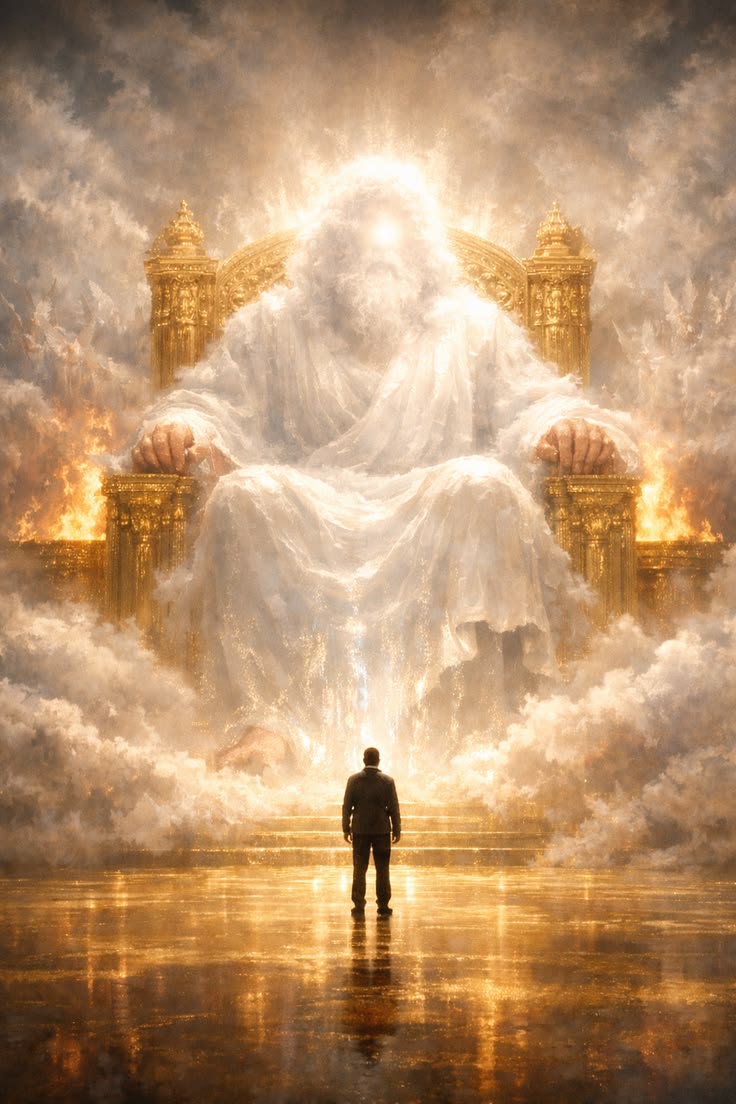
Consequently, when Father God reveals Himself, He always does so with symbolism: a burning bush, a bronze serpent, pillars of cloud and fire, a lamb, a lion, not with explicit likenesses or images. Between the cherubim in the Holy of Holies in the temple, the only place on Earth where Father God says He will dwell … there’s no image, only Shekhinah glory.

Even the Son of God Jesus Christ, when He came to live among us, may not have revealed His true appearance; He may well have dwelt among us incognito. He is the most beautiful Being in existence (Ps 45:2), yet He took upon Himself an unattractive form (Is 53:2), humbling Himself more than we can ever truly know. (Php 2:7-8)

Also in His glory, when John describes the Son of Man (Re 1:13-16), the detail is insufficient to completely inform the creation of an image; it’s still a bit symbolic and vague. We may imagine the remaining detail, but this is no stumbling block to anyone; it’s quite different than crafting an actual image.

Further, no matter how sincere, thorough and careful an artist is, no likeness or image can fully capture the infinitude of God — the work will misrepresent Him by definition, and very likely in significant, profound ways. Even images or movies about Christ seeking to publish His story and share the Gospel, even if they’re only quoting Him verbatim from Scripture, must guess at His disposition, attitude and general demeanor. But body language, facial expression and verbal tone are thought to be 70-90% of communication, and it’s certain that every attempt to embody these aspects of Christ will be imperfect and therefore incorrect, misrepresenting Him in some substantial way, and we truly have no idea how far off any of them are. The more I learn of God’s heart (Ps 119:136), the more I fear many of these works are seriously missing the mark, perhaps even presenting another Jesus, not the true Messiah. (2Co 11:4)

So, do such movies, pictures and statues really help us understand what God is like, so we may know and worship Him more effectively? If they did, if they were good for us, wouldn’t God have provided them Himself? (Ja 1:17) He could have done so, bypassing all the corruption and misrepresentation from well-meaning artists, but He not only didn’t provide anything — He carefully worded the 2nd command so as to explicitly forbid anyone else from doing so.

Perhaps Jehovah God gave us the 2nd commandment the way He did because there’s something deeper at stake here. We’re constantly trying to re-make God in our own image (Ps 50:21), to re-imagine Him after our own sinful likeness, rather than beholding His glory as He is revealing Himself so we’re transformed more into His image. (2Co 3:18) We do this instinctively, corrupting our own worship, being alienated from the life of God through our own ignorance of Him. (Ep 4:18)

The natural man will never receive God as He truly is (1Co 2:14), only what it wishes for Him to be. Since any physical object or artist’s rendition of God diminishes His glory per the artist’s own biases and limitations, attending to, serving or inappropriately focusing our attention on such works will necessarily diminish the quality of our own worship, our capacity to ultimately enjoy Him in Spirit and in Truth. (Jn 4:24)

God has given us His written Word to fully inform both our Gospel witness (Ro 16:26) and our worship. (Ps 119:7) When our eyes are enlightened by the Spirit through the Word, we really don’t need anything else. (2Ti 3:16-17)

The enemy’s always ready with a clever argument as to why it’s beneficial to violate God’s commands, but if we consider his reasoning carefully it always fails the sniff test. Are those who produce explicit images of God guilty of violating the 2nd command? Are they creating stumbling blocks for the weak? Are they, in fact, attacking the glory of God? I’m afraid they are, though God may use their works for good in spite of this. (Ro 3:7) Only God knows the heart, and He will sort it all out when He returns. (1Ti 1:13)

articles    posts

Casting Down Imaginations

audio

In our daily battles with sin, if we’re not intentional we can find ourselves continually playing defense, reacting to our own sins after the fact, trying to recover and undo the damage.

Yet how can we ever win a battle if we’re always on defense? How do we go on the offensive in striving against our sin?

God says the weapons of our warfare are mighty through Him to pull down strongholds (2Co 10:4), enabling us to cast down our imaginations and every high thing within us that exalts itself contrary to the knowledge of God (5a), so we may bring all our thoughts under control to the obedience of Christ (5b) This war is not focused on changing the world: it’s about delivering ourselves from being slaves to sin. (Ro 6:16)

Once we become aware of a weakness in our spiritual defenses, a sin that’s getting the best of us (He 12:1), or any pattern of behavior which is un-Christlike (1Pe 2:21), where we are missing the mark (Ja 4:17), we can go on the offensive by engaging our imagination with the power of Christ and the sword of the Spirit: God’s Word. (Ep 6:17)

Reimagine the scenario in which we failed, replaying it in our mind while consciously inviting Father God into the experience. (Ep 4:6) Invite Him to show us the lies driving our behavior (Ps 139:23-24), empowering the stronghold holding us captive (Jn 8:32), and the related scriptures from His living Word which expose and address these lies. (He 4:12)

Then we speak the truth of God’s living Word along with Him into ourselves and ask Him to give us repentance to receive and acknowledge the truth in the very deepest places of our mind and heart. (2Ti 2:26) In this way we receive with meekness the engrafted Word which is able to deliver (save) our souls. (Ja 1:21) We cast down the imagination itself, by putting it under and making it subject to the Word of God until it has no more hold on us, and then ask God to bring that part of our spirit, heart, mind and soul into obedience and set us free. (Ro 7:24-25a)

Once we overcome a particular sin pattern like this, we can bookmark it and periodically check to ensure we’re still free by replaying related scenarios in our mind as part of an entire series where we’ve experienced failure and have been set free, noting in each one that we’re still responding as Jesus would. If we’ve lapsed at all, we can cleanse ourselves again with the washing of water by the Word in the same fashion to regain and maintain our freedom. (Ep 5:26) This is how we add virtue — moral excellence — to our Faith (2Pe 1:5), overcome the world and live in victory. (1Jn 5:4)

articles     blog

His Heart Fretteth

audio

When we make unwise decisions and it doesn’t go our way, we may find ourselves blaming God for our suffering. (Pr 19:3) It’s as if we think God is obligated to serve us and arrange His universe for our convenience. We may resent the fact that He allows us to experience the consequences of our own foolishness.

But God doesn’t cause us to make unwise choices; we make them on our own. He isn’t responsible for them; we are.

In fact, God tells us to expect this. He even has a Law about it — the Law of Sowing and Reaping (Ga 6:7-8): we reap what we sow; we reap more than we sow, and we reap later than we sow. God is not unjust in this; it’s how all reality is designed.

Even when others make foolish choices which impact us, God isn’t responsible for these either. God is not obligated to protect us from the harm others would cause us, any more than He’s obligated to protect us from ourselves. God really doesn’t owe us anything. We have no right to be resentful in our suffering, to murmur against God. (1Co 10:10)

It’s actually an incredible mercy that God intervenes in our calamity at all (Ps 103:11), watching over us and protecting us in all the chaos of this broken world. (La 3:22) He does this frequently, more than we can ever really know. (Ps 103:4) Even so, we ought not to demand or expect it; we should be very grateful for His lovingkindness and protection. (Ps 107:21)

God’s promise to work everything out for out for good to those who love Him, for those whom He’s called according to His purpose (Ro 8:28), is so undeserved! His infinite benevolence should fill us with joy and hope regardless what He allows. We should give Him thanks in (1Th 5:18) and for all things (Ep 5:20), for He has a glorious purpose in it all. (Ep 1:11)

Living as if God is supremely victorious in every circumstance of life is how we glorify Him in this world. It’s all about Him, not about us. (Ro 11:36)

articles      blog

Great in the Kingdom

audio

Jesus tells us there’s a hierarchy in Heaven, a ranking or metric whereby some believers are counted great and others least in God’s kingdom. (Mt 5:19) Though salvation is by grace and not by works (2Ti 1:9), works are evidently very important. (Ro 2:9)

Jesus Christ explains the standard by which He will measure us all to define this eternal ranking in His kingdom; He lays it out very plainly: “Whosoever therefore shall break one of these least commandments, and shall teach men so, he shall be called the least in the kingdom of heaven: but whosoever shall do and teach them, the same shall be called great in the kingdom of heaven.” (Mt 5:19) Jesus is talking about Torah, the Mosaic Law; (17-18) He will evaluate everyone in His kingdom based on how we have respected Torah, His Law, the Law of God. Did we do our best to keep all of it as a manner of life and teach others to do so? Or did we break certain parts of it and encourage others to do so? 

So, Jesus will give every one of His saints a grade in Heaven based on how we keep His Law, even the least of His commandments: the seemingly obsolete and obscure laws He laid out for us in the Old Testament in Exodus, Leviticus, Numbers and Deuteronomy. Do we love them (Ps 119:97), delight in them (Ro 7:22), and try our best to love and honor Him in keeping them? (Jn 14:21) Or do we ignore some or all of them? (Ro 2:8-9)

Jesus mentions two grades in His Kingdom: Great and Least: in other words, we’re evidently either getting an A+ or an F.

Clearly, those trying to convince us God’s Law is just for Jews, if they’re in God’s kingdom at all, are ignorantly aiming for an F, and they want us at the bottom as well. Not smart.

We don’t even know what sin is apart from Torah (Ro 7:7); how can we strive against sin (He 12:4) if we have no clue what it actually is?

Jesus’ focus on obedience to the least of His commandments tells us they’re all important. He wasn’t careless or arbitrary in giving us His Law; if we break any of His commandments on purpose, we expose ourselves as lawbreakers (Ja 2:10), those who despise His Law and trample Him underfoot. (He 10:28-29)

Those who don’t yet know Jesus Christ as Judge, don’t yet know Him as He is. (He 10:29-31) Those of us who do, serve Him with fear and rejoice with trembling. (Ps 2:11, Php 2:12)

articles    posts

Neither Murmur

audio

To murmur is to complain and grumble, resentfully and subversively, under our breath, in a rebellious, discontented manner. Murmuring against God is a serious sin; we should take a lesson from Israel on this one (1Co 10:10), avoid this wickedness and root it out of our lives.

Discontentment and resentment come from thinking we deserve better, so murmuring against God is accusing Him of treating us inappropriately.

Perhaps we’ve made some poor decisions and we’re now suffering for it. Is that God’s fault? It’s true He could have stopped us, but He didn’t. Was that unfair? Is God obligated to restrain us from our own foolishness? Is it right to be resentful? (Pr 19:3)

Or maybe someone sinned against us and we’re now suffering as a consequence. Is that God’s fault? It’s true He could have stopped them, but He didn’t. Was that unfair? Is God obligated to restrain others from their malice or negligence? Is it right to be resentful? (Ro 11:36)

Or we might be sick or in pain and we’re now suffering in the midst of it. Is that God’s fault? It’s true He could heal us and stop the pain, but He hasn’t, and we don’t see any rhyme or reason in it. Is that unfair? Is it unloving? Is God obligated to make our lives pain-free and easy? Does He need to explain everything to us? Is it right to be resentful? (1Pe 1:6-7)

If we harbor resentment toward God, if we aren’t giving thanks to Him in our circumstances (Ep 5:20), if we lose hope (1Co 13:7), we’re accusing Him of being unjust; we’re denying His goodness, fainting in the day of adversity. (Pr 24:10)

The remedy here is to humble ourselves; murmuring can only be grounded in pride, thinking we deserve better. If we’ve been foolish, let’s own it and seek wisdom. (Ja 1:5) If we’re suffering otherwise, let’s trust God’s plan for good in it (Ro 8:28), hope in Him (Ro 8:24) and wait on Him. (Ps 27:14) We can glorify God in all His ways. (Re 15:4)

articles    blog

Everlasting Burnings

audio

The doctrine of Hell, a place of everlasting punishment for the wicked, finds its roots in the Tanakh, the Old Testament. While not fully articulated there, the concept exists in seed form, discernible to those attentively studying God’s revelation. (Jn 3:7–10).

While the Tanakh does not explicitly describe Hell as a fiery, eternal abode the way we find it in the New Testament (2Th 1:7), it does contain vivid imagery related to moral distinctions which prefigure and lead us to this understanding. Daniel 12:2 states, “And many of them that sleep in the dust of the earth shall awake, some to everlasting life, and some to shame and everlasting contempt.” This is perhaps the clearest hint given in the Tanakh, introducing a post-mortem, eternal suffering: the righteous inherit “everlasting life,” while the wicked face “everlasting contempt.” The Hebrew olam (everlasting) and deraon (contempt) suggest a permanent, disgraceful fate, a precursor to eternal punishment, which a diligent reader should perceive as divine justice extending beyond the grave.

Isaiah 66:24 illuminates further: “And they shall go forth, and look upon the carcases of the men that have transgressed against me: for their worm shall not die, neither shall their fire be quenched; and they shall be an abhorring unto all flesh.” The unquenched fire and undying worm depict a lasting physical judgment, likely tied symbolically to the Valley of Hinnom (Gehinnom), a place of dismal, abhorrent destruction. This imagery, though focused on physical ruin, hints at an unfathomable eternal consequence for rebellion, foreshadowing a reality more severe than earthly death.

Isaiah 33:14 extends the imagery by capturing the terror of divine judgment: “The sinners in Zion are afraid; fearfulness hath surprised the hypocrites. Who among us shall dwell with the devouring fire? who among us shall dwell with everlasting burnings?” The “devouring fire” and “everlasting burnings” evidently symbolize God’s holiness and wrath (De 4:24). The dread felt by sinners as they perceive the ultimate threat of divine wrath suggests an inescapable, impending, eternal judgment, a window into Hell’s eternal fire, discernible to those pondering God’s justice.

Psalm 1:5–6 reinforces this: “Therefore the ungodly shall not stand in the judgment, nor sinners in the congregation of the righteous. For the LORD knoweth the way of the righteous: but the way of the ungodly shall perish.” The “perishing” of the ungodly and their exclusion from the reward of the righteous imply permanent, divine rejection, aligning with the Tanakh’s covenantal framework where disobedience brings destruction (De 28:15). This shows us there will be a final separation of the righteous from the wicked; the wicked be unable to withstand God’s piercing, fiery judgment and will suffer immeasurably in the face of His indignation. (Ps 69:24)

Jesus’ teachings in the New Testament elaborate on the Tanakh’s foreshadowing and imagery, confirming what attentive readers should have understood. In Matthew 25:46 Christ openly declares, “And these shall go away into everlasting punishment: but the righteous into life eternal.” This directly echoes Daniel 12:2, replacing “shame and everlasting contempt” with “everlasting punishment” and affirming “life eternal” for the righteous. Jesus’ use of “everlasting fire” in Matthew 25:41 (“Depart from me, ye cursed, into everlasting fire, prepared for the devil and his angels.”) draws on Isaiah 66:24s unquenched fire and Isaiah 33:14’s everlasting burnings, clarifying their eternal nature.

In Mark 9:43–48, Jesus warns, “If thy hand offend thee, cut it off: it is better for thee to enter into life maimed, than having two hands to go into Hell, into the fire that never shall be quenched: Where their worm dieth not, and the fire is not quenched.” This directly quotes Isaiah 66:24, applying its imagery to Gehenna (Hell), the New Testament term derived from the Tanakh’s Valley of Hinnom. Christ’s repetition of “fire… not quenched” confirms the Tanakh’s seed as a literal, eternal reality, intensifying its horror beyond symbolic destruction.

Jesus’ parable in Luke 16:23–24 further elaborates: “And in hell he lift up his eyes, being in torments, and seeth Abraham afar off… and he cried and said… I am tormented in this flame.” The rich man’s conscious torment in flames builds on Isaiah 33:14s “devouring fire” and Deuteronomy 32:22’s fiery wrath, revealing Hell as a place of suffering, consistent with the Tanakh’s hints of divine indignation (Na 1:6, “Who can stand before his indignation?”).

The New Testament doctrine of Hell is consistent with the Tanakh, which emphasizes God’s holiness, justice and covenant. The Tanakh informs us of the basic concepts — fire (Is 66:24, 33:14), contempt (Da 12:2), and perishing (Ps 1:5–6) —reflecting divine wrath against sin, which Christ’s words clarify as eternal punishment. The righteous’ contrasting fate (Ps 23:5–6, Da 12:2) aligns with the Gospel’s eternal life, showing God’s unified plan: reward for obedience, punishment for rebellion.

Like Nicodemus, who should have understood spiritual rebirth from Ezekiel 36:26 (“A new heart also will I give you”), readers of the Tanakh should discern the reality of Hell in its warnings of judgment. Christ’s teachings do not introduce a foreign concept but fulfill the Tanakh’s moral framework, revealing Hell’s full reality as more horrific than its symbols.

The Tanakh plants the seeds pointing us to the reality of Hell, painting the reality of eternal judgment for the wicked and eternal life for the righteous. Christ’s words confirm and elaborate upon these seeds, unveiling Hell’s eternal fire as the reality behind the Tanakh’s fire, shame, and everlasting contempt. This doctrine, consistent with God’s revelation, calls us to humbly heed scripture’s warnings and embrace the hope of the Gospel.

articles    blog

Righteousness Exalts

audio

When given a voice, a social platform or a vote, to influence a community or culture, should we promote a strictly biblical worldview, or should we soften it to accommodate diversity? In other words, should we fully promote what we think is true or neglect to point others toward what we believe is correct for fear of offending them?

Firstly, we should inform our choice here based not on how our fellow-citizens might react, but on whether our choice pleases God or not. In the end, our peers will not be our judges; God Himself will reward us all according to our deeds. (Ro 2:5-6) We ought to please God rather than Man. (Ga 1:10)

Secondly, we should acknowledge Torah as God’s universal standard of righteousness for all Mankind (Ro 3:19); it is not merely Jewish law. (De 4:8) Breaking it is the definition of sin, independent of race or nationality. (1Jn 3:4)

We should also recognize that righteousness exalts a nation, and that sin is a reproach to any people. (Pr 14:34) The more closely our nation’s laws and general civil order align with Torah, the better off all of us will be.

And we should not find it charitable to deviate from the Law of Love in the name of compassion and tolerance. All of Torah hangs on, depends on and is upheld by the Law of Love. (Mt 22:37-40) Denying the Law of Love is not love; this is fear.

Finally, we should observe that when Christ returns, He will rule the nations with a rod of iron (Re 2:25), enforcing Torah with justice, precision and rigor. (Mi 4:2) Freedom of religion is not on His radar.

We should be prepared to humbly yet unapologetically defend God and His laws in the face of those who presumptuously make up moral law as they go; we should not be ashamed of anything in Torah. (Lk 9:26)

Yet we should be careful to promote Torah itself, not man-made additions to it, and anticipate those who might legalistically abuse Torah to create a burden or twist it to impose injustice. This is especially true when our judges are fallible, when society itself is composed largely of unbelievers. Torah was originally imposed in just such a context, ancient Israel, and is perfectly designed for it.

So, we should pray for and encourage the enactment of laws which reflect both the letter and spirit of Torah, which focus on well-defined and achievable behaviors, and which are easily interpreted and supported with impartial, enforceable penalties.

We should also remember that God’s kingdom is not of this world, and that He is working all things out according to His own will and plan. We should expect to be in the small minority in our entire world view and glad for opportunities to engage others to understand and appreciate it as well as we can.

articles    blog

Hate Evil

audio

Scripture defines fearing God as hating evil (Pr 8:13), and exhorts all who love God to hate evil. (Ps 97:10) What is evil, and what does hating it feel like? How can we know if we hate evil, or measure how much we hate it? How can we grow in hating evil, and in loving and fearing God?

We should define evil (the way God does) as any tendency to want to sin, or to violate God’s law. (1Jn 3:4) Hating evil is detesting our tendency to want to break God’s law (Ro 7:24), any reluctance or hesitancy to obey God’s law with delight and joy, or any tendency to excuse or make light of any motive or attitude which deviates from perfect holiness. This is the way of the wicked, an abomination to Jehovah. (Pr 15:9)

We should be asking God to search our hearts, to try us and expose our thoughts to uncover our wicked ways (Ps 139:23-24a), any place where we’re not hating evil, where darkness still has a foothold (Pr 4:19), where the enemy can take us captive whenever he likes. (2Ti 2:26)

Our goal is to cooperate with God as He leads us in the everlasting way (Ps 139:24b), as He gives us repentance to acknowledge the truth (2Ti 2:25), the truth that sets us free. (Jn 8:32)

It is insufficient to merely stop desiring sin, to stop being tempted and drawn away by our lust (Ja 1:14), to be neutral or complacent about sin; sin must become utterly disgusting, repulsive, grotesque, abominable, dreadful.

We must begin to recognize what sin does to us and to God, what it costs God and us, and to identify it in all of its ugliness and horror. We cannot toy with sin safely. If we don’t hate sin, we don’t yet see it clearly: we need God to open our eyes and help our hearts understand. (Jn 12:40)

In hungering and thirsting after righteousness, God will fill us (Mt 5:6); in perfecting holiness (He 12:14) in the fear of God we will find it (Mt 7:7-8); in adding to our faith virtue, moral excellence, we build on the rock and find true freedom.

articles    blog