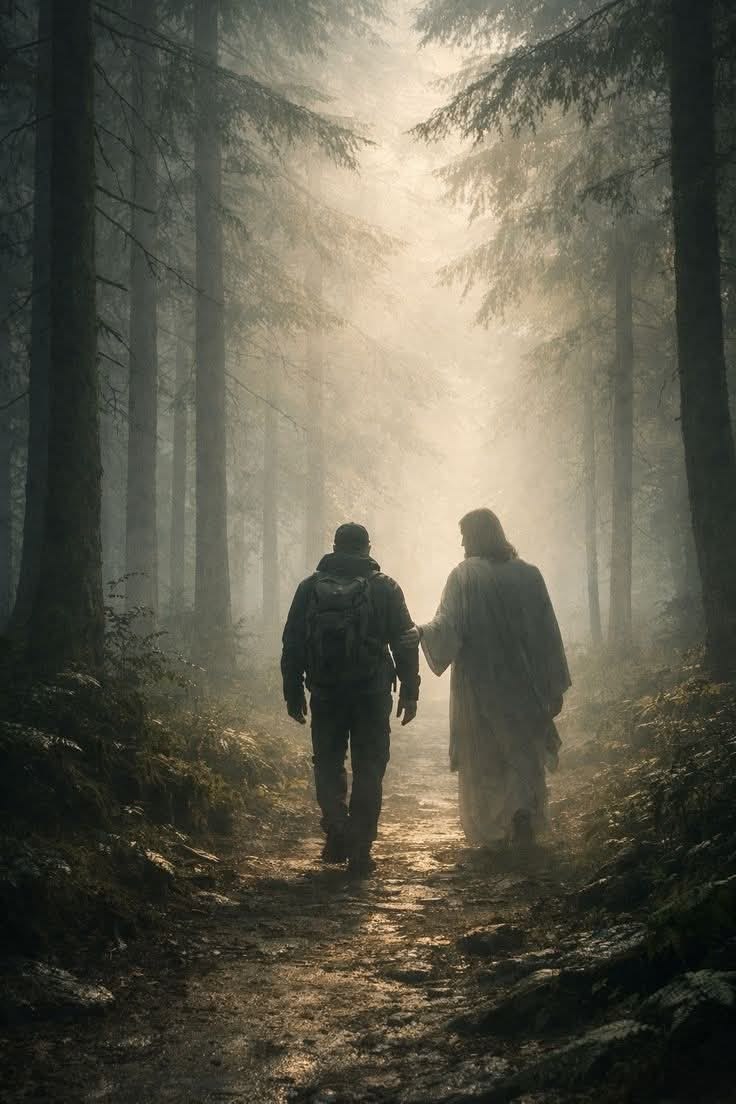
The Days of Darkness

I recently experienced a sobering vision-like awareness that I have absolutely nothing of this world; no wife (1Co 7:29), no children, no family, no job, no health, no friends, no home, no nothing. (30) I am currently enjoying all these things, but I do not have any of them; they are like a vapor that will vanish away in an instant. (Ja 4:14b) Ownership and control is an illusion; attachment to illusion is a lie. (1Co 7:31)

I can still feel this, as if I am on my deathbed, my whole life passing before me, and nothing of my temporal interests or activity in this world is of any consequence. Eventually, my entire life will be completely forgotten, as if it never happened, just like all who have gone on before me, dropping out into the infernal blackness, never to be seen again. This is the consummation of all worldly ambition, and it will be the same for mine: nothing.

Such is the way of all the earth, focused on our tiny little lives as if we’re going to live here forever.

The wise Preacher says, “Truly the light is sweet, and a pleasant thing it is for the eyes to behold the sun: but if a man live many years, and rejoice in them all; yet let him remember the days of darkness; for they shall be many. All that cometh is vanity.” (Ec 11:7-8)

As I navigate this life, I am to remember eternity and focus my heart there. (Mt 6:21) For each of us it will be either glory beyond anything we can imagine (2Co 4:17), or eternal darkness and blackness forever (Ju 13), even darkness which may be felt. (Ex 10:21)

So, what do I actually have right now, in the here and now? I have God, and what He is doing in me to transform me into his image. This is the work of God, and this will endure forever. (1Jn 2:17) This is what I have: the light. (1Jn 1:5) This is all I have; I have nothing else.

Yet who am I to presume this? Many think they have a secure relationship with Jesus Christ (Mt 7:22), that He is their best bud — LGBTQ activists, drunkards, fornicators and adulterers, you name it. False hope in a false religion is a wonderfully deceptive thing. (1Jn 3:7-8)

So very few will find eternal light; even the Preacher fell away (1Ki 11:9-10), and we have no real indication that he ever found his way back. How easily we preach the Word and neglect to do it, deceiving ourselves! (Ja 1:22)

Yet he spoke eternal truth that grounds us in reality when we receive the Word with meekness (Ja 1:21): the days of darkness will indeed be many, dwarfing this life until it is all but forgotten, a tiny spec in the distant past. The souls of the lost will long for any faint strand of light, and there will be none. How unspeakably dreadful! Who can even begin to imagine this?

Remembering the pitch blackness of eternity makes me exceedingly grateful for God’s gift of sunlight (Mt 5:45), and for spiritual light, drawing me again to ensure I am not being led off course by seducing spirits (1Ti 1:4) comforting me in my own deception, as they do the world. (Ep 2:2) The foundation of God stands sure: Heaven and Earth shall pass away, but he who does the will of God abides forever. (1Jn 2:17)

The key of assurance, as always, is found in Torah, the light (Pr 6:23), the perfect revelation of Jesus Christ (Jn 5:39), exposing the enmity and darkness of all who despise any part of it (He 10:28-29), as a rejection of Himself. (Ro 8:7) We must keep turning back to Torah (Is 8:20) to enjoy the glory of Christ. (2Co 3:14)

Who will come to One Who demands we give up all to follow Him? (Lk 14:33) When He isn’t offering us prosperity in this life, but to take up our cross for Him? (Mt 10:38) When His offer is to give us new hearts which delight in Torah and keep it all? (He 8:10) How many are drawn to His invitation? Barely a handful? These are His elect.

And yet this is the Christ of the Bible, coming to save His people from their sins (Mt 1:21), from their violations of Torah (1Jn 3:4), the law of His eternal kingdom (Mt 5:19), that we may walk in the light, as He is in the light, and have fellowship with Him. (1Jn 1:5-7) While we have the light, let’s believe in the light, that we may be the children of light. (Jn 12:36)

articles    blog

Unlearned and Unstable

Near the end of his 2nd epistle, Peter warns that those who are “unlearned and unstable wrest” the teachings of Paul “unto their own destruction” (2Pe 3:16), highlighting how easy and eternally dangerous it is to misinterpret Paul without a proper grounding in the Tanakh (the Hebrew scriptures or Old Testament). Since Christianity has, ever since the mid-2nd century, consistently been reinterpreting both Christ and the Tanakh in light of Paul, this is deeply concerning.

The Tanakh teaches all God’s laws are good for all people. (Ps 1:1-3), and that we are to reject any teaching as darkness which does not align with any part of Torah. (Is 8:20) We are commanded to hide the very words of Torah in our hearts and meditate on them continually (De 6:6-7), desiring them more than silver and gold (Ps 19:7-11), continually asking God to open our eyes that we might behold wondrous things out of His law. (Ps 119:8)

The Tanakh also claims all of God’s judgements are unchanging and timeless (Ps 119:160); we are not to add to them or diminish any of them in any way, ever. (De 4:2) There is no indication anywhere in the Tanakh that any part of Torah is only for Jews or temporary in nature. (De 4:6-8) Shame is the expectation for anyone who breaks the least of God’s commands (Ps 119:6); God will eventually trample underfoot all who error from His statutes. (Ps 119:118)

Since Paul clearly grounds all of his teaching in the Tanakh (2Ti 3:16-17), particularly the gospel (Ro 16:25-26), it is a serious mistake to think Christ came to provide a new way for us to be saved or that He changed anything about how we are to relate to God; rather He came to explain what has always been God’s way. So, if our understanding of the Gospel is not firmly grounded in the Tanakh, we are in a very dangerous place.

What Christianity has been claiming since the post-apostolic era is that Christ abolished almost all of Torah, such that only “moral law” remains, effectively re-defining sin as well as repentance, which is no longer a change of mind about breaking Torah, but rather submission to the Christian Church and her dictates.

Yet this step corrupts the gospel itself since it fundamentally changes what salvation is all about: Christ came “to save His people from their sins” (Mt 1:21): from violating Torah. (1Jn 3:4) Inviting the lost to come to Christ for any other reason is offering them false hope in a false Christ (2Co 11:4); using all the same terminology while proclaiming something fundamentally different is a lie of the very worst kind. (2Pe 2:19)

A firm grounding in the Tanakh immediately exposes this as darkness. (Pr 6:23, Pr 4:19) But those unfamiliar with the Tanakh, unstable and inconsistent in how they are interpreting scripture (2Co 2:17), can easily be deceived. Many will be misled in this way, thinking they’re eternally safe only to be turned away by Christ at the end. (Mt 7:22-23)

Are all who are deceived about Torah eternally lost? Certainly not; there are evidently a few souls sincerely seeking God who have not yet understood their obligation to obey Torah. Those of us who would run to Christ even if He were preached authentically and truly, offering to write Torah into our hearts and enable us to obey His Torah in spirit and truth, have received Him even though we have not yet seen Him as He is. (1Jn 3:2) He is longsuffering and merciful in our ignorance (1Ti 1:13); He will lead us into all truth as we continue to seek Him. (1Jn 2:27)

articles    blog

A More Sure Word

audio

There are many religions claiming to have the truth about how we relate to God. Though they all evidently have some truth, they do, in fact, make contradictory claims, so they can’t all be entirely true. How do we know which one is true? How do we know if any of them are true? How should we evaluate their truth claims? How do we know when we have finally found the truth?

To coherently evaluate truth claims we must evaluate evidence for and against each claim, assuming truth claims cannot contradict or be inconsistent with each other.

We should also perceive from the very existence of multiple, contradicting religions, as well as from the evil apparent in the world, the existence of a lying personality, a spiritual Deceiver determined to mislead us, and expect it to be very convincing. In other words, our search for truth requires honesty and rigor; we must lay aside our bias; we must be thorough and relentless.

A useful device in any pursuit of truth is proof by contradiction: if assuming a truth claim is false implies a contradiction this proves the claim is true.

For example, assuming there is no god implies abiogenesis: that life randomly sprang from non-life, and that the universe spontaneously created itself ex-nihilo, from nothing. Both implications contradict basic, well-established science; therefore, there is a god: both atheism and agnosticism are irrational, invalid world views.

The next natural step is historical; examine the most verifiable fact of all human history: the Resurrection of Jesus Christ. Assuming Christ did not rise from the dead implies every single one of His twelve apostles suffered immensely for what they knew was a lie without expecting any earthly benefit; not one of them ever recanted, even under extreme torture. This contradicts human nature on a very basic level. This proves Jesus Christ did rise from the dead.

The next reasonable step is literary: examine the reliability of the Bible. Assuming the Bible is unreliable contradicts Christ Himself; atheists (e.g. Bart Erhman) admit historical records of Christ’s beliefs are reliably preserved for us in the four Gospels, which document Christ’s implicit trust in the Tanakh (the Hebrew scriptures) as the inspired Word of God. (Jn 10:35, Lk 16:31) He claimed to be Jehovah God of the Tanakh (Jn 8:58), and He lived accordingly. His testimony is all we need; we may safely trust the Tanakh as more reliable than any supernatural sign we might encounter. (2Pe 2:19-21)

So, we may conclude that any religion which does not align with both the Resurrection of Jesus Christ and the Tanakh is a lie, the work of the Deceiver. Let’s cross-check and verify this, testing each world religion for consistency.

Assuming Islam is false leads to no contradiction: Muhammed could plausibly have been assisted by the Deceiver; he denied the Resurrection, was irreconcilably inconsistent with his own teaching, adapted it conveniently over time and benefited immensely from it.

Similarly, assuming Hinduism is false leads to no contradiction; oral tradition and idolatry mixed with supernatural visions and experiences aided by the Deceiver is certainly plausible.

Assuming Buddhism is false leads to no contradiction; an ancient eastern philosopher got some basic things wrong. Not an issue.

Assuming Judaism is false leads to no contradiction; though He rose from the dead, they continue to reject their own Messiah, presuming they can cover their sins through ritual and tradition, which is inconsistent with the Tanakh. (Eze 18:4) No contradiction here.

Surprisingly, assuming Christianity itself is false, at least as we know it today, also leads to no contradiction; claims that Christ abolished Torah (the supposedly civil / ceremonial parts of Mosaic Law) evidently emerged in the mid-second century in response to Fiscus Judaicus to create a new, apostate religion distinct from the true, Torah-centered apostolic faith, presenting another Jesus which Christ’s apostles would not have recognized. Though institutional Christianity may contain more truth than any other religion, its rejection of Mosaic Law as the standard by which we define sin (1Jn 3:4) exposes it as an elaborate counterfeit, another work of the Deceiver.

Every other world religion fares similarly; they are all man-made, corrupt, broken. We should not rely upon any of them to guide us in seeking God.

Where does this rigorous pursuit of truth inevitably lead? The Tanakh is where we find our answers (Jn 5:39), while carefully using the New Testament as a guide, aware that Christians consistently misinterpret the Apostle Paul to wrest much of scripture, potentially leading us to spiritual death rather than life. (2Pe 3:16)

As we search scripture, we find we are all sinners in need of salvation (Ps 14:2-3); we have all broken Torah and are at enmity with God as a result, deserving of spiritual death. (Eze 18:4)

God has made a way for us to be reconciled with Him through faith in Messiah (Hab 2:4), trusting Jesus Christ to take our place and die for us, being punished for our sin. (Is 53:6, 11)

God imputes perfect righteousness to all who believe in God, submitting to Torah as His righteous law (repentance) and trusting Him as our atonement for sin through Jesus Christ (faith).  (Ge 15:6) As we believe on Him He imparts spiritual life into us (Ps 119:140), forgives us of all of our sins against Himself and counts us as perfectly righteous, gives us a new heart and begins writing His Torah into our hearts, enabling us to obey and love Him. (Je 31:33-34)

To all who wish to be reconciled with God, saved from both the penalty and practice of violating Torah, who are willing to give up everything to be transformed by Him, the witness of the Tanakh echoes the call of Jesus Christ, “Verily, verily, I say unto you, He that heareth my word, and believeth on him that sent me, hath everlasting life, and shall not come into condemnation; but is passed from death unto life.” (Jn 5:24) This is how we are reconciled to God; this is the way of salvation. There is no other way.

Ask God for understanding and faith until you receive; seek until you find, knock until God opens the door and you know deep within that you are His and He is yours. (Mt 7:7-8)

articles  ♦  blog

Partakers of the Divine Nature

God has already given His children everything we need to live a holy life in fellowship with Him (2Pe 1:3a) by revealing Himself so we may know Him. (3b) When we internalize and walk in His amazing promises, He enables us to partake of and enjoy His divine nature. (4)

For example, God promises to always be with us, to never leave us nor forsake us (De 31:6, He 13:5), so we may partake of and enjoy God’s divine nature by living more like Jesus — boldly, knowing God is our helper, without fearing others or what our future might bring. (6)

God promises to instruct us and teach us how to live, and to guide us along the way (Ps 32:8), so we may partake of and enjoy God’s divine nature by being confident He is achieving His purpose for our lives as we live for Him. (Php 1:6)

As our shepherd He promises to meet our needs (Ps 23:1), so we may partake of and enjoy God’s divine nature by seeking His kingdom and righteousness as our top priority without being overly concerned about basic provision (Mt 6:33-34); He will meet all of our needs. (Php 4:19)

God promises to lead us in the way of righteousness for His own glory (Ps 23:3), so we may partake of and enjoy God’s divine nature by being confident He will sanctify us (1Th 5:23-24), deliver us from the power of sin and present us faultless before His presence with immense joy. (Ju 24)

As we separate ourselves from the evil of this world and pursue Him (2Co 6:17), God promises to dwell in us and walk in us (Le 26:11-12, 2Co 6:16), so we may partake of and enjoy God’s divine nature by continually acknowledging His immediate presence with us every moment of our lives. (Ep 4:6)

God promises His goodness and mercy will follow us every single day (Ps 23:6a), so we may partake of and enjoy God’s divine nature by knowing nothing will ever separate us from His love. (Ro 8:38-39) No matter what happens to us, we will be victorious. (37)

In having such amazing promises we may partake of and enjoy God’s divine nature by cleansing ourselves from all filthiness of the flesh and spirit, perfecting holiness in the fear of God. (2Co 7:1) This is exactly what all of God’s children do. (2Ti 2:19, He 12:14)

articles  ♦  blog

Of Good and Evil

The very first command God gave to Man was to not eat of the fruit of the Tree of the Knowledge of Good and Evil. (Ge 2:17) He imposed a dietary law providing a simple, standalone boundary condition, a restriction on what we could consume as food.

Why did God do this? Was the tree poisonous? Did it cause disease? Evidently not; as far as we know, eating from it caused no physical harm. God doesn’t explain exactly why we are not supposed to eat it, so, understanding how obeying a command is beneficial for us must not be the main point; the fact God commands it is all we need. A restriction reminds us we are not God; we are subjects in God’s kingdom.

We should implicitly trust God as intrinsically good, without evaluating and double-checking Him based on our own limited perspective. But believing the lie that God is keeping something good from us by imposing restrictions seems to be our natural inclination ever since the Fall, when the serpent first suggested it. It wasn’t too hard to convince us even when we were sinless.

So, if God’s first command actually was good, an outflow of His love for us, and He was not withholding something good, what was He shielding us from?

Some presume knowledge itself must be bad for us, that God is discouraging us from earnestly pursuing understanding. They admonish us for digging deeply into spiritual matters and trying to more fully understand God’s ways. They remind us that knowledge puffs us up (1Co 8:1a), so we shouldn’t bother with systematic theology, critical thinking, apologetics and the like, just love one another. (1b) Yet God encourages us to seek knowledge and wisdom, to get understanding above everything else. (Pr 2:3-5, Pr 4:7) We ignore it at our own peril. (Pr 1:29-31) Something else is in play.

Notice carefully the full name of this forbidden tree; it’s not the Tree of Knowledge, but the Tree of the Knowledge of Good and Evil. There is a specific kind of knowledge which is harmful and destructive: the knowledge of good and evil. What is this, exactly?

Satan’s claim in the immediate context provides a clue: in eating the forbidden fruit Adam and Eve would “be as gods, knowing good and evil.” (Ge 3:5) In other words, by disobeying God we start deciding what is right and wrong for ourselves, making up our own moral law as we go, and since moral law is God’s domain, we’re actually acting as if we are God. (Ge 3:22)

Trying to act like we are God when we aren’t is problematic on a number of levels, not the least of which is that it insults God Himself; it’s our attempt to displace God and position ourselves at the center of the universe, at the center of Reality, at the epicenter of Being itself. Yet there can be only one true Center (Re 4:11); when we all start jockeying for this position we create conflict, confusion and resentment, making up rules for everyone else so we can please ourselves.

Most all of the human-induced suffering and injustice in the world can be traced back to each of us acting as if we are God without the loving, selfless wisdom of God. At heart, when left to ourselves, we’re selfish, needy, fearful little creatures, constantly competing with God and with one another. So, in forbidding us to eat from the forbidden tree, God is commanding us to not do that which we are all now naturally inclined to do: to sit in judgment of His laws and of His ways and decide for ourselves what is good and evil, abusing Him and one another in the process.

What would it be like if we all started obeying God, just because He’s God? Call it Paradise. (2Pe 3:13) God’s commands are the definition of righteousness (Ps 119:172) and all of them are truth. (152) Those who walk in them comprise His kingdom. (1Jn 3:10)

articles    blog

To Fulfill

Christ our Messiah didn’t come to destory or abolish Torah, the Mosaic Law, He came to fulfill it. (Mt 5:17) Fulfill comes from the Greek play-ro’-o, meaning to fill up, make replete, cram; it’s used in many places in scripture to indicate a fulfillment of prophecy by bringing to pass what was predicted. (e.g. Mt 1:22, 2:15, 17, 23, 4:14, etc.) Christ certainly fulfilled hundreds of biblical prophecies as God used Him to accomplish what they foretold.

Another way in which Christ fulfilled the Law and the prophets was by His perfect obedience to Torah, and to all the godly precepts and principles which the prophets have derived from Torah. (Mt 3:15) It was necessary for Christ to live like this, to be perfectly righteous, in order to suffer for our sins: He had to be innocent, pure and holy in every possible way so He could become a proper substitute for the ungodly (Ro 5:6), that He might bring us to God. (1Pe 3:18)

Yet many presume that since Christ has kept God’s law for us, we don’t have to keep it; He has obeyed Torah for us, on our behalf, so we are free break it. But since God defines sin as the violation of Torah (1Jn 3:4), this is equivalent to claiming that since Christ died to save us from our sins we are now free to sin. In other words, since He is our Great Physician, we are now free to be sick; since Christ has set us free from the bondage of sin we are now free to be slaves of sin (Ro 6:16); since Christ is our Resurrection and our Life, we are now free to pursue death. It’s a contradiction on such a basic level only the reprobate mind can tolerate it. (Ro 1:28) Nothing could be farther from the truth. (2Ti 2:19)

Clearly, Christ did not come to save us so we can persist in our sin, delivering us from sin’s lawful penalty so we could go on living in disobedience without consequence. No. Christ also came to set us free from the power and dominion of sin (Ro 6:14), to work godliness and holiness within us as a manner of life. (He 12:14) We are elect unto obedience (1Pe 1:2), created in Christ unto good works, which God has preordained that we should walk in them. (Ep 2:10)

We might think this settles the matter, yet most Christians still ignore Torah and use this idea that Christ fulfilled the law as justification. The claim is that much of Torah was temporary in nature, either applicable only to Jews to distinguish them as God’s chosen people until Christ came or foreshadowing what Christ would accomplish in His ministry. The assertion is that though Christ did not actually abolish any of Torah, in completing His ministry He fulfilled or completed certain types of laws such that they are no longer useful or binding; they have served their purpose and are therefore now obsolete.

To support this claim, ever since the mid-second century, post-Apostolic Christianity has been cleverly partitioning Torah into moral, civil and ceremonial laws, and claiming the civil and ceremonial laws are fulfilled. So, while the moral law is still valid (clearly, we’re not free to murder, lie, cheat and steal, etc.), Sabbath, dietary law, God’s feasts and the like are no longer applicable. This avoids obvious absurdity and may seem reasonable on the surface, but no justification is ever provided for the partition itself; it is taken for granted.

However, dismissing certain parts of Torah as obsolete plainly violates the immediate context, in which Christ states (as clearly as it can be stated) that every single detail of Torah will remain relevant in God’s kingdom until every single prophecy has been fulfilled, until Heaven and Earth pass away. (Mt 5:18) He emphasizes and affirms that anyone breaking any of the least of Torah’s commands will be considered least in God’s kingdom, and whoever does and teaches all of Torah will be considered great in His kingdom. (Mt 5:19) It is difficult to imagine how Christ might have been more explicit, or how He might have stated this more clearly.

As we consider the rest of scripture, we find no indication how to partition Torah into sections we might ignore; Torah is consistently treated as an integrated whole, like a mirror (Ja 1:23); breaking any part of it makes one a law-breaker. (Ja 2:10) Each command elaborates on how to love God and our neighbor (Mt 22:40), so dismissing any part of Torah diminishes and corrupts this biblical revelation of love.

Apart from having no biblical precedent for a formal Torah partition, actual attempts to classify Torah this way, sorting commands into these arbitrary classes, are rare and deeply problematic (for example, why classify Sabbath as civil instead of moral?). Rather than discarding parts of Torah, this entire man-made paradigm should be discarded; it is evidently a lie and should be scrapped entirely. Each of God’s commands outlives the universe. (Lk 16:17, Ps 111:7-8, 119:44, 152, 160)

Even so, post-apostolic Christianity persists in discarding the bulk of Torah and ignores it as God’s perfect standard of righteousness for today (Ps 119:172), leveraging numerous Pauline passages to effectively abolish the supposed civil and ceremonial laws. Paul does write many things which are hard to understand; those who take him out of context in an unlearned and unstable manner, as they do the rest of scripture, do so to their own destruction. (2Pe 3:16) This should concern any earnest soul; we may not choose between Christ and Paul, we must reconcile them.

In my experience, we won’t get much help from organized religion, and this should be no surprise. Yet if we are prayerful, persistent and careful, taking each passage in context, we find Paul’s new, godly nature loves Torah (Ro 7:22); he affirms and validates Torah as God’s definition of sin (Ro 7:7); he sees no inconsistency between faith in Christ and strict Torah observance (Ro 3:21), and he never encourages us to break it. (Ro 6:1-2) We find what we should expect to find: there’s no inconsistency between Paul and Christ; Torah is the law of God’s eternal kingdom, and if we love Him we should be obeying all of it that we can. (1Jn 5:3)

articles    blog

At My Right Hand

Practicing the presence of Jehovah God means orienting our minds, hearts and spirits to acknowledge and appreciate the immediate presence of the King of the universe in every moment of our lives. (Ps 139:7-10) He lives and walks among us unseen (Ac 17:28), yet once we rightly believe on Him He also lives within us, closer than our breath. (Ep 4:6) To ignore Him even for an instant, failing to continually acknowledge Him is, for all practical purposes, to live like an atheist. Being conscious of Him and honoring His majesty moment by moment changes everything. (Ps 104:1)

Can we be fearful and afraid as we acknowledge the sovereign King of the universe in our midst? (2Ti 1:7) Who lets nothing pass through His hand but what will glorify Himself in and through us? (1Pe 1:7) Can we bring fearful energy and doubt into a trial while confidently knowing He has already told us to count it all joy? (Ja 1:2) that the trying of our faith works patience and steadfastness? (3) Nay, we are more than conquerors through Him Who loves us. (Ro 8:37)

Who can be seeking approval from others while acknowledging the presence of Almighty Jehovah God Himself before us? while recognizing all desire for approval is created by Him and for Him and through Him? (Ro 11:36) He will judge us all, and He has built into our very DNA this anticipation. Yet it is only His judgment, His accounting of us that matters. If we’re living to hear Him say, “Well done, good and faithful servant!”, we will not be snared in seeking approval from others. (Pr 29:25)

Can we hesitate to ask the only wise God (1Ti 1:17) for wisdom when He, Who alone is truly wise (Ro 16:27), stands beside us and bids us freely ask, without wavering and doubting, even reprimanding anyone who dares to doubt the ultimate goodness and benevolence of God in giving freely to all who ask of Him?

Who can break Torah and sin presumptuously, pretending no one else can see, when God is all seeing, standing right beside us? (Pr 15:3) when all the secrets of men will be opened up before the entire universe? (1Co 4:5) It is the atheist who pretends there are secrets; rebellion blinds to spiritual reality (Ps 73:11); let us not be like them. (Ps 10:4)

The world tries to stabilize itself by focusing on nothing, or in praying to “the spirit of the universe”, teasing us with its empty, shallow focus. It makes more sense to pray to a pet rock or seek guidance from a stuffed animal. The wicked want the benefits of a benevolent Mind without acknowledging His existence; it is blindness. Let no man spoil us with these trinkets, and not after Christ. (Co 2:8)

Jehovah God, King of the universe, is with me; He is my light and my salvation; whom shall I fear? Jehovah is the strength of my life, of whom shall I be afraid? (Ps 27:1) I have set the LORD always before me: because he is at my right hand, I shall not be moved. (Ps 16:8)

Get Understanding

I am intrigued by the idea that Nicodemus, an earnest Pharisee living in ancient Israel, in the epicenter of God’s chosen people, having memorized the entire Tanakh (Old Testament) and trained himself to teach its core principles (Jn 3:1), could be clueless about eternal salvation and how to be reconciled with God. (10) Similarly Paul, also a Pharisee in all good conscience before God, thought he was serving God by persecuting Christians, profoundly ignorant of justification by faith (1Ti 1:13), until Christ Himself taught him the Gospel. (Ga 1:11-12)

This begs a profound question: why has God written His word the way He has, with the gospel itself being so elusive, hidden and mysterious? Even if we’re intimately familiar with scripture, we still might be missing its primary message. It’s as if God is hiding the truth from us and doesn’t want us to find it very easily.

We know God cannot be pleased in our ignorance because He is supremely loving, to the point of self-sacrifice for anyone who will turn to Him, and He is infinitely wise and good; He did not design His word the way He did by accident; ultimately, He must have some merciful and gracious purpose in mind. (Ro 11:33)

Perhaps God is acknowledging that mankind as a whole will persist in unbelief no matter how clear He explains the gospel, and is hiding the truth so He might have mercy on us all. (32) God is acting as if no one will be receptive to the truth even if He does make it obvious (2Ti 4:4), as if everyone will refuse to be reconciled with Him (Ro 3:11), and so by hiding the truth, purposely making it difficult to find, He is in a sense giving us all somewhat of an out, an alibi to lessen our condemnation. Perhaps God is hiding the truth so He can be a little bit more merciful to those who willfully refuse to seek Him.

Evidently, as there are levels of reward in Heaven (Mt 5:19), it stands to reason there are also levels of punishment in Hell. (Ro 2:5) Perhaps God is dealing with the fact that no one will seek Him on their own; nearly everyone is voluntarily headed for eternal destruction. (Mt 7:13) Perhaps God is providing room for a little bit of mercy to lessen the severity of damnation for all those who neglect to pursue a relationship with Him.

And for His elect, in whom He mercifully intervenes and softens our hearts, it may very well be that in earnestly searching out the truth when it is so hard to find, this very process not only strengthens us (Php 2: 12-13), but makes the truth itself that much more precious to us when we do find it. (Mt 13:45) This is evidently very good. (Pr 25:2)

We should all seek God earnestly so we may know Him (Je 9:24), so we may walk with Him in spirit and truth. (1Jn 1:3) The fact that the truth is hidden is no issue; God has promised to give understanding to all who seek it. (Ja 1:5-6) So, it is not a matter of whether we can ultimately come to understand the truth (Mt 7:7-8), it’s more a question of how God chooses to get us there, how we must invest in doing so: it does cost us everything. (Lk 17:33)

God tells us to commit our all to Him in this pursuit (Mt 19:21), to value Wisdom and Understanding above all else. (Pr 4:7) There is nothing more important than walking out a practical knowledge of God, grounding ourselves in spiritual reality (Php 3:8-9), putting on display what He reveals to us about Himself as we seek Him.

articles    blog

A Ransom

Every ancestral heritage is a mixture of light and dark, good and evil; while our ancestors are imperfect they offer us valuable lessons. (1Co 10:1-4) We should be thankful for what we learn from them, yet discerning: our responsibility is to embrace what is noble and good, and let go of the rest. (5-6)

As we embody the godly virtues of our ancestors, we ought not seek our identity or security in their legacy; they cannot heal our broken relationship with God or give to God a ransom for our souls. (Ps 49:7)

We each do need a ransom because we have all sinned against God by breaking His law, the Mosaic Law in the Hebrew scriptures, the Torah (Mt 5:19), which makes Him very angry with us. (Ro 1:18) No mere mortal, dead or alive, can help with this because we all have the same problem: we are all sinners. (Ro 3:10)

The penalty we all deserve for our sin is eternal, spiritual death. (Ro 6:23) Justice must be served: we either need to suffer eternally for our own sin or find someone else willing to take our place and suffer on our behalf, someone who does not also deserve to die. But who could do such a thing for us? And who would do so, even if they could? (Ro 5:7)

Yet our biggest problem isn’t the fact that we deserve God’s wrath because of what we have done; our biggest problem is that without God’s help we will keep on breaking Torah; we don’t want to be governed by God and obey His commands; in our natural state we are at enmity with Jehovah God and we cannot submit to His Law. (Ro 8:7)

It’s impossible for us to be in right relationship with God like this (Ro 8:8), but it’s how all of us are when God lets us go our own way. So, we not only need to be saved from the penalty of our sin, but also from its power, from our very nature which causes us to violate Torah; in other words, we actually need to be saved from ourselves (Ro 7:23-24): we need a miracle from God. (Jn 3:5-7)

There is only one Man who is willing and able perform this miracle for us: the Son of God, the God-Man Jesus Christ. (1Ti 2:6) Christ is not a sinner, so He doesn’t deserve to be punished for sin, yet He is willing to be punished for us, to reconcile us to God by dying in our place, to be punished on our behalf so He can reconcile us with God. (2Co 5:19)

And Jesus Christ is also able to save us from ourselves, to give us a new, divine nature, new hearts that love Him and want to obey Him (2Co 5:17), and write His laws into our minds and hearts. (He 8:10-12) He is both willing and able to transform us from rebels into His own likeness and righteousness. (Ro 8:4)

Even so, most of us will naturally keep on looking for some other way to be reconciled with God (Mt 7:13-14); we won’t give ourselves over to God and let Him save and heal us. We want to do things our own way, so rather than searching for the evidence God has graciously provided to show us His way, we make up religions that make us feel good, which maintain our sense of control and give us what we want, and so we trample underfoot the Son of God. (He 10:29)

Though we can do nothing to save ourselves, finding our salvation in God will indeed cost us everything; if we are unwilling to give ourselves entirely up to Him, hanging on to our old life, we will be lost. (Mk 8:35-36) But we have no excuse (Ro 1:19-21), no way to escape if we neglect so great an offer (He 2:3); we’ll just be storing up wrath for ourselves against the day God’s righteous anger is revealed. (Ro 2:5-6)

So, how do we find our eternal salvation in God? We receive His Son Jesus Christ by faith as our Eternal King and Savior and believe on Him (Jn 1:12-13), submitting to Him as Lord, trusting and knowing He has died in our place, has been raised again from the dead, and reconciled us to God, and that He is transforming us into His image. This faith in Him is a supernatural work of God in our hearts wherein He reveals to us what Christ has already done to save us and gives us His spiritual life. (Ro 3:25-26) We cannot make this happen through an act of our own will; it is the work of God. (Ja 1:18)

Until we experience this supernatural work of faith in our hearts we should continue seeking it from God, turning away from all which displeases Him, earnestly obeying Torah as well as we can, in every way that we can, and meditating on what He has revealed to us about ourselves and His Son in the Holy scriptures. (2Ti 3:15) We should also ask others to pray for us, working out our own salvation with fear and trembling (Php 2:12), surrounding ourselves with those who have found Him and are seeking Him, and continue pursuing God until we find Him, and He rewards us with faith in His Son. (He 11:6)

Good News

The word gospel means good news, but our idea of good depends on what we value, and this is informed by our world view, how we’re engaging reality. Who or what do we position at the center of Life itself, and why? What drives our sense of value?

By nature, we each put ourselves at the center of reality, as if we’re gods, and define good by what serves our personal interests. Yet we did not create the universe: so, obviously, we are not the center of reality. To have a coherent world view we must look beyond ourselves.

We need not look very far at all (Ac 17:24): the most verifiable fact of all human history is that Jesus Christ, the first-century Jew Who claimed to be Jehovah God of the Hebrew Scriptures (Jn 8:58), died by Roman crucifixion and then rose again from the dead. (Ac 17:31) We rightly engage reality by acknowledging Jesus Christ as Creator God, King of the Universe, and living this out in our conscious behavior; there is no other way.

A central claim of Christ our King is that Mosaic Law — Torah — is the law of His eternal kingdom (Mt 5:17-19); Christ will personally tread down all who break His laws (Ps 119:118) and trample them in His fury. (Is 63:3)

The bad news is that we all deserve to be destroyed by Christ because we’ve all broken His laws (Ro 3:19): we all need deliverance from His wrath. (Lk 3:7)

The Gospel, or good news (Ac 13:32-33), is that if we want to keep Jehovah’s commandments and walk in fellowship with Him, He has made a way for us to be reconciled to Himself through Jesus Christ (2Co 5:19), Who died on behalf of sinners like us (1Jn 2:2) to rescue us from our enmity against Himself and His laws (Ro 8:7) and deliver us from the wrath to come. (1Th 1:10)

By faith we can seek Him (He 11:6) until He we believe on Him (1Jn 5:13), until we know we’re redeemed (He 10:22), resting in what He has done for us (Ro 3:25), confident He has given us a new nature that loves Him and delights in His law (He 10:16-17), and we have become His children. (Jn 1:12-13) The moment we first believe on Christ we are immediately justified, eternally safe; we pass from death to life. (Jn 5:24) Because this is entirely the work of God (Ja 1:18), this salvation can never be forfeited, lost or undone. (1Pe 1:5)

But those who wish to continue breaking Torah, neglecting God’s incredible offer of salvation, are choosing to store up unfathomable eternal misery for themselves (Ro 2:5-6); there will be no escape. (He 2:3)

Religion may offer us false hope by telling us we aren’t so evil, or that if we follow their man-made rules we’ll make it, or by offering us a savior who abolished Torah (2Co 11:4), accepting us as we continue on in willful sin, but these lies won’t stand in the day of Judgment. (Mt 7:21-23)

A very common misconception is that we can be reconciled with God merely by asking Him to save us after we’ve checked some theological boxes and sincerely decided to follow Him. But God never tells us this; it’s just table stakes, how we start seeking salvation. We must continue seeking Him until we become convinced Christ has reconciled our souls to God by dying in our place. Until this becomes the supernatural reality within us, producing true rejoicing in our salvation, we should continue asking God to help us believe on Him until we are absolutely sure, sure unto joy. (2Pe 1:10)

We truly can be saved from ourselves, but we must be willing to give ourselves over to God and let Him have His way with us in order to be set free. (2Ti 2:25-26) If we love our lives we will lose them forever, but if we lose them for His sake, we will find them in Him. (Jn 12:25) If this sounds like good news, then come! The door is wide open; God turns no one away who truly seeks Him. (Re 22:17)

The words of the God-Man Jesus Christ will try us all (Mt 7:26-27) and they will damn nearly everyone for eternity. (Mt 7:13-14) Extremely few will be saved (1Jn 5:19), not because we have no choice, but because we neglect to lay hold of what God is offering us. (1Ti 6:19) There’s absolutely nothing worth going to Hell for (Mt 5:29-30) so we should each work out our own salvation with fear and trembling. (Php 2:12)

articles  ♦  blog