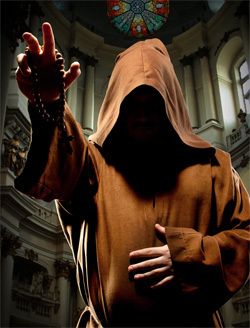
Everlasting Punishment

Fear of suffering eternally in Hell should move us (Jud 1:22-23) to seek the Lord earnestly, striving to enter the Way (Lk 13:23-24), until we know we have eternal life. (1Jn 5:13) The infinite cost of failure here makes any other outcome entirely unacceptable to the rational soul.

But is Hell, the second death, actually eternal? What if, as some teach, Hell has an explicit finality to it, where souls don’t suffer forever but are rather extinguished, annihilated, such that they cease to exist? Wouldn’t that be more consistent with a loving God?

Annihilationism is the claim that as the wicked are destroyed (Mt 10:28) they cease to exist, that spiritual death is final and complete, an eradication of body, soul and spirit, producing a state of non-existence. The motive is to frame God as more reasonable and compassionate when eternal torment is not perceived to be justifiable. (Ro 11:33) After all, how could a loving God torture souls eternally? 

To begin, observe that we can destroy something without annihilating it, say, by smashing a computer or a car and rendering it inoperative, incapable of fulfilling its intended purpose, forcing its components into an altered, unusable state.

Similarly, in death (separation of spirit and soul from body) spirit, soul and body continue to exist; none are annihilated. (Lk 16:22) So, verses including death and destroy do not, in themselves, imply Annihilationism.

Further, Annihilationism assumes sin has a finite degree (making infinite punishment unjust) and no benefit in eternal torment (making it unnecessary). But if Man’s unchecked sin is indeed infinite, in both intensity and duration, and if eternal suffering would bring glory to God, prompting worship in the righteous by uniquely revealing the nature of both God and Man, then Annihilationism is problematic. To verify this, let’s search the Scripture.

The Word states, as clearly as anything can be stated, that most souls will suffer consciously for eternity. (Re 14:11) This is not surprising, since we all, when left to ourselves, love darkness rather than light, because our deeds are evil. (Jn 3:19) This is deeply offensive and dishonoring to God. What should He do about it?

Conventional teaching has been that God angrily casts the wicked into a furnace of fire (Mt 13:42), consigning them there forever because they did not believe on Him in earthly life. (Jn 3:36) This punishment seems so harsh that many struggle to understand how this could possibly be consistent with God’s love and mercy, even if we see it in Scripture. Can anyone truly deserve such an end?

How can God impose this kind of fiery punishment for eternity and yet be loving and just? It is impossible to rightly understand these kinds of things without the proper context; as with many other theological problems, the resolution lies in a full comprehension of the nature of Man.

Everlasting, infinite punishment would only be unjust if the wicked were not infinitely so, if their rebellion were finite in either intensity or duration. Yet, Annihiliationism would explicitly hide this reality from us, such that we could never experience the timeless nature of either God or Man. But isn’t this God’s explicit purpose in Creation, to reveal and glorify Himself? (Ro 9:22-23) If so, how then might eternal punishment reveal and glorify God?

When God has suffered the indignity of our sin long enough, suppose all He does is simply unveil Himself (Is 25:7), showing us all Who He is and what He is like, unfiltered, exactly as He is. (Re 20:11) This will distill every place in the universe down to only one: the immediate presence of Almighty God. Infinite depravity will then begin to fully and intimately engage with infinite holiness, justice and love.

This simple unveiling of God changes everything. Whatever is in God and of God is fulfilled and completed (Col 2:10), home at last, while all outside God is incapacitated (Mt 15:13), shaken to the core (He 12:27), unable to function as designed: destroyed.

As this climactic event unfolds, a permanent standoff develops: the wicked remain opposed to God and at enmity with Him (Ro 8:7), while God remains infinitely holy, just and loving. These two natures are entirely irreconcilable; they cannot abide in harmony together, not even a little bit. Each side is absolutely intolerable to the other (Pr 11:20), and they clash with unfathomable violence and intensity. God’s indignant fury fills the wicked with terror (Na 1:6), yet there is no place to hide. The damned begin to suffer the real, ultimate consequence of their rebellion, destroyed by the very glory of the God they despise (2Th 1:9), the inevitable result of their own willful choices and nature.

Since God does not change (Ja 1:17), the only way this stalemate will ever end is if the wicked find it within themselves to repent and turn to God (Je 13:23), otherwise their punishment will indeed be everlasting (Mt 25:46), infinite in both degree and duration, according to their own nature. (Is 33:14)

So, as the wicked stubbornly continue in their unbridled rebellion, drowning in inextinguishable holy fire (Mk 9:43-44), they put their hatred for God on universal display (Ps 21:9), permanently showcasing themselves before God’s throne for the righteous to observe and contemplate. (Is 66:23-24) They are held by the cords of their own sin (Pr 5:22), in perpetual shame and everlasting contempt. (Da 12:2)

In this state, what should God do? Must He annihilate His enemies in order to be loving and just?

What if the holy arms of a loving God remain forever open (Ro 10:21), even to those in Hell (Re 22:17), offering mercy and pardon to any who will repent and turn to Him? (Is 55:7) And what if we begin to observe, in age after incredible age, that the damned will never return to God (Ps 81:15), not a single one (Ps 14:2-3), no matter what immense suffering their own relentless, stubborn blasphemy (Re 16:9) continually draws down upon their own heads? (Pr 27:22) If God ever does do such a thing, and the wicked play their hand as predicted, who could ever rightly complain against Him? (Re_15:4)

And if God did annihilate His enemies, how would we ever know how infinitely evil human nature truly is (Je 17:9), when God gives us up to fully pursue our own way?

Perhaps it is only then, as we actually experience eternity itself, that we will be enabled to fathom more and more the infinitude of our God (Ps 145:3), to glory in His infinite mercy (Ps 103:11), to experience the true nature of unregenerate Man (Ro 8:7), and agree that it’s inexcusable. (Ro 1:20) Perhaps this will enable us to begin to perceive the exceeding riches of His grace in His kindness toward us through His Son (Ep 2:7), as we explore the unsearchable riches of Christ. (Ep 3:8)

The eternal, infinite, willful, voluntarily self-imposed suffering of the damned will be a continual, tangible reminder of what we all are like without God, and what we all deserve. There will be no self-glory in His presence. (1Co 1:29) We will never forget what our Father has done for us. (1Jn 3:1)

articles    posts

None Good but God

When a rich young man approaches Jesus Christ to inquire about salvation, he begins by addressing Christ as “Good Master.” (Mt 19:16) Christ replies, as He often does, by questioning the young man: “Why callest thou me good? there is none good but one, that is, God.” (17a)

Christ systematically uses questions to help us think through what we’re doing so we can find the truth. This case appears to be no different. What is Christ leading the young man to discover?

Some might claim from Christ’s response that He’s rebuking the young man, admitting that He Himself isn’t good because He isn’t God. If this were true, then a rebuke would certainly be appropriate, but it presupposes that Christ is merely human. So, treating this as evidence of Christ’s mere humanity is classic circular reasoning, a logical fallacy.

If we observe carefully, Christ doesn’t actually assert that He isn’t good, or that the young man’s address is inappropriate; the mere question isn’t a condemnation. Christ simply affirms that no one is truly good except God; everyone else is sinful and depraved by nature. So, is the young man acknowledging the divinity and perfection of Christ, or is he flattering a sinful creature like himself? Christ’s challenge is to awaken: either Christ is God, or He isn’t good.

This question challenges us all, does it not? Many are tempted to describe Jesus Christ as merely a good man, a great teacher of morality, perhaps the greatest ever, and nothing more. Yet Christ Himself doesn’t leave us this option: He spoke in ways that were totally inappropriate for a mere man. (Jn 8:12, 19, 23, 29, 58)

So, we’re left to choose: either Christ is God, or He wasn’t good; there is no in-between. This is the most profound choice one will ever make, so choose wisely and fully, and then live accordingly.

Unless we find some clear fault in Jesus Christ, some obvious flaw in His character, it’s exceedingly unwise to presume He isn’t Who He claims to be. (Jn_14:6) A Man who foretells His own innocent suffering and death (Mt 16:21), and claims He will raise Himself from the dead (Jn 10:17-18), and then pulls this off — and actually does it — has given us more proof than we could ever need.

articles    posts

I Am Thy Servant

Those who wrote scripture claimed to be slaves of Christ, to be His loyal servants. (Ro 1:1) Sounds admirable, even holy, so should we be saying the same? Or is it a bit presumptuous for normal people like ourselves to do so? (Ps 119:125) How can we tell?

Well, a loyal servant is always seeking to please their master, never deliberately or carelessly disobeying, consistently doing their best to serve, looking for ways to make their master as happy as possible. Is that your attitude towards Christ?

If not, if there are areas in your life that are off-limits for God, where you are able to obey Him but are knowingly and deliberately refusing to do so as a manner of life, then, no, you are not a servant of God. This defines one as a child of disobedience. (Ep 2:2-3)

Or, are you simply living life for yourself, with little regard for whether you’re pleasing God or not? That’s not much different; those who live like this are Christ’s enemies. (Php 3:18-19).

Those who neglect to obey Christ don’t love Him (Jn 14:21), and those who don’t love Jesus Christ don’t belong to Him (1Co 16:22)

So, yes, every child of God should heartily claim to be a servant of Jesus Christ (Col 3:24), and this won’t just be empty words; it will express the reality of our daily lives. As we choose Christ as Master we are choosing to be His slaves, to gladly do for Him whatever He bids us do. (Lk 6:46) We’re members of Christ (1Co 12:27), part of His very Body; He’s living in and through us — we’re His hands and eyes and feet on Earth: called, chosen and faithful. (Re 17:14)

But it’s also true that our very best may not actually be very good at all. If we’ve not been careful to follow after holiness, purging our hearts and minds of lies and deception, much of what we offer to Christ may, in fact, be wood hay and stubble, consumed in the fire of God’s discerning judgement. (1Co 3:12-13) Pride, ignorance and arrogance can pollute everything we do, such that we’re largely ineffective for Christ.

Serve the Lord with fear, and rejoice with trembling (Ps 2:11), continually asking God to show us His Way (Ps 25:4), revealing Himself until we might see Him as He is (1Jn 3:2), and we’re transformed into His image. (2Co 3:18)

articles    blog

Be Strong

Weakness is something we all experience; it’s unavoidable. We’re born in weakness, and we’ll probably die in weakness. We get sick, injured, tired, eventually old. Weakness makes us feel vulnerable, unable to care for ourselves and others. Why would anyone deliberately choose weakness, choosing to be more vulnerable than necessary?

A couple possibilities are obvious. We might not love ourselves properly, abusing or neglecting ours minds, souls and bodies, thereby causing ourselves to deteriorate into weakness. Similarly, we might not love others, being resentful or envious, and might want to burden others with our physical, emotional or spiritual care. In any case, deliberately choosing weakness like this violates the 2nd Great Command, to love our neighbors as ourselves. (Mt 22:39) Love does not choose weakness, either for itself or others.

Yet, even if we love as we ought, we might confuse weakness with humility and find a little virtue in it, seeking to be inordinately dependent. Yet how could this be a virtue when God commands us to be strong? (1Co 16:13) Strength must be aligned with humility; we must strive to be strong and humble at the same time.

The Apostle Paul recognized that when he was weak in ways that were beyond his control, he found the strength he needed in God’s grace. (2Co 12:9-10) But though Paul gloried in scenarios that made him weak, he never deliberately weakened himself, or neglected to be as strong as he could possibly be. This is key.

Strength is the ability or power to act according to one’s potential; the closer we are to being able to live in our ultimate design, the stronger we are. This comprises the physical, emotional and spiritual dimensions of our being. To willfully neglect strength in any area of our lives is to despise our intrinsic design, our value, our Creator’s benevolent purposes for us. (Col 1:11)

God has designed us such that if we obey Him in exercising ourselves (1Ti 4:7), prayerfully and wisely pushing our current limits to try to improve (2Pe 1:5-7), we will grow (1Ti 4:8) and He will gird us with strength. (Ps 18:32) Every part of our design is like this; we just have to be willing to discipline ourselves and honor Him, balancing our lives to care for ourselves so we can live according to His calling and election in us.

articles    posts

To His Own Master

Scripture is perfectly precise; it isn’t overly specific, nor is it inappropriately vague. The detail God has provided is both necessary and sufficient for us; we must not add to it, nor take away from it. (De 4:2)

Yet there are a great variety of circumstances in which we might find ourselves, and a body of law which explicitly detailed how to act in every conceivable setting would be enormous, unthinkably vast, anticipating the impact of undeveloped technologies and innumerable cultural/familial complexities. Composing such a paint-by-the-numbers standard is evidently untenable as we consider the great variety of possible cultural and societal forms that might evolve across time.

Even so, all we need to be fully equipped to please God in every circumstance of life is provided us in the Tanakh, the Old Testament. (2Ti 3:16-17) We may derive from its precepts how God would have us act in every scenario we could ever encounter. It is miraculously precise in this regard, a living Sword, discerning every motive and intent of our hearts. (He 4:12)

So, in extra-biblical matters, which are by definition beyond the scope and obvious spirit of the text of Scripture, we are required and encouraged to use our own judgement and understanding as to how best to follow God, discerning His way for us through the precepts embedded in His Word (Ps 119:104), which He must help us understand (Ps 119:27) as we meditate on them (Ps 119:15) in the Spirit. (1Jn 2:27)

Each of us may, indeed, being at varying points in our journey after God, see things a bit differently from those around us; this is both expected and healthy. God does not want us to blindly defer to others in these kinds of things by failing to seek His wisdom and discernment for ourselves, but to maintain a sense of individual responsibility to walk and to please Him. He tells us to be fully persuaded in our own mind (Ro 14:5), and to be happy in the freedom to obey according to our own conscience. (Ro 14:22)

This kind of spiritual autonomy and individuality does not promote lawlessness, where everyone’s selfishly doing what’s right in their own eyes (De 12:8) in spite of what God says, justifying absolutely anything they like. (Pr 21:2) Such is the way of the world. (Pr 30:12) This kind of liberty only works well in communities of saints, who delight in God’s Law as He is writing it in their hearts.

Neither should we permit our individuality to make us unteachable, disinterested in the insights, wisdom and challenges of others. (He 10:25) It is our great privilege to edify one another, seeking the living Christ in each other as we help each other follow Him. (1Th 5:11) This is the very foundation of spiritual community. (1Co 14:26)

And, to be certain, there are clear guidelines for this kind of spiritual liberty; we must not allow it to become a stumbling block to our weaker brothers. (1Co 8:9) When a brother or sister doesn’t have a mature understanding of God’s Way, and would be tempted to violate their untrained conscience through our example, walking in such liberty violates the law of love and sins against Christ Himself. (1Co 8:12) Further, insisting that others follow our particular understanding when seeking practical consensus in community is likewise stubborn uncharitableness. In such cases, deferring to others, especially the elder and more experienced, is simply wisdom. (Ep 5:21)

The dangerous alternative to God’s design here is to impose universal compliance in matters which God has not clearly specified, effectively adding to His Word through man-made tradition, which subtly — yet inevitably — corrupts our worship (Mk_7:7) and turns us from the truth. (Tit 1:14) It elevates a select group of men above the brotherhood into a place of unhealthy spiritual authority over others, oppressing the saints into delegating their responsibility to discern the optimal application of God’s Word for themselves to these select few. This is entirely contrary to God’s design for our spiritual life.

To be healthy in God, we must each retain a sense of individual accountability to God as our own Master (Ro 14:7-8), and encourage others to do the same. (Rom 14:4). We’re each individually responsible for how we live before Him; if we’re in any kind of error (Ja 1:16), or are misapplying God’s Word in some way, it is no one’s fault but our own.

The head of every man is Jesus Christ (1Co 11:3); we are to be looking unto Him as our Example in every facet of our lives (He 12:2), delegating no step of this precious, eternal walk to anyone else. (1Pe 2:21)

articles    posts

Give Me this Power

Simon was a sorcerer, using witchcraft to promote himself as a godly man (Ac 8:9-11), until he believed on Christ and was saved. (13) But Simon’s thinking about the nature of spiritual power was still off, and it immediately got him into trouble.

When Simon observed the Holy Spirit falling on people, as Peter and John prayerfully laid hands on them, he offered to pay the apostles for this capability. (Act 8:18-19) But Peter rebuked Simon sharply (Ac 8:20-21) — Simon still had the witchcraft perspective: that we obtain spiritual power via ritual, not relationship.

This is the essence of witchcraft: trying to harness spiritual forces by following a formula or technique. “If I say in Jesus’ Name when I pray then God will answer me.” “If I pray the rosary 10 times and say 20 Hail Mary’s then God will forgive me.” “If I spend X hours in prayer then God will fill me with the Holy Spirit.” “If I stop thinking and start babbling then God will give me supernatural tongues.” All examples of the spirit of witchcraft, treating God like a machine rather than a Person.

Yet spiritual power doesn’t work like this. We don’t get our prayers answered by praying a lot, or by following a formula. (Mt 6:7) God answers prayer as we abide in Him, saturated with His word (Jn 15:7), praying according to God’s heart and will (1Jn 5:14-15) by faith. (Mk 11:22-24) God gives spiritual gifts according to His purposes (1Co 12:11), not to those with the right technique.

Seeking spiritual power apart from God Himself is actually very dangerous business; it’s wickedness that springs from bondage to iniquity. (Ac 8:22-23) The enemy lures us through our discontent, through lust for power and significance, in order to counterfeit God’s gifts in us, so he can wreck havoc in our lives, and in the lives of others, while we’re trying to exalt ourselves. It may seem spiritual on the surface, but it won’t be love, and it will be worse than nothing. (1Co 13:1-2)

Seeking spiritual gifts over the Giver Himself is to miss all. When we rightly understand God we’ll be perfectly satisfied in Him. Like Simon, we may not yet be content in God’s love and forgiveness in Christ, and that He’s given us particular gifts and callings according to His purpose. We may not yet know unspeakable joy in God, how to feed in His majesty. In our unrest, we may stoop to trying to impress others with our pseudo-spirituality, or to trying to manipulate circumstances for our convenience rather than waiting on God to glorify Himself.

Fulfillment and peace is only found in humbling ourselves under the mighty hand of God, enjoying every moment as His perfect gift, casting all our care upon Him, knowing He cares for us. (1Pe 5:6-7)

articles    posts

Corrupt Communication

Of the abundance of our hearts we speak, whether for good or evil (Lk 6:45), so taming our tongues is taming our hearts, which is no small thing. (Ja 3:8)

Yet we’re commanded to let no corrupt communication proceed out of our mouths, only that which is edifying, ministering grace. (Ep 4:29)

Pure communication is more than just telling the truth; it’s speaking truth in love – for the benefit of both ourselves and others. (Ep 4:15) It’s refusing to demean others, or ourselves, or to posture or manipulate or control, or even simply to please and entertain. (Ga 1:10)

When we speak inauthentically, falsely, we re-wire our own spirits and minds, diminishing our character and weakening our inner man (Jon 2:8), corrupting our spiritual, mental and emotional constitution. (Pr 5:22) It’s then easier to speak more lies (2Ti 3:13), continuing to blur our own perception of reality (Ep 4:18), until we’re blind and numb (1Ti 4:2), having no clue where we are. (Pr 4:19)

As JEHOVAH God spoke Jesus Christ, the Logos, the divine Word (Jn 1:1), Truth itself (Jn 14:6), to bring the universe into existence out of nothing (Col 1:16), we also, made in the image of God, continually transform the chaotic potential before us into a present reality, both for ourselves and others. (Pr 18:21)

When we speak the truth in love, carefully articulating reality as well as we can, we create the most beneficial order out of the chaos, and transform the potential of the future into the best reality that we can. When we choose anything less, though arrogance or carelessness, we use this incredible, supernaturally empowered capability (Ja 3:6) to create something twisted, broken, corrupt. Whatever we do thus create with our words is etched into the very fabric of history itself (Re 20:12), indelibly and permanently for all to consider (Lk 8:17): it can never be undone.

Let’s be asking God to make us observant, aware of our speech, and any corruption in our words (Ps 119:29), which weakens and pollutes our souls, harming ourselves and those about us. Let’s weigh our words, measuring them, testing them (Job 12:11), fashioning them with purpose and deliberation and dignity. (Ec 5:2)

Let the Word of Christ dwell in us richly in all wisdom (Col 3:16), permeating our spirits, so that our speech will be Him living through us, speaking spirit and life anew by us (Jn 6:63), creating new reality with Him as we go, word by word; we will give account for every single one of them (Mt 12:36), and they will either justify or condemn us. (Mt 12:37)

Let the words of our mouths, and the meditations of our hearts, be acceptable in God’s sight, our Strength and our Redeemer. (Ps 19:14)

articles    posts

I Hope In Thy Judgments

There are only two orientations from which we might view God and His Law: distrust and hope. We either believe God is good, and therefore that His decisions, evaluations, ways, laws and judgments are perfectly righteous and just (Ps 119:128), and thus we delight in God’s laws, and expect perfect goodness to come from obeying them, regardless of appearance (Ps 119:75), or we distrust God in some way, and expect His ways might be less than optimal, that we might fare better apart from Him.

The former view aligns us with reality, the latter postures us as the ultimate judges of God and of His Word (Ja 4:11), of Being itself, and thus aligns us with lies, darkness and deception. (Pr 4:19)

So, the Psalmist can ask God to keep him in the way of truth because he has maintained a posture of hopeful expectation in God’s judgments (Ps 119:43); he is trusting God in the face of suffering and injustice, hoping in God’s Word (Ps 119:147), trusting God will reconcile all things, and hasn’t set himself up as the judge of Being.

The corollary is that the more we posture ourselves as judges of Being, disdaining God’s purpose in Creation, questioning God’s wisdom in allowing evil and suffering in this world, the more we forfeit our access to and alignment with the truth.

Trusting in the goodness and love of God is a process, growing in the grace and knowledge of God. (2Pe_3:18) Casting ourselves upon God, let’s be asking Him to give us this understanding (Ps 119:34), making us understand the way of His precepts (Ps 119:27), and inclining our hearts unto His ways. (Ps 119:36) And let’s ask in faith, nothing wavering (Ja 1:6), knowing God is pleased to satisfy those who hunger and thirst after righteousness. (Mt 5:6)

articles    blog

God Is Not Mocked

We’re constantly making choices, moment by moment, in a continuous flow of sowing and reaping. A universal law governs this: whatever we sow, we reap. (Ga 6:7b) If we invest primarily in our physical, temporal nature, in our own comfort and pleasure, we reap corruption and death (Php 3:18-19); if we choose life and walk in the light as a manner of life, we reap everlasting life. (Ro 2:6)

The law of sowing and reaping: we reap what we sow, we reap more than we sow, and we reap later than we sow. It’s a universal truth; no one escapes it, not even through the Gospel. So, the apostle Paul warns us: “Be not deceived, God is not mocked: for whatsoever a man soweth, that shall he also reap. For he that soweth to his flesh shall of the flesh reap corruption; but he that soweth to the Spirit shall of the Spirit reap life everlasting.” (Ga 6:7-8)

So, how does this work in Christ? When God forgives us, does He deliver us from the consequences of our choices? No; even those in Christ are subject to this law: no one is exempt. (Col 3:23 -25) Why must this be?

God chastens and scourges every child He receives (He 12:6) to break the pattern of selfishness and disobedience, and work righteousness in us. (He 12:10) God’s law is for our good (Ro 7:12), and when we break it, or sin, this is bad for us. God is intent on delivering us from the power of sin as well as from its penalty; so, if we’re sowing in the wrong place, God will often use this law of sowing and reaping to help straighten us out. The natural consequences of our choices are often our best teachers.

Certainly, God is merciful to all of us (La 3:39): we never reap the full consequences of our sin in this life. (Ps 103:10) For those who fear Him, His mercy is infinite. (Ps 103:11)

But those who commit themselves to a life of sin, sin of any kind, show themselves to be alienated from God, subject to His wrath and indignation (Ro 2:8); it reveals that they’re not God’s children. (1Jn 3:9) God transforms His elect such that they live to please Him. (Ep 2:10)

Thinking anyone can sin without consequence is to deny the justice of God, making a mockery of His dignity and His eternal Word. It makes Him out to be a liar. For anyone who tries this, it will not end well. God does not tolerate being mocked like this; His fiery indignation will silence every rebellious tongue, terrify every arrogant heart, and devour every adversary. (He 10:27)

Let’s serve the Almighty with fear, and rejoice with trembling (Ps 2:11), working out our deliverance from sin by sowing in truth unto obedience.  (Php 2:12)

articles    blog

Sound Wisdom

I love Jordan Peterson (JP) – like the father I never had. His book, Twelve Rules for Life, is filled with sound wisdom, godly instruction – things I wish my father’d taught me. (Pr 3:21)

In his straightforward, brilliant, humble manner, JP’s helping me understand fundamental life principles, things I wish I’d been taught when I was young, and had been able to teach my kids. It’s priceless. (Pr 4:7, 12:1)

JP isn’t a Christian, not just yet, doesn’t even claim to believe in God; he’s a man who’s struggling to find the truth in the fear of a God Who might exist. If what he’s found so far is any indication, he’ll be a believer before he’s done. He’s seeking and knocking like no one else I’ve seen; he’ll find. (Mt 7:7-8)

Below are his 12 rules, with some summary notes and supporting scriptures.

  1. Stand up straight with your shoulders back. Be as strong as you can be, in mind, body, soul and heart. (1Co 16:13) Our nervous system responds differently when we face difficulty voluntarily rather than as a victim. There’s no virtue in self-imposed weakness. Individuals can take down empires, change the world; one who stands for truth in love cannot be defeated. So, stand! (Ep 6:13-14)
  2. Treat yourself like someone you are responsible for helping. (Ep 5:29) People take better care of their pets than themselves. Self-hatred/disrespect/unforgiveness is inconsistent with God’s love for us. Act like you’re your own best friend, think of your future self as someone you need to care for.
  3. Make friends with people who want the best for you. (Pr 13:20) People who don’t want the best for you aren’t your friends. Not only can you separate yourself from them: you should. Set proper boundaries; seek out people who’ll help you be your best self, and be that kind of friend to others.
  4. Compare yourself to who you were yesterday, not to who someone else is today. (2Co 10:12) Make daily incremental changes in your life, towards a goal of perfection (Php 3:12-14); compound interest is at work, and works both ways.
  5. Do not let your children do anything that makes you dislike them. (Ep 6:4) What I wish I’d heard as a young parent! This is Dare to Discipline on steroids, with a nuance that’s both encouraging and unarguably wholesome.
  6. Set your house in perfect order before you criticize the world. (Mt 7:5) If we can’t set our own house in order, what business do we have trying to control or manipulate anyone else? People and social systems are much more complex than we realize, and we can easily wreck havoc with simplistic ideas. Humility applies wisdom first at home, verifying its utility through experience.
  7. Pursue what is meaningful (not what is expedient). (Mt 6:33) Life isn’t about happiness, it’s about purpose. Find your path and walk in it.
  8. Tell the truth – or, at least, don’t lie. (Ep 4:25) When we lie, we corrupt our own ability to perceive and interpret reality. There is never a good reason to do so. Speaking the truth in love always brings habitable order out of chaos. Articulate the truth in love as well as you can, to yourself and to others, and it clears your mind and spirit to see even more truth.
  9. Assume that the person you are listening to might know something you don’t. (Ja 1:19) Don’t be gullible, yet recognize you don’t know it all. (1Co 8:2) Be willing to learn from anyone and everyone.
  10. Be precise in your speech. Speech conveys information, precise speech does so efficiently, requiring less time and effort. It is a way of honoring others, loving them as ourselves. Anything less is unrefined, tainted, corrupt.  (Ep 4:29)
  11. Do not bother children when they are skateboarding. “The spirit that interferes when boys are trying to become men is no more friend to Woman that it is to Man. It will object, just as vociferously and self-righteously, when little girls try to stand on their own two feet. It negates consciousness. It’s anti-human, desirous of failure, jealous, resentful, and destructive. No one truly on the side of humanity would ally him or herself with such a thing.”
  12. Pet a cat when you encounter one on the street. Why is there so much evil and suffering in our world? It is the price of being, of freedom, of growing, and limitation. Pay attention to the intermittent rays of light sprinkling down into a suffering world. Enjoy them, and be reminded that the wonder of Being itself makes up for the ineradicable suffering that accompanies it.

articles    blog