Once we perceive that Torah is the universal law of God’s kingdom (Mt 5:19) we begin to wrestle with how to apply it where most of us live, in non-Torah observant cultures. Instruction related to this context can be quite insightful.
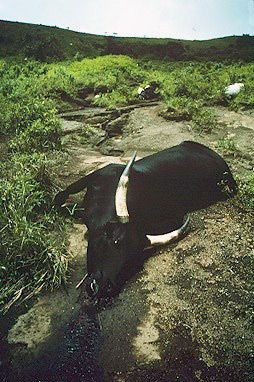 For example, God tells us not to eat an animal which dies naturally, on its own; we should give to the stranger living among us so he may eat it, or sell it to an alien, an outsider, for we are a holy people unto Jehovah our God. (De 14:21a) Exploring God’s heart here guides us in our application of Torah today. (Ps 119:18)
Firstly, note that livestock were very valuable in ancient Israel; losing an animal unexpectedly from the flock was a significant loss, comparable to $1000 today; wasting it entirely might well have been offensive to those new to Torah, especially if they were in need; though freshly slaughtered meat was preferred, carrion was not forbidden in other ancient cultures.
We now know animals which die naturally are not ideal for human consumption (in most 1st world countries it’s actually illegal to sell meat from an unhealthy animal or one that is not properly slaughtered), but the science was unknown at the time; it was an act of faith that could easily have been misunderstood by those outside the covenant community. And God evidently does care about such things (Ex 32:12); He is careful to avoid needlessly offending the ignorant and the weak, or giving them any cause to resent His ways. (2Co 8:3)
In particular, the stranger, being new to Torah and a bit vulnerable while transitioning from another culture (De 24:19), may perceive needless waste in discarding such provision and might easily become offended or disheartened by it, especially if they are in need. If the animal is discovered promptly, it is likely still of at least mediocre quality, not dangerous to consume, and considered a substantial benefit and blessing to the poor. And those passing through the country, entirely unfamiliar with and/or disinterested in Torah, might very well appreciate the extra sustenance, even if it isn’t the highest quality.
Secondly, note that we are not required to pick up the dead animal and proactively take it over it to the stranger and offer it to them as a personal gift, as if we are encouraging or obligating them to accept our generosity, nor are we told to wave down the foreigner, advertise a bargain, and try to get them to buy it. The sense here might indeed be that the stranger hears about our loss, knows we are forbidden to eat it and comes over asking if they can have it; or the foreigner passing through gets the news, stops by and offers to take it off our hands. This does not mean we are encouraging them to eat it, just that we are not going to stop them from doing so if they want it. This then becomes a consume-at-your-own-risk opportunity, which makes all the difference in the intent of this command; rather than different standards of holiness for Jew and Gentile, this can be understood as a merciful, accommodating leniency (Mt 12:3-4) for those untrained in Torah.
The difference in the way the stranger and the alien are treated in the command is noteworthy; this may well be rooted, not in their Jew or Gentile-ness, but in their disposition toward and adoption of Torah, the civil law in Israel at the time. The stranger is evidently transitioning into a Torah-observant lifestyle and is likely in a more vulnerable state than usual. (De 14:21) If they feel the need and want to accept the risk, they may freely partake of it.
The foreigner passing through is also somewhat vulnerable, yet expected to be less interested in adopting Torah than the stranger living among us, so they are not given free access to the community safety net as are the stranger, fatherless and the widow (De 26:12), but they still get a fair price. It is as if God is providing a type of leniency in imposing this particular food law based on one’s interest in and proximity to Torah as a whole.
Consider the impact of such a transaction as it would likely have naturally unfolded. The Israelite, grounded in Torah community, testifies God forbids him the animal because he is holy unto God, so he must let it go if another wants it. The obvious implication is that the recipient is evidently not so holy to God, but this is of his own choosing and it should give him reason to hesitate: he is openly invited more deeply into holiness if he is interested. If he wants to partake of the animal, God won’t allow Israel to punish him for it, but if he has faith to pass on it in seeking a closer walk with God, so much the better. This wisdom avoids offense without encouraging sin.
God’s law is good for everyone and will eventually be imposed universally; until then most of us who are pursing Torah are doing so as a minority, apart from Torah-based community, struggling to understand how to apply it in complex circumstances. Imposing Torah on others outside of cultural norms, either directly or passively, is likely not the loving path.
God is evidently pleased to guide each of us uniquely in our journey as it pleases Him, without imposing everything upon us all at once. We are all at different stages in our understanding and face bewildering complexities at times; we must be patient with ourselves and others, finding balance, refusing to directly promote or encourage sin while patiently loving others through their non-compliance, praying God will work in them to seek Him as He wills.
You have a wonderful way of explaining Torah to us!!! Thank you for the insight and a fresh way of learning more of God’s love for His chosen people!!!
Thanks Connie! This passage has been a particularly challenging one for me since it is often used as a proof text to claim that God does not hold Gentiles to the same standard of obedience as Gentiles. It is important for me to harmonize this text with the idea that Torah is not a “Jew first” standard, but universally and equally applicable to all of us. It is the law of Love, and I don’t see myself inherently as a 2nd class citizen of God’s Kingdom.