Christian Zionism is a theological and political movement within Protestant evangelical Christianity that supports the existence of the state of Israel and the right of the Jewish people to occupy their national homeland. This might seem harmless enough, but it’s being blamed for significant loss of innocent lives and labeled a “brain virus” by popular Christian commentators. Why is this controversial and where should God’s people land on it?
Firstly, differences in the way we interpret scripture (hermeneutics) often lead us to different theological positions. While Zionism follows from a literal biblical hermeneutic, opposing viewpoints rely on a more metaphorical approach. Since Protestant Evangelicals tend to interpret the Bible more literally, they tend to align with Zionism. This should come as no surprise.
And while other interpretive frameworks may disagree with the necessity of a modern Jewish state, there doesn’t appear to be any convincing theological motivation, at least from the Bible, to actively oppose the existence of a Jewish state or to discourage Jews from settling there; theological attacks on Zionism are therefore evidently energized by other values and world views.
Secondly, the key dynamic in the ongoing Arab-Israeli conflict is evidently Dar al-Islam (“House of Islam”), the Muslim belief that once a territory is ruled by Islam it must always remain under Islamic control. This is not a fringe belief; it is rooted in mainstream Islamic jurisprudence. So, by definition, since the Islamic Ottoman Empire ruled this area for four hundred years, right up until the end of WW1, Israel can never make peace with serious adherents to Islam, with Iran and her proxies Hamas, Houthis and Hezbollah; eventually, Israel must either persuade Islamic fundamentalists to abandon their convictions, destroy them or be destroyed by them. There are no other options.
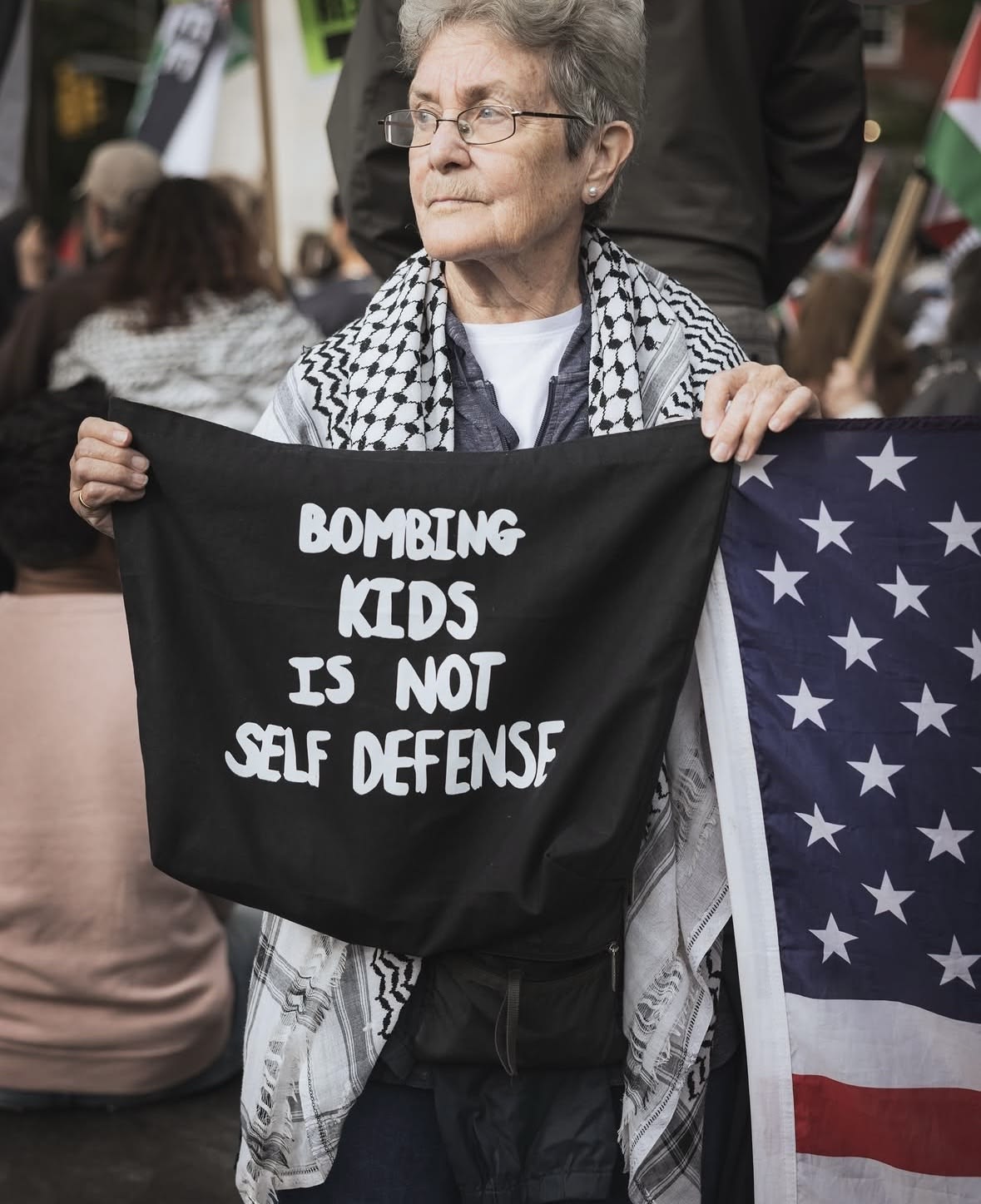 Additionally, Islamic ideology prioritizes loyalty to Islam above any degree of human suffering; the eradication of the Jewish state is commendable regardless of the means, including leveraging women and children as human shields to maximize human misery should Israel retaliate to eliminate ongoing threats. Failing to acknowledge this dynamic in the midst of on-going atrocities, blaming Israel for causing civilian suffering as they defend themselves, is an irrational double standard that places Israel in a no-win situation, but it conveniently energizes convincing propaganda.
Thirdly, we should also carefully consider whether the nation of Israel, the Jewish people of the Diaspora, actually has a right to occupy what was once their homeland. It is difficult to imagine a reasonable justification for failing to acknowledge this right.
For starters, Israel has soundly defeated her Arab enemies in every single war between them, armed conflicts started by Arab neighbors bent on annihilating Israel. Historically, territory conquered in war goes to the victor; the right to claim ownership of an area is based on the ability to defend it. There is no other consistent historical precedent to establish national sovereignty over a territory. This is how Islam acquired the disputed land in the first place.
Secondly, the land of Israel certainly is the ancient homeland of the Jews. This is well-established both archaeologically and historically. Arab occupation of the land during the Diaspora is irrelevant.
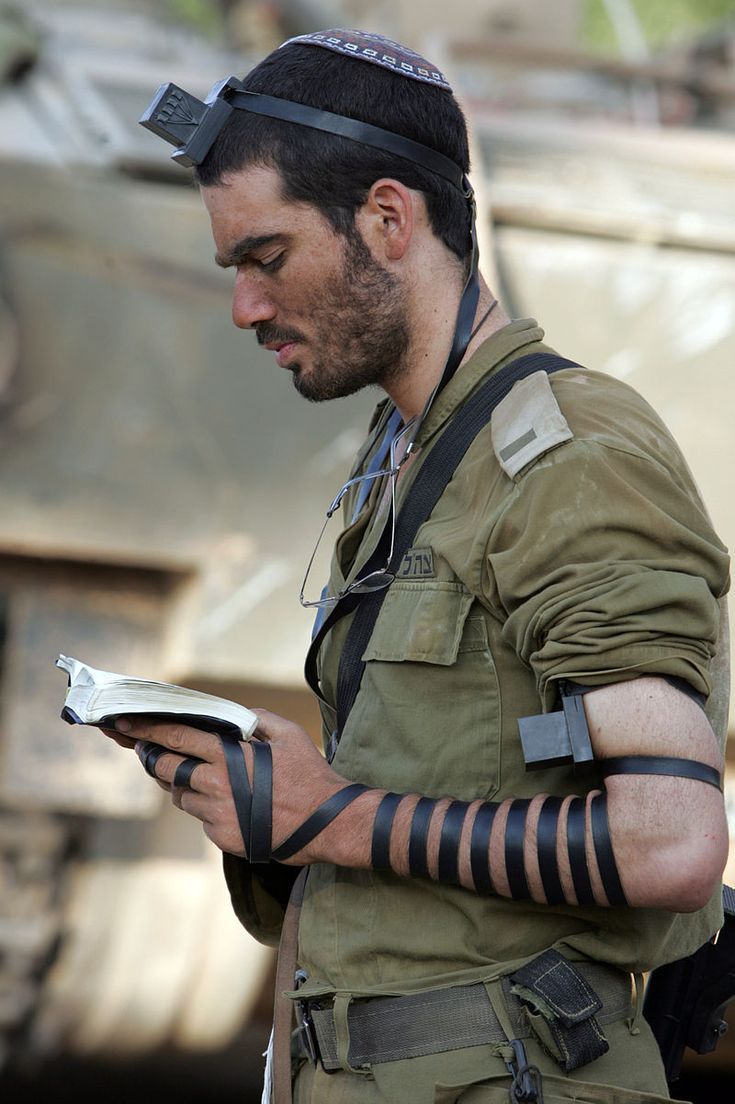
Finally, the fact that God Himself gave this land to the physical descendants of Abraham as an everlasting possession is apparent to those who take their Bible at face value. (Ge 13:14-15, 15:18, 17:8) He not only gave it to them, He also enabled them to conquer it step by step by supernaturally empowering them against far stronger enemies; they could never have done this on their own. (De 20:1-4) Anyone who has studied the Arab-Israeli wars in any detail will find the same pattern: God is the only explanation Israel has ever existed as a nation state.
I will never forget sitting in a military science class at the US Air Force Academy in 1980, when my professor said: “The US Air Force is the greatest in the world; I wouldn’t hesitate to put her up against any other nation…” And then he paused in the midst of the cadets’ patriotic cheering. He continued unexpectedly, “… except one: I would never turn the US Air Force against Israel. There is something about Israeli pilots that’s hard to describe. Though they’re young, inexperienced, flying inferior aircraft and aren’t as well trained, they consistently execute with a precision exceeding the technical design and capability of the aircraft itself. God Himself is with these people; make no mistake about it.”
Agree with the politics of the Jewish state or not; like their politicians or not; find the Jews themselves reasonable and deserving people or not; this is not the point. The land of Israel belongs to Israel: this is their homeland; they have no other; God Himself gave it to them for an everlasting possession, and God is now defending them and enabling them to live there again.
Regardless how unpopular Zionism becomes, let no child of God be found on the wrong side of eternal history here. God’s purposes in Israel are not yet complete (Ro 11:25-29); they will indeed be accomplished. Woe to anyone who dares to stand in His way.
Opponents of Zionism often site its roots in Pre-millennial Dispensationalism, popularized by John Darby of the Plymouth Brethren. This is a straw-man logical fallacy: Zionism is much more consistent with a completely unified view of scripture; it is weakened by Dispensationalism, not strengthened by it.
Mainstream Christianity’s opposition to Zionism is rooted in Replacement Theology, or Supersessionism, the belief that the Christian Church has replaced Israel in God’s plan as God’s chosen people and that He has no more special interest in or use for the Jewish people in general or the nation of Israel as a whole. This is based on a general misunderstanding of the Pauline epistles, taking them out of context and rejecting Torah as God’s moral standard for all mankind. This error (Is 8:20, Mt 5:17-19) has been inherent in Christianity as we know it today since its inception in the mid 2nd century. It’s a distinctly different religion than the Apostolic Christianity of Christ and His Apostles.
The fact that God’s eternal heavenly city is called New Jerusalem, that it has 12 gates named after the 12 tribes of the children of Israel, that earthly Jerusalem itself is “the city of the great king” (Mt 5:35), that the Gospel itself is “to the Jew first” (Ro 1:16, 2:9-10), and that the 144,000 Gospel witnesses hand-selected by God in the end times are evenly divided among the 12 tribes of Israel, each of which is explicitly named (Re 7:4-8) should tell us all we need to know about Supersessionism. The gifts and calling of God are without repentance. (Ro 11:29)
Tim,
Amen! Question, can a Christian bring judgment upon themselves by disrespecting the [purpose] of YHWH. Elohim. WHY do You think Christians are ignorant of what you share above? A friend of mine rented an empty synagogue at one time in Wichita Falls TX… A few lifetimes ago. I always enjoyed going down there [I had a key] and praying in the whole building by myself. It had become unused, not sure who he had rented it from.
stephen
I don’t know the details of what all Israel is doing in the region in the midst of this terrible conflict, and I would likely not agree with everything they are doing even if I did know the details.
I think it is OK to disagree with immoral behavior, but opposing Zionism itself seems to imply Israeli has no right to exist, that Israelis themselves have no rights, and that they should surrender to their Arab aggressors and remain at the mercy of those in other nations who do not value their way of life or heritage.
As far as I can see, opposing Zionism puts us on the wrong side of scripture. Many Jews definitely are enemies of Christ, and therefore enemies of His followers, but they are still beloved for the fathers’ sakes. (Ro 11:28-29)
Whether it is wrong to shoot through the human shield or not depends on a moral standard, which most of us make up as we go, if we are being honest. But if we are making up our own moral standard, so can Israel, so we don’t get anywhere like this. It isn’t a reasonable approach.
The question to ask then is, “What divinely revealed moral standard says harming a human shield in self-defense is right or wrong?” The biblical standard, which is the only moral standard which I find to have any legitimate claim to being divinely revealed, allows for killing in self-defense, regardless of unavoidable collateral damage, such that harm caused to the human shield falls on the one using them as a shield, not on the one defending themselves, unless there are other ways to protect oneself, which there generally isn’t in these contexts.
In the biblical standard, intent matters in evaluating moral failure, and it is clear in this context that the intent of the defender is not merely to kill the human shield but to prevent themselves and their loved ones from being killed.
The intent of the aggressor using human shields is evidently to maximize innocent human suffering should their victim try to defend themselves. In a biblical worldview, I think this is wicked and cowardly on a supreme level and should be condemned.
This is Grok’s analysis:
Evaluating the claim strictly from the KJV requires looking at biblical principles of self-defense, just war, the value of life, the responsibility of aggressors, and how God treats situations where the wicked endanger the innocent.1. The Sixth Commandment Does Not Prohibit All KillingExodus 20:13 says, “Thou shalt not kill.” In context, this forbids murder (unjust, intentional taking of innocent life). Scripture repeatedly distinguishes this from lawful killing in self-defense, capital punishment, or war commanded by God.Exodus 22:2-3 allows killing a thief who breaks in at night: “If a thief be found breaking up, and be smitten that he die, there shall no blood be shed for him.”
Numbers 35 and Deuteronomy 19 carefully distinguish murder from accidental or justifiable homicide, providing cities of refuge for the latter.
Self-defense is therefore not murder.2. God Commands and Regulates WarfareDeuteronomy 20 gives rules for Israel’s wars. Cities that refuse peace are to be besieged. Combatants are the focus, but the chapter does not prohibit all civilian deaths that result from the enemy’s refusal to surrender. God Himself sometimes orders total destruction of certain peoples (Deuteronomy 20:16-18; 1 Samuel 15) because of their wickedness.Psalm 144:1: “Blessed be the LORD my strength, which teacheth my hands to war, and my fingers to fight.”Nehemiah 4 shows the people of God building with one hand and holding a weapon with the other against those who sought their destruction.3. The Aggressor Bears Primary Moral ResponsibilityWhen an enemy deliberately places non-combatants in harm’s way, Scripture places the guilt on the aggressor, not on the defender who is forced to respond.Ezekiel 33:11: God takes no pleasure in the death of the wicked, yet He still judges them.
Those who lead their own people into danger or use them for evil purposes are condemned (see the prophets’ constant rebukes of wicked kings who brought calamity on their own nation).
The tactic of using human shields is itself an act of wickedness. The one who forces the choice between letting the aggressor continue killing or accepting collateral damage is the one primarily accountable.4. Intent and Necessity MatterBiblical justice weighs intent. Accidental death in the course of lawful defense is treated differently from deliberate murder of the innocent (Numbers 35:22-25). When a nation is under active attack and the attackers hide among civilians, the defender’s primary duty is to stop the threat. Scripture does not require the defender to accept unlimited casualties among its own people in order to spare those the enemy has deliberately endangered.5. Protection of the Innocent Is Required — But Not Absolute PacifismProverbs 24:11-12 calls for delivering those who are drawn unto death. A nation that fails to defend its own people against ongoing attack violates this principle. At the same time, Deuteronomy 20 and other passages show restraint is expected where possible (offers of peace, targeting combatants first).Summary Evaluation from the KJV AloneThe claim that “Israel ought not to kill human shields in self-defense” cannot be sustained from a plain reading of the KJV. Scripture:Affirms the right of self-defense and just warfare.
Places primary guilt on those who endanger the innocent by using them as shields.
Distinguishes murder from the regrettable but sometimes unavoidable results of stopping an aggressor.
Does not require a defending party to accept national destruction or continuous slaughter of its own people in order to avoid all civilian casualties on the other side.
Collateral deaths are tragic and should be minimized. They are not, however, automatically the moral equivalent of the deliberate murder of the innocent by the side that chooses to fight from among civilians. The Bible holds the aggressor who creates the situation primarily responsible.
Explore Numbers 35 cities of refuge
Examine Ezekiel 33 watchman duty
Omit Deuteronomy 20:16-18 Samuel 15
The claim there is no self-defense in the invasion of Gaza, that it’s a clear revenge campaign and that self-defense ended around October 9 when Hamas was beaten back to Gaza, is a bit shallow.
I agree that if a thug pulls out a gun on you, you can shoot back in self defense. It isn’t self defense to track down this thug 2 years later and bomb his apartment complex “for justice”.
But if the thug is part of a religious gang with the single purpose of destroying you, your family and relatives by any means possible, and they regularly shoot at you all from a distance so it’s hard to pinpoint them, and have been killing you for years as you go about your business, and have positioned their headquarters throughout their apartment complex and use their family members and neighbors as human shields whenever you try to stop them from attacking you, and if you happen to chase one of them off after he has killed a couple of your relatives, do you think you should just go back home and wait for them to attack again? How long are you going to keep doing that, letting them pick you apart from a distance? If bombing their apartments and killing their families is the only way you can figure out how to actually eliminate their constant threats against you and your family then, I agree this isn’t about justice, it actually is self-defense. They have given you no other way to defend yourself.
Beating Hamas back into Gaza doesn’t actually protect Israel; it just stops them until they decide to attack again or launch more rockets, etc. This has been the nature of the conflict since Hamas was created, and before that with the PLO, etc.
Check out Hamas’ original charter, why they exist: to destroy Israel via any means possible. Tough to make peace with an enemy like that.
In any conflict, the threat remains until the aggressor is eliminated or ceases to be an aggressor. Dar al Islam guarantees the conflict will persist until Hamas is completely and finally eliminated. If there is another way to eradicate Hamas other than invading Gaza, capturing or killing all of the members of Hamas, and all who support and encourage them, and destroying all of their infrastructure, I would love to discuss it. I don’t see anyone providing any other solution, short of Israel choosing to continue to let her enemies keep regrouping and attacking again until they are finally successful.
Awareness of Hamas’s 1988 resolution in this context is crucial. Here it is.
The original charter of Hamas is the 1988 Covenant of the Islamic Resistance Movement (Hamas), issued on August 18, 1988 (Muharram 1, 1409 A.H.). It is a formal 36-article document that sets out Hamas’s identity, ideology, goals, and methods.
Core Elements of the 1988 Charter
Identity and Ideology
• Hamas presents itself as a Palestinian branch of the Muslim Brotherhood (Article 2).
• Its way of life is Islam, and its goal is to raise the banner of Allah over every inch of Palestine (Article 6).
• It describes itself as a universal Islamic movement whose members are Muslims who have given allegiance to Allah.
Palestine as Islamic Waqf
• Article 11 is central: The land of Palestine is an Islamic waqf (religious endowment) consecrated for future Muslim generations until Judgment Day. No one has the right to renounce it or any part of it—not Arab states, kings, presidents, or organizations.
• Therefore, the liberation of all of Palestine is an individual religious duty for every Muslim (Articles 13–15).
Destruction of Israel
• The preamble states: “Israel will exist and will continue to exist until Islam obliterates it, just as it obliterated others before it” (quoting Hassan al-Banna, founder of the Muslim Brotherhood).
• The charter frames the conflict as a religious struggle against Jews and Zionism, not merely a territorial or national dispute.
Rejection of Peace Processes
• Article 13 explicitly rejects peace initiatives, negotiated solutions, and international conferences as contrary to Islamic principles. It declares that there is no solution to the Palestinian problem except through jihad. Such initiatives are described as a waste of time and a means of appointing “infidels” as arbitrators over Muslim lands.
Call to Jihad
• When an enemy usurps Muslim land, jihad becomes the individual duty of every Muslim (Articles 15 and others).
• The document calls for raising the banner of jihad against the “Jews’ usurpation” of Palestine and for spreading Islamic consciousness to support this struggle.
Other Notable Features
• It contains antisemitic language and conspiracy theories, including references to the Protocols of the Elders of Zion.
• It outlines roles for women, education, art, and social services within an Islamic framework subordinated to the goal of liberating all of Palestine.
• It presents the struggle as part of a long chain of jihad dating back to earlier Muslim fighters in the region.
Important Context
In 2017, Hamas issued a new political document (“A Document of General Principles and Policies”) that softens some of the language, accepts a Palestinian state on the 1967 lines as a “formula of national consensus” without formally recognizing Israel, and attempts to distinguish between Jews and Zionists. However, Hamas has never formally repealed the 1988 Charter, and many of its leaders and actions continue to reflect the original document’s maximalist goals.
The 1988 Covenant remains the foundational statement of Hamas’s original ideology: an Islamist rejection of Israel’s existence, the view of the entire land as permanent Islamic trust, and the insistence that only jihad can resolve the conflict.