The 2nd command in the Decalogue forbids making unto ourselves any image of God, or even any likeness of God. (Ex 20:4) It also forbids worshipping any object resembling or representing God, treating any physical likeness of God with special reverence as if it were God, to honor or respect it as an embodiment or depiction of God. (5) Any such image or likeness can become an idol: all who worship or revere the object as a god become idolaters (2Co 10:7), and have no part in the kingdom of God. (1Co 6:9-10)
 So, does this command forbid making a movie about Jesus to share the Gospel story? as a way to tell others about Christ, to try to reveal who He is, to help others understand what He is like and what He has done for us? Is it wrong to paint a scene of Jesus in the act of ministry? or suffering on the cross, dying for our sins?
Such artistic creations are indeed representations of God by definition; they depict Him explicitly, even though they’re not generally intended to embody God, or to be reverenced as if they are God, to take His place or supplant Him. So, we might be tempted to think it’s OK to develop such art. Yet God doesn’t provide any exceptions to His command: there’s no acceptable motive for creating any likeness of Himself.
Even though the intent is generally to point others to God, to make Him known more widely and effectively through engaging modes of communication, it doesn’t justify breaking God’s command. Similar to telling a story or giving an illustration, a picture, likeness or image can indeed be worth a thousand words, but are such images actually helpful? or do they do more harm than good?
Those who interpret such art forms as if they were God Himself are evidently immature and misguided, yet once an image of God is created, we have no control over how people will respond to it; those who are weaker in their spiritual understanding or disposition will invariably treat such images with special reverence or even worship, while the more mature may merely treat the object with elevated respect, deference or importance. In any case, disrespecting such objects is generally considered sacrilegious because of what they represent, and this is to be expected.
Any physical object associated directly with God, even in a cursory manner, becomes holy or sacred (Nu 16:37); the very name of God is holy and ought not to be abused, spoken irreverently or casually. (Mt 6:9) How much more careful then should we be with any supposed likeness of God? If it’s natural to treat it with reverence and respect, even if we don’t worship it, doesn’t this inform our application of God’s 2nd command? He clearly says not to create such likenesses, evidently, because He doesn’t want us awkwardly engaging with sub-optimal, inaccurate images of Himself.
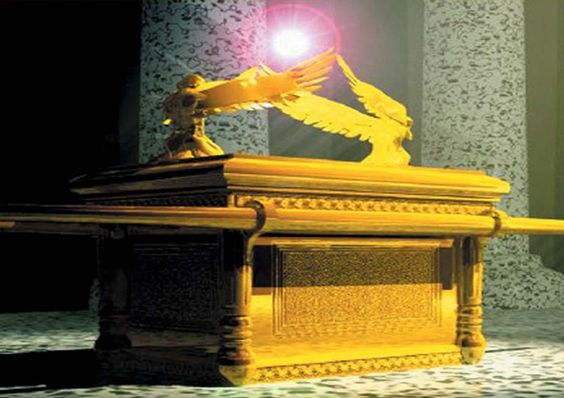
Consequently, when Father God reveals Himself, He always does so with symbolism: a burning bush, a bronze serpent, pillars of cloud and fire, a lamb, a lion, not with explicit likenesses or images. Between the cherubim in the Holy of Holies in the temple, the only place on Earth where Father God says He will dwell … there’s no image, only Shekhinah glory.
Even the Son of God Jesus Christ, when He came to live among us, may not have revealed His true appearance; He may well have dwelt among us incognito. He is the most beautiful Being in existence (Ps 45:2), yet He took upon Himself an unattractive form (Is 53:2), humbling Himself more than we can ever truly know. (Php 2:7-8)
Also in His glory, when John describes the Son of Man (Re 1:13-16), the detail is insufficient to completely inform the creation of an image; it’s still a bit symbolic and vague. We may imagine the remaining detail, but this is no stumbling block to anyone; it’s quite different than crafting an actual image.
Further, no matter how sincere, thorough and careful an artist is, no likeness or image can fully capture the infinitude of God — the work will misrepresent Him by definition, and very likely in significant, profound ways. Even images or movies about Christ seeking to publish His story and share the Gospel, even if they’re only quoting Him verbatim from Scripture, must guess at His disposition, attitude and general demeanor. But body language, facial expression and verbal tone are thought to be 70-90% of communication, and it’s certain that every attempt to embody these aspects of Christ will be imperfect and therefore incorrect, misrepresenting Him in some substantial way, and we truly have no idea how far off any of them are. The more I learn of God’s heart (Ps 119:136), the more I fear many of these works are seriously missing the mark, perhaps even presenting another Jesus, not the true Messiah. (2Co 11:4)
So, do such movies, pictures and statues really help us understand what God is like, so we may know and worship Him more effectively? If they did, if they were good for us, wouldn’t God have provided them Himself? (Ja 1:17) He could have done so, bypassing all the corruption and misrepresentation from well-meaning artists, but He not only didn’t provide anything — He carefully worded the 2nd command so as to explicitly forbid anyone else from doing so.
Perhaps Jehovah God gave us the 2nd commandment the way He did because there’s something deeper at stake here. We’re constantly trying to re-make God in our own image (Ps 50:21), to re-imagine Him after our own sinful likeness, rather than beholding His glory as He is revealing Himself so we’re transformed more into His image. (2Co 3:18) We do this instinctively, corrupting our own worship, being alienated from the life of God through our own ignorance of Him. (Ep 4:18)
The natural man will never receive God as He truly is (1Co 2:14), only what it wishes for Him to be. Since any physical object or artist’s rendition of God diminishes His glory per the artist’s own biases and limitations, attending to, serving or inappropriately focusing our attention on such works will necessarily diminish the quality of our own worship, our capacity to ultimately enjoy Him in Spirit and in Truth. (Jn 4:24)
God has given us His written Word to fully inform both our Gospel witness (Ro 16:26) and our worship. (Ps 119:7) When our eyes are enlightened by the Spirit through the Word, we really don’t need anything else. (2Ti 3:16-17)
The enemy’s always ready with a clever argument as to why it’s beneficial to violate God’s commands, but if we consider his reasoning carefully it always fails the sniff test. Are those who produce explicit images of God guilty of violating the 2nd command? Are they creating stumbling blocks for the weak? Are they, in fact, attacking the glory of God? I’m afraid they are, though God may use their works for good in spite of this. (Ro 3:7) Only God knows the heart, and He will sort it all out when He returns. (1Ti 1:13)