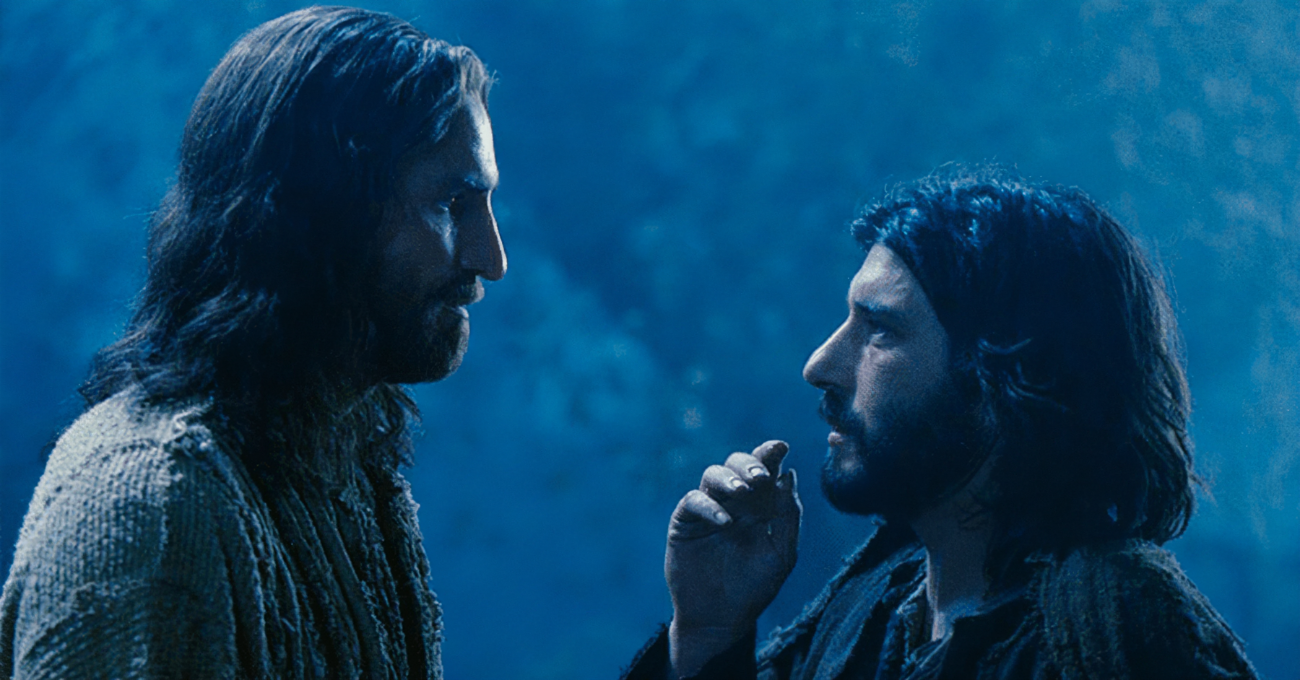
Dead Unto Sin

God says, “Reckon ye also yourselves to be dead indeed unto sin, but alive unto God through Jesus Christ our Lord.” (Ro 6:11) What does He mean?

When we’re dead we’re unresponsive; we don’t interact with the world or function within it any longer.

To be dead unto sin then is to be beyond its reach, no longer subject to its appeal, disinterested in its enticements, to say as Christ did, “The prince of this world cometh, and hath nothing in me.” (Jn 14:30) It’s natural to ask then, How might we attain to such a state?

Yet this is evidently the wrong question for the believer: God’s telling us we already have attained to this state; we’re to reckon this to be true, acknowledge it, and live accordingly. The right question to ask is then, How do I identify that part of me that’s dead to sin? How does that part of me live my life, and not the rest of me?

Paul identifies part of himself, the flesh, offering nothing good; it doesn’t equip him to do anything good he wants to do. (Ro 7:18) So, there’s a part of him which wants to obey God, which knows what’s right, an inward man which delights in God’s Law (22), which he calls his mind, and a different part (the flesh) which wars against the good part. (23)

So, we might think of ourselves as having a sort of dual personality, two different versions of us which behave very differently under the same conditions. (Ro 7:19) We might also think of a set of beliefs as a personality which embodies these beliefs; it’s a perfectly reasonable way to describe it. (Pr 1:20-23)

So, we might think of our flesh, the carnal mind (Ro 6:7-8), or the old man (Ep 4:22), as that body of lies to which we’re still clinging, either intellectually or perhaps emotionally or subconsciously, due to wrong teaching, being emotionally biased because of a wound or carnal desire harbored within us, etc. Whatever the root symptom, the underlying substance is the lie.

Putting off the old man, and being renewed in the spirit of our mind (Ep 4:22-23), is then to rid ourselves of these lies and to be transformed by the renewing of our mind (Ro 12:2), such that we’re progressively walking more and more fully in the Way, the Truth and the Life – Christ in us, the hope of glory. (Col 1:27)

Reckoning then is noting that all the lies we believe are terminal; each one has a unique death sentence pronounced over it. (Ps 1:6) We’ve no allegiance to it, no obligation to follow after it.

It’s also remembering there’s a part of us which already believes the truth, a part of us which is alive unto God (Ro 6:11): this is the life of Christ in us.

When we look for this part of us, asking God to enable us to recognize it, to realize that we believe the truth and experience our faith in Him, He does so. (He 4:16) We’re free to walk in the light with Christ, if we will. (Ro 6:22)

When we engage our will to walk in this new man (Ro 6:19), the spiritual man, the mind of Christ (1Co 2:16), Christ delivers us from the body of sin (Ro 7:24-25) so we can walk in newness of life. (Ro 6:4) We overcome, because greater is He that’s in us than whatever’s in the world. (1Jn 4:4)

articles  ♦  blog

Drawn Away

Is it a sin to be tempted? Evidently not: Christ was tempted in all points like as we are, yet without sin. (He 4:15) Then again, perhaps tempted can mean different things depending on who’s being tempted, and by what.

It isn’t a sin to be tested, merely to have sinful choices presented to us. It was in this sense Christ was tempted (Mt 4:1); He certainly had many opportunities to sin, to break God’s Law (1Jn 3:4), but He never did.

But we are tempted when we’re drawn away of our own lust and enticed. (Ja 1:14) Drawn away from what? From God, from holiness, from wisdom, purity and love. We are enticed, feeling the internal pull and attraction of sin drawing us away from the light into the darkness. This isn’t Christ (Jn 14:30): God cannot be tempted in this way. (Ja 1:13) The very suggestion of sin is repulsive to Him. (Ps 45:7)

We may not feel this is sin, to be drawn away from God and enticed; we may be confident that we aren’t in sin until our lust — the unlawful desire within us — conceives, giving birth in our hearts and minds to intent and will to pursue what’s forbidden us. After all, we’re only human.

Clearly, intending to break God’s law is sin as well (Ja 1:15a); that’s  taking disobedience to a whole new level, often resulting in outwardly sinful behavior, leading ultimately to death. (15b) Considering the consequences and long-term impact of our sin when we’re feeling tempted like this is a certainly a powerful deterrent. (1Co 6:18) This is wisdom, and the fear of God. (Pr 14:16)

Yet, by definition, being enticed by a sinful choice actually is sin if being in that state necessarily violates any of God’s laws. So, we might look at it this way: Can we be loving God with all our heart, mind, soul and strength (De 6:5), as we’re being drawn away from God? Or does being drawn away from God necessarily imply that we’re already, in some way, loving Him less than He deserves? When our soul is fully satisfied in Him (Ps 63:5-6), what can draw us away? (Ps 73:25)

When we aren’t in deep communion with God, feeding on the majesty, whenever we’re distracted, tired, bitter or wounded, that same old primal lie that God doesn’t quite satisfy, and that something else will, beckons. Lust can then draw us even farther away, our desires becoming more pronounced and powerful, because we’re not fully satisfied in God, we’re not pursuing and enjoying Him as we ought, we’re not loving Him with all of our heart, soul, strength and mind. That’s how we give place to the devil (Ep 4:27), offering him ground to work in us all manner of wrongful desire. (Ro 7:8)

We may choose to live our lives in unfulfilled passion, exerting a brute force asceticism in denying ourselves the pleasures of sin for a season. (He 11:25) This is certainly better than giving in to our lusts, yet there must be a better way. (Ps 63:3)

Perhaps if we seek (Mt 7:7-8), we can find the life of Christ rooting out the sin nature itself (Ro 7:24-25a), bit by bit, realigning our internal affections in God (Ro 12:2), cleansing us of the great lie in all its insidious shades and nuance, until we’re joyfully esteeming the unsearchable riches of Christ greater than any earthly pleasure. (He 11:26) Perhaps then would grace reign through rightesouness in us (Ro 5:21), and the world would not be so enticing. (1Jn 2:15-16)

articles  ♦  blog

Strong Delusion

audio

In his work, The God Delusion, Richard Dawkins asserts that belief in God qualifies as a delusion: a fixed false belief which persists in light of conflicting evidence. Atheists often exude this conviction, that any belief in God is blind superstition, confident that science, logic and reason are entirely on their side.

When we’re at fault, we may find ourselves projecting our own error upon others, and then judging them mercilessly. (Ro 2:1) We find it so with many atheists, Dawkins being typical.

Just how difficult is it to prove God exists? If we’re honest with the facts, it’s relatively simple.

Consider the claim that there are only two possibilities for the origin of the universe: Either [P1] God created it ex nihilo, or [P2] The laws of physics did.

The late Stephen Hawking chooses P2, positing that the laws of physics exist as creative forces independent of Nature. “Because there is a law such as gravity, the universe can and will create itself from nothing,” he writes. “Spontaneous creation is the reason there is something rather than nothing, why the universe exists, why we exist.”

The obvious flaw in P2 is that the laws of physics actually don’t exist: they are not creative forces, merely abstract concepts describing patterns we consistently observe in Nature. So, P2 is a delusion in the proper sense of the word: a claim explicitly contrary to science.

However, Hawking is so confident in P2 he offers no other option, making his claim an assertion of scientific fact. So, in his inestimable brilliance, Hawking ultimately leaves us with a very simple choice: Deity, or Delusion. He sides with Delusion; anything but Deity, no matter how absurd.

Perhaps the following are the only plausible responses.

[R1] Hawking is no expert in this field and should not be trusted. This is easily dismissed; Hawking was an eminently reliable authority on cosmology, knowing the valid options on origins and distilling them for us.

[R2] The above misrepresents Hawking’s claim. Also easily refuted with commonly available facts.

[R3] Persist in blind faith that P2 is a valid choice, merely one scientists can’t fully support just yet. The problem here is the fact that the claim explicitly contradicts all known science. Claiming we might eventually discover how something which does not exist could create everything which does exist – ex nihilo, from NOTHING — does contradict all we know from science. In this case, we haven’t any argument; it’s raw delusion: a refusal to consider any evidence for God at all. (Ro 1:20)

[R4] Admit atheism/agnosticism is irrational.

If we have already presumed there can’t be a god then we must confidently choose P2, and never P1, no matter what the data say. Though the heavens declare the glory of God (Ps 19:1), our presupposition blinds us to the obvious. This is the essence of delusion.

God will eventually send strong delusion upon all who don’t love the truth. (2Th 2:11-12) There may be thousands of poorly framed arguments for the existence of God, but this is not one of them. It only takes one to convince the honest soul. What say you: Deity or Delusion?

articles  ♦  blog

Keep the Feast

God tells gentile believers in Christ to keep Passover (1Co 5:7-8), the first of seven feasts in God’s annual celebration cycle. (Ex 12:2)

Since this command was initially given to a community living quite a distance from Israel, in an era when international travel was extremely slow and perilous, and since the prescribed location for correctly celebrating Passover is in Jerusalem, and since there’s no mention of them permanently relocating, the command implies there are valid ways to observe God’s feasts imprecisely, outside the Promised Land, apart from Levitical priests and the temple. Simply ask: which parts of each feast are we still able to keep practically within our current circumstances?

Believers scattered abroad throughout the nations can’t keep everything about these feasts exactly as prescribed, but this appears to be inconsequential in the overall scheme of things. God has embedded prophetic pictures and rich symbolism within the rituals of each feast (Col 2:17), and evidently intends to systematically edify us as we engage each other in celebrating them as well as we can. Mercy is more about the heart than the letter. (Ro 2:29)

For example, the Passover Seder has enabled Jews to celebrate Passover for centuries without the temple, a sacrificial lamb or convening in Jerusalem. It enables us to retain the spirit and overall benefit of the feast for ourselves and families as we recount our deliverance from Egypt, God’s provision of blood in the paschal lamb to deliver us from spiritual death, the bitter herbs reminding us of our being freed from bondage to sin and the world (Ro 6:22), and unleavened bread symbolic of God’s call to holiness. (1Pe 1:16)

Christ adds that the unleavened bread of Passover is symbolic of His body, and that the cup of wine traditionally taken after the meal is symbolic of His blood. (Lk 22:20) Thus, He further enhances the meaning of Passover, telling us to continue celebrating this particular feast in remembrance of Him. (19) So, Passover, which is The Lord’s Supper (1Co 11:20), is one key way in which we’re to remember Christ and what He’s done for us. (1Co 11:25)

Similarly, we can keep the feast of Firstfruits in celebrating Christ’s Resurrection (1Co 15:20), and Pentecost to celebrate harvesting souls in God’s eternal redemption plan. (Ac 2:1) It’s no surprise that Christ fulfilled all three of God’s Spring feasts in His first coming. (Mt 5:17)

The Fall feasts evidently await their fulfillment in Christ: Trumpets, Atonement and Tabernacles are likewise packed with precious insights into God’s Way, work, and eternal plan. There is vast wealth here, the riches of Christ, to be mined through prayerful and obedient celebration of God’s amazing feasts, even though we cannot do this perfectly.

Most all of what God calls us to enjoy in these celebrations does not require a priest or an earthly temple. As we delight in each one with what opportunity we have (Ro 7:22), we align with celestial hosts celebrating with God about the true tabernacle in Heaven. (He 8:2)

articles  ♦  blog

They Could Not Believe

When we present reasonable evidence for a spiritual concept to someone who believes differently, why is it so rare for people to grow and change?

When our assumptions or reasonings are flawed, people should point this out with a carefully reasoned position, especially when we invite them to do so and listen intently to their concerns. So, when people persistently reveal shallow, inconsistent, irrational reasons for unbelief this can be frustrating, until we consider the inherent nature of the carnal mind. (Ro 8:7)

Take for example the overwhelming historical evidence for the Resurrection of Christ. The proof is straightforward and unanswerably sound, yet it’s generally unconvincing to those who aren’t raised in church. It’s hard to fathom a more reliable testimony than the apostles have passed on to us. What does it take to convince people?

One might think miracles would help, but this is untrue historically: miracles never have convinced the masses. (Jn 12:37-38)) Neither has earnest, rational debate.  (Ac 6:10-11) There isn’t much left.

Evidently, our values determine what we notice, what we’re receptive to, and what we find credible. A temporal value system disvalues eternal things and obscures them, so Christ tells us to align our value system with God’s so we’ll be able to rightly value and perceive spiritual truth. (Mt 6:19-21) This is where we must begin: it’s the fear of God. (Pr 1:7)

When our eyes focus properly we’re able to see clearly (Mt 6:22), but when improper focus impairs our vision the light we’re seeing might as well be darkness. And if we’re mistaking darkness for light, thinking we can still see, we’re worse off than if we knew we were blind. (23)

Further, when we don’t love truth we open ourselves up to deception (2Th 2:10), inviting supernatural wickedness to further restrict our vision and perception. (2Co 4:4) No one imprisoned like this can overcome and believe on their own. (Jn 12:40)

Lack of love for the truth equates to love of the lie, which leads to making and receiving lies, which ultimately damns the soul. (Re 22:15) This disposition is evidenced in part by preferring Man’s praise to God’s, rendering us unable to perceive and receive the reality of His Son. (Jn 5:44)

Evidently, God must give us a love for truth and open our eyes in order for us to believe in and follow Him. (Jn 1:12-13) Without Him we’re dead, lifeless, oblivious to Him. (Ep 2:5) If we happen to find ourselves aware of Him, and of our need for Him, and if we’re willing to seek His face and submit to Him (He 11:6), this itself is the gift of God. (2Ti 2:25) If we pursue Him, He will give us the evidence we need and lead us into all truth (Mt 7:7-8), into Himself.

The blindness of the fallen nature is no excuse to be imprecise or irresponsible in our thinking, or in our efforts to reason with others. We should do our level best to present the truth as clearly and as articulately as we are able. (1Pe 3:15) Yet we must keep in mind that it isn’t the power and wisdom of our argument that will win the day, but the power of God. (1Co 2:5) He will enlighten those He chooses according to His pleasure and in His time.

articles  ♦  blog

Sound Speech

God forbids us from using words improperly, saying or writing anything that’s destructive or harmful, speech which isn’t edifying. He calls this corrupt communication, and says we aren’t to tolerate it within ourselves. (Ep 4:29) What He’s looking for is sound speech which shines under the strictest moral scrutiny. (Tit 2:8a)

Sound speech is speaking the truth in love (Ep 4:15), to move the hearer to a better place, springing from wisdom, knowledge and humility, encouraging others and ourselves in a godly way. Anything else is corrupt.

For example, if we say something arrogantly, proudly or maliciously it can’t be edifying (1Pr 2:1); this isn’t sound speech. If we’re seeking someone’s harm in an unrighteous manner, speaking ill of them (Ja 4:11), this can’t be helpful: it’s corrupt. (Ep 4:31)

If we speak simply to draw attention to ourselves, to exalt to boast or commend ourselves, this isn’t edifying. (Php 2:3) It may be edifying to point out our behavior and experience as an example or encouragement (Php 3:17), or to invite souls to rejoice with us in our accomplishments (Ro 12:15), or even to describe our faults and ask for prayer (Ja 5:16), but simply drawing attention to ourselves isn’t edifying. (1Co 13:4-5)

Certainly, no lie, false accusation (1Ti 3:3), or half-truth can be edifying because it seeks to hide the light from those who ought to know it (1Jn 2:10), and encourages them to remain in darkness. Even claims which might be true should not be stated as true unless we’re certain. Silence might be wisdom when speaking certain truths would not be edifying (Jn 16:12), but we should put away lying: whenever we do speak, speak only the truth. (Ep 4:25)

Also, we shouldn’t swear as a means of assuring others we’re telling the truth; that’s the way of lying. (Ps 119:29) No gradations are permitted in the Way of truth (30), everything we express must be completely and utterly aligned with what we know to be true. A simple Yes or No is sufficient when we’re walking in truth; anything less is corrupt. (Mt 5:34-37)

And what of exclamations, expletives, cursing and profanity? If we shall give an account for every idle word (Mt 12:36), how shall explain our use of these?Some seem harmless, but are they sound speech?

Using God’s name or title as any kind of expletive or exclamation is taking His name in vain, irreverently, not as intended, a violation of the 3rd Commandment (Ex 20:7), so it is corrupt. Similarly, cursing — invoking spiritual power to harm someone — is off limits. (Ja 3:9-10)

But what about words expressing anger, frustration, annoyance, surprise or even wonder? Expletives and exclamations, is this sound speech, or corrupt communication? A good test might be, “Do I see Jesus saying this?” (1Pe 4:11) In other words, can I say it in His name, on His behalf?” (Col 3:17) Does it glorify God? (1Co 10:31) Is it the most effective and efficient way to encourage or edify another? Is there a more precise way to express what I’m feeling or thinking? Is it something I need to express, such that I’ll be negligent and unloving if I don’t?

A general rule here might be: When in doubt, don’t. (Ro 14:23) Be swift to hear, but thoughtfully precise, selective and deliberate in speech (Ja 1:19), choosing words carefully, prayerfully and intentionally. (Pr 19:10) To the degree we don’t control our tongue, even when we’re surprised and excited, our religion is empty and pointless. (26)

And what of idle conversation, words filing the air just because we’re uncomfortable with silence? If it isn’t edifying, again, it’s  not sound speech, it’s corrupt.

And finally, speech which weakens us, deprecating words designed to lower or belittle ourselves — this also is corrupt, unloving to both ourselves and others. Perhaps we’re afraid of the strength of those about us, wanting to make ourselves small so as avoid abuse or oppression, or we may be looking for sympathy, or forgiveness, or nursing a deep father wound and lack that robust, healthy self-confidence which is unashamed of God’s design and gifting within us. Whatever the root of unhealthy speech, if it isn’t grounded in the dignity and love of God, it’s corrupt, profane and vain babbling. (2T 2:16)

The overriding principle is edification: does my communication honor all people (1Pe 2:7), treating all – including myself – with love, wisdom, compassion and respect? (Col 4:5) Is God at work within and through my words, not to control and manipulate, but to empower in godliness? Am I considering others, where they are and what they need, deliberately enabling them in a right relationship with God (Col 4:5-6), laying a good foundation against the time to come? (Mt 12:37)

This is the high calling (Php 3:14), for sure. I count myself to have apprehended (13) and press forward toward the mark. To master the tongue in sound speech and not offend is to be mature, able to properly discipline the entire body.  (Ja 3:2)

The ideal in Christ is sound speech that can’t be condemned, so when the adversaries come to accuse, they’ll have nothing to say (Tit 2:8), and then to hear God will say, “Well done!” (1Co 4:5)

articles  ♦  blog

In Six Days

Evolutionists assert that Earth is billions of years old, so we expect some to try to interpret Scripture to accommodate an old earth. How might they do so?

Primarily by allegorizing the Creation myth and considering the days of Creation to be geologic ages, making each day as long as we like.  The general pattern of a lifeless earth (Day 1), then plants (Day 3), followed by sea creatures (Day 5), land animals and finally Man (Day 6) seems to more or less follow evolutionary sequence. It’s called the Day-Age Theory.

Obvious problems include the fact that the planet itself is created before light (Day 1), Earth, light and plants (Days 1-3) all appear before the sun, moon and stars (Day 4), birds (Day 5) come before all land animals (Day 6), and God blessing the 7th Day to start an ongoing 7-day rest cycle based on Him completing Creation in 6 days. (Ex 20:11)

Further, Adam is said to be the very first man (1Co 15:45) and his life-span is stated explicitly (Ge 5:5), along with those of all the antediluvian patriarchs (8-30) in the lineage of Christ (Lk 3:36-38), placing Creation around 4000 BCE.

So, to be consistent, we can’t simply allegorize the Creation account in isolation, we end up corrupting the integrity of Scripture throughout; its authors evidently understood the Creation account literally: if they were mistaken, they weren’t inspired. If the Day-Age Theory had any real basis in scripture, it’s difficult to explain why it appeared so late in history, only in the last 200 years. The interpretation thus appears forced in order to accommodate recent, opposing scientific claims.

Another approach, the Gap-Theory, allows for a literal interpretation of the Creation account, yet postulates a large gap between the first two verses; between the creation of the planet (Ge 1:1) and it being found formless and void. (2) This view harmonizes nicely with most scripture while providing for any age of the earth we like. However, it’s also inconsistent with the Sabbath Command (Ex 20:11), and begs the question of whether an old planet with no light or atmosphere, no sun or moon or stars, or any life form whatever as we know it, helps much to square the Word with evolutionary claims. What’s the point then?

We all choose an authority for determining what’s true, and if we earnestly want to know the truth we should insist on having no contradictions in our world view, no inconsistencies. If we accept God’s Word as Truth, in it’s entirety (Ps 119:160), then we must try to interpret it consistently, and discount unverified scientific claims, such as evolution, which contradict it. (1Ti 6:20-21)

articles  ♦  blog

Make Friends

The parable of the Unjust Steward is challenging, putting it mildly. When Christ says, “Make to yourselves friends of the mammon of unrighteousness; that, when ye fail, they may receive you into everlasting habitations.” (Lk 16:9), is He saying befriend the wealthy so when we fall on hard times they’ll be there to rescue us?

The mammon of unrighteousness would be material things this unrighteous world values, tools for good and evil. They aren’t ours (Ps 24:1), so we’re all stewards, and like the steward in the parable (Lk 16:1-2) we’ll all be accused of mismanagement (Jn 5:45) and held accountable. (Ro 14:11-12)

So, we all find ourselves in a similar crisis: we’re flawed in fundamental ways, our record shows this and judgment is coming; we should prepare to make the best of it using every means at our disposal. Pass or fail, the consequences will be eternal. (Ro 2:6-11) In this predicament, Christ is telling us, “make friends.” In other words, live such that when Judgment Day comes those testifying in the heavenly court will be on our side, welcoming us into Paradise.

Consider that everyone who has ever lived will be present at this final Day of Judgment, and those we’ve impacted through our lives will be testifying about us (Ja 5:4), agreeing with God in how they view us, being for or against us. (Mt 12:41-42) Our own works will also bear witness (Ja 5:3), our every act testifying in heavenly court. (Mt 12:36) There will be no deception or partiality; if we’ve walked in holiness before God even the wicked will be forced to agree. (1Pe 2:12)

So, the kinds of friends we should be thinking about here aren’t those who’d pay our bills when we’re unemployed, but those who’ll be receiving us into everlasting habitations, standing between us and our eternal home, inviting us in or barring our way. We must keep short accounts (Mt 5:25-26) and manage our affairs with an eternal perspective. (Col 4:5) As the unjust steward wisely navigated his crisis to secure his earthly comfort for a season (Lk 16:8), Christ is calling us to holy intensity (Mt 5:29-30), striving to secure our eternal welfare. (2Pe 1:10-11)

As we steward earthly resources we’re laying an eternal foundation (1Ti 6:17-19), so let’s make it solid, grounded firmly in the Rock of our salvation (Ps 95:1), to withstand the blasts of God’s penetrating inspection. (Mt 7:24-25)

This isn’t salvation by works; we’re saved by faith (Ep 2:8-9), but our works do reveal our faith. (Ja 2:18) We show what we believe by what we do, so when our actions don’t align with faith in Christ it’s a faith issue (Lk 6:46), a peril of sobering consequences. (Ro 8:13)

To find healing we examine ourselves (2Co 13:5), confess our faults to those who are praying for us (Ja 5:16), and root out the lies which bind us. (Jn 8:32) Living this way doesn’t produce salvation – it’s the life salvation produces. (Ep 2:10)

articles  ♦  blog

Thy Word Is Truth

In seeking truth, we each have a way, a protocol or methodology, for evaluating whether an idea is true: we have chosen an authority, a standard by which we evaluate truth claims. We also have a motive for pursuing truth.

In the physical realm, truth is found through the accurate perception of Creation through our senses, which are our God-given authority. Rightly knowing scientific truth requires all our sensory experiences to align; no contradictions to a truth claim are tolerated.

Since our physical senses are designed to be relatively reliable and unbiased, if our minds and spirits are seeking physical truth we can collaborate with each other to validate this alignment. Our motive is clear: alignment with physical reality is extremely beneficial on every level. Once we perceive contradiction, if we’re sincere, we admit incomplete understanding and continue to explore.

However, in the spiritual/moral dimension we’re evidently on very different footing, not having a consistent, unbiased way to verify metaphysical reality. Like Creation, metaphysical reality is ultimately grounded in the divine Being: what He considers truth is true regardless. Yet, due to biases we hold deeply within our minds and spirits, each individual may discern any given metaphysical claim differently, so we’re unable to consistently verify spiritual truth merely through collaboration with each other’s broken perceptions.

Our inability to successfully collaborate here implies it is also an error to trust entirely in ourselves, presuming we have the capacity to accurately discern spiritual reality all on our own, that only we are unbiased and accurate in our perceptions, and no one else. We are not unbiased observers; we must trust God to reveal spiritual truth to us, and to reveal and heal our brokenness, our biased way of looking at reality. How might He do this?

God might speak to us directly in some way, which may seem reasonable in theory. Yet, when one experiences the myriad ways in which people claim God speaks to them, the impracticality is evident. God does speak to us at times, yet seducing spirits also consistently impersonate God and deceive many. (1Ti 4:1) This isn’t straightforward.

So, unless we’re so sure it’s the voice of God that we can’t even ask, “Who are you?”, which isn’t very often for most of us, we shouldn’t presume it’s God we’re hearing. We’re also commanded to test those who claim to have a word from God, because the reality is that they’re likely not hearing from God either. (1Jn 4:1) Yet, how do we go about such testing if we’re not to trust entirely in ourselves, nor in others, nor expect God to reveal truth directly to us as a rule?

There is only one other possibility: a written document containing God’s moral instructions in His own words. This is, in fact, His provision (2Ti 3:16-17), and He requires us to hide His Words in our heart (Ps 119:11) and meditate on them continually. (Ps 1:2) We’re to receive with meekness the engrafted word, through which He reveals metaphysical reality to us and delivers us from our ignorance and rebellion. (Ja 1:21)

For this to work as God designs, meekness is essential: we must submit to His Word as truth (Jn 17:17), obey it and yield to it. (Ja 1:22) If our motive in pursuing spiritual truth is selfish, we will inevitably miss it. The proper motive is alignment with God, a single-minded intent to be in right relationship with Him.

In pursuing truth in the absence of unmistakable divine revelation, expose every truth claim to the entire Word of God and reject any claim which violates any text of scripture. When this troubles me, and God’s Word is rubbing me the wrong way, I turn around — repent. Otherwise, I’m back to trusting in myself as spiritual authority instead of God, where all roads lead to death. (Pr 14:12)

articles  ♦  blog

You

Silent mystery past
Eon space You cast
Not location bound
In no place unfound

You are

You need not plan, design nor learn
No thought “occurs” to You
You cannot grow
You cannot risk in hope

You know

No sequence in Your view
No duration
No queue
When and Then eternal Now to You

“I AM”

No small detail escapes Your eyes
No grand scope too wand
You created shape and size
You are within beyond

You pervade

Time and space beneath You
My Measureless Mighty One
Majestic rule Your rightful due
Your choice such painful stun

You reign

From deep within expression flows
Your Mind and Heart and Will it shows
Vast breathed creation splendor
Vast inscribed Word wonder

You speak

No strength defined, no taxing You
No weary strain is found
Your purpose done without a sound
Seen only by so few

You work

You kindly govern earthen lands
Though we lightly grieve You
Hate Your sacred precious Name
Mar Your outstretched Hands

You care

What patience for rash fools
So deep to error prone!
Who mock with head and heart disdain
What they have never known!

You teach

What other Lover
would call and plead
long after purity is defiled
and deaf ears have turned away?

You love

Blind idol fawning chants
Cold self worship in our dark
We fashion a god like ourselves
Shielding Your warm radiance

You weep

You who find the stars impure!
Oh! What grief You must endure!
As we strut in Your presence
and sin!

You suffer

To save us You descend
Yet by us You are ravaged
Your high and holy Heart
made bitter sin full vial

You die

Blending Justice and Mercy
Holiness and Compassion
Purity and Toleration
You conquer Death

You live

With open loving arms You plead
Your table spread
Your own blood shed
No one comes

You select

Rebels drawn of will beyond
So few poor hearts do finally turn
To rest unfettered in Your arms
Elect to feast and love

You conceive

Great mystery of godliness!
Spirit wrestles flesh within
Slowly purging, renewing
Self dying to divine Life

You nourish

In what depthless cross design…
does vicious hateful enemy…
stride permitted through Your door…
to rape and maul Your loved one?

You yield

…. then ….

Shatt’ring fury unfurls
in breathless deaf’ning rage
ripping time and space
to shreds

You come

Quivering filthy defying fools
still hate You
curse You
fight You

You conquer

With blood soaked feet and hands
Your steaming hate at last unveiled
You stride and tread the dregs
of squirming hateful remnants

You crush

Earth and heaven flee Your Face
Yet both are caught and smashed
Mercy now extinct
Consuming terrors blast

You judge

Your fire-capsuled hate
Has Death’s eternal scream
Blackness bound
Forever at Your Feet

You triumph

One Lover throngs
Your Bridegroom songs
Our passion is strong
One we be long

You wed

Revelation 13:7

articles  ♦  blog    poetry