The Covenants of Promise

audio

In God’s dealings with the nation of Israel there are two covenants (binding agreements) in play: the first is a conditional covenant made with Israel at Mount Sinai (Ga 4:24); the agreement is that if Israel will obey God’s Law He will bless them, otherwise He will curse them. (De 11:26-28)

The second (or new) covenant is an unconditional covenant God will eventually make with Israel: He will put His Laws into their minds and write them in their hearts (He 8:10); He will be their God and accept them as His people, ensure they all know Him, and put away all of their sins. (11-12) He will give each of them a new nature which delights in His laws (Ro 7:22), redeeming and saving the entire nation. (Ro 11:26-27)

This first covenant with Israel is not a promise of salvation by works; it’s simply a promise given to Israel as a nation to bless them if they honor and follow God’s law to the best of their ability, evidently as a signal to the rest of us that there’s tremendous blessing in obeying God (Ps 1:2-3), and trouble if we don’t. (Ps 119:118) Israel has, of course, failed miserably to keep their end of the covenant and are being punished by God as a consequence.

The second covenant God will eventually make with Israel certainly is a promise of redemption and eternal salvation for Israel as a nation, but it’s incomplete and mysterious at present, how He will accomplish this and what it will look like.

In the interim, in between these two covenants, we’re left to work out an understanding of how we’re all to relate to God, for it’s through these two covenants God reveals His redemptive plan. (Ps 50:5) They hold within them the keys to having a relationship with God; in being estranged from them we have no hope, and are without God in the world. (Ep 2:11-12)

Yet these two covenants with Israel don’t comprise the whole picture: God makes a third covenant related to redemption, but this one is unique in that God makes it with Himself (Ga 3:20); this is a covenant between the Father and the Son (He 10:8-10): the Father gives the Son a group of people (the elect, or chosen) to redeem, and the Son redeems these people for the Father. (Jn 6:37) This covenant is flawlessly secure because both parties to the covenant are unfailingly perfect. (Ro 4:16) This divine agreement is actually the first covenant of the three, made in eternity past (Ep 1:4, 1Pe 1:19-20) and publicly formalized, revealed and confirmed in front of Abraham, well before Sinai. (Ga 3:17)

The eternal covenant between God the Father and God the Son is evidently related to the two covenants God makes with Israel in that God produces obedience to the Law in the hearts of His elect as required in the Sinai (first) covenant (De 5:29) by providing Himself as the new heart (Ez 36:26), the divine nature within the elect (Co 1:27) inclining us to obey (1Pe 1:2), as promised in the future New Covenant with Israel. (He 10:16-17) In this way, God unites us with Himself and His Law so we partake in both of these two covenants of promise He makes with Israel (1Ti 1:6), giving us hope of eternal life and fellowship in Him. (Ep 2:13-14)

articles      blog

Stone Him

Since God’s Law requires stoning stubborn rebellious sons (De 21:20-21a), it seems most Christians would argue the old Mosaic laws, or at least some of them, are obsolete, inconsistent with the Law of Love. (Ro 13:10) This is so obvious to most of us it’s offensive to suggest otherwise. (Ps 119:172) Yet Christ affirms otherwise: the entire Mosaic Law remains valid so long as Heaven and Earth stand. (Mt 5:18-19) We do well to ponder the maxim: Obviousness is always the enemy of correctness. (Is 8:20)

First, note that this command to stone a defiant son may not be obeyed in isolation, parents taking matters into their own hands: following this command requires the collective assessment and agreement of an entire civil community. Parents accuse the son of rebellion in front of the city elders, in the city gate where civil matters are formally resolved. (De 18:18-19) The elders then enquire, question the parents, the son and others familiar with the situation, and must align with the parents in their struggle. Then all the men of the community participate in executing the son, after his legal conviction.

So, unless parents live in a society which incorporates the civil aspects of Torah within its legal code (as every society should), this command to stone a rebellious son cannot be rightly obeyed. This does not mean the law is obsolete; God has not abolished it (Mt 5:17); it simply doesn’t apply outside this civil context. However, when Messiah returns to rule the nations (Ps 2:9), we can be sure He will enforce this law (Mi 4:2), and it will be holy, righteous and good. (He 1:8)

Secondly, the charge requires both parents to publicly testify that their son is in willful rebellion against them both (De 21:20a), implying both parents are uniquely accountable for training their children into adulthood, and in this case neither parent has been successful in getting their son to cooperate

Thirdly, the requirement for the son to obey implies he is still a child, not yet an adult, and therefore unable to provide for himself; he remains under his parents’ roof and dependent on them, and therefore required to obey them. Further, the context implies the son is sufficiently mature to understand the gravity of the consequences of his rebellion; though still a child, he is choosing to defy his parents and is old enough to be held accountable for his actions.

Finally, the accusation must include the sense that the son, in addition to being defiant, is focused on pursuing his own interests and pleasures. (De 21:20b) The rebellious son is intent on gratifying his own personal appetites without providing for himself; he is acting irresponsibly and burdening his parents rather than contributing to the welfare of the family.

These public accusations, and the threat of brutal execution looming before him, provide a final opportunity for the rebellious son to repent, or perhaps to expose his parents if they’ve been neglectful, abusive or cruel. (De 25:1) In either case, the conflict is dealt with decisively by the community such that open childhood rebellion is not normalized at any level within the culture. (De 21:21c)

Just imagine this command of God playing itself out in a society over decades, over centuries, as parents raise up children amidst grandparents, aunts and uncles, extended family all keeping an eye out for domestic strife, ready to intervene, to love, encourage and advise as needed.

What parent could afford to be careless, negligent or selfish here, unreasonably harsh or undisciplined, knowing a bloody execution could be the outcome? That they’d lose a son, nephew or grandson in brutal termination before the entire community. To be remembered as the family who couldn’t control their kids.

What sobriety this would encourage! (Ti 2:1-6) What self-control and wisdom! What prayerful discipline of all the children in the household, care taken to promptly and prayerfully address any signs of rebellion with firmness, impartiality, fairness, consistency and love! (Pr 19:18)

How it would encourage wisdom in courtship! to choose a compatible, godly spouse, to intentionally avoid turmoil and chaos in the home. How it would motivate parents to collaborate and work together to solve relational issues, both between themselves and among their children, to seek God in maintaining a loving, stable equilibrium in the family, constantly aware of the pulse and disposition of each of their children as they grow and mature.

Might this be a good thing?

And what are our alternatives? Tolerate such abuse and disruption in the family? Do nothing of consequence to deter and prevent it? (Ps 119:155)

And how is that working out for those who despise God’s Law? (Pr 28:9)

I hear the Jews claim that throughout their recorded history, not a single Jewish son has ever been stoned for rebellion. If true, this certainly is something to think about, as we search down the corridors of our prisons — it’s rare indeed to find among the inmates the son of a practicing Jewish family.

articles    blog

By the Scriptures

The thought that Christ came to start a new religion, which we now call Christianity, evidently lies at the heart of Christianity itself as a distinct religion. Christians claim to follow Christ, to believe in Him and worship Him, find their salvation in Him, and believe their unique practices and beliefs are what Christ Himself has commanded of them. For these divine instructions they rely exclusively upon the New Testament.

There is, however, a very basic problem with this understanding: Christ Himself never taught this, that He came to start a new religion, neither did any of His apostles. Both Christ and all of His apostles, including the Apostle Paul, believed the one true faith (Ep 4:4) was an old one, largely lost in Judaism yet embodied within the Tanakh, what we now call the Old Testament, which they referred to as the scriptures. (Jn 5:29) There was no concept of a New Testament (NT) scripture during the lifetime of Paul or the Twelve Apostles; they never based any of their teachings on anything but the Tanakh. They had no other scriptural authority, and scriptural authority was all they truly had. (Ac 17:11)

Both Christ (Jn 3:10) and the Apostles taught that the true and correct religion (Ju 3), the way to be in right relationship with God, was the historic faith embodied in the Tanakh, the Old Testament. (Ro 16:25-26) Christ’s work and message didn’t alter this in any way, shape or form. (Ps 19:7-9) This is, in fact, how Christ Himself frames His entire ministry: He affirms that His message and redemptive work are grounded in, explained by and perfectly consistent with the Tanakh. (Mt 5:17-19)

While it is evident (at least to me) that the NT writings are just as inspired as the Tanakh, it is also evident that if we’re not properly grounded in the Tanakh we can easily misread, misinterpret, and misapply the NT, particularly the writings of Paul. This is, I believe, the fundamental problem with Christianity as a whole, and it is not a recent problem; it traces as far back as the early second century CE and includes nearly everything which makes Christianity a distinct religion, such as Sunday worship, the Eucharist (the Lord’s Supper), a belief that Christ has abolished or annulled Torah, and a variety of corruptions of the gospel which are deeply inconsistent with the Tanakh. Though considered fundamentals of Christian faith today, such beliefs were foreign to the early Church.

In the earliest days of the Faith, during the Apostolic Age, the disciples of Christ were considered a Jewish sect, The Way (Ac 9:2), a subset of Judaism; gentile believers were largely indistinguishable from their Jewish brothers and sisters in their worship and practice. (Ga 2:14) This sect was distinct from traditional Judaism in two fundamental ways: [1] a return to justification by faith (rejecting Judaism’s legalism) and [2] recognizing salvation was available to gentiles even if they didn’t become Jewish proselytes and observe Jewish customs and man-made traditions (as required in Judaism). Apart from these two key differences, the early Church was essentially identical to Judaism; the Church simply corrected the errors of Judaism in these two key areas where she had departed from the way of truth defined in the Tanakh.

It wasn’t until after the death of the apostles, as persecution of the Jewish people become more intense, that a move began to distance the churches from Judaism and from the Tanakh, to redefine the Faith as distinctly non-Jewish. Deceitful workers found plenty of fuel in the Pauline epistles (2Co 11:13), inventing another Jesus, another gospel, and fabricating an entirely new religion. (1Co 11:4)

Peter himself warns us about this, that some of what Paul writes is hard to understand and easy to misinterpret, such that those who are unlearned and unstable typically wrest Pauline statements, as they do also the Tanakh, unto their own destruction. (2Pe 3:16) And Paul himself warned that soon after his departing grievous wolves would enter into the Church, not sparing the flock. (Ac 20:29)

To the degree any Christian sect strays from the Tanakh it will be in error, and when the lies are couched in the very language of scripture, those who are deceived in them are exceptionally difficult to reach, since the words and many of the key concepts are already accepted and believed, but incorrectly, out of context.

This is particularly true of the gospel itself; very few (if any) Christian presentations of the gospel are based on the Tanakh, and what most Christians actually believe about salvation cannot be found within it. In fact, most Christians believe Christ actually came to change the way we’re saved, such that we’re now saved in a different way than those in the old dispensation. Nothing could be farther from the truth, or more eternally dangerous.

As it was for me personally, Christians may indeed find themselves inoculated against the true faith of God, thinking they’re eternally safe when they aren’t, hoping they have spiritual life when they’re still dead in sin. (Re 3:1) It is sobering to realize that many, perhaps most of those complacent in their Christianity will fail to make their calling and election sure (2Pe 1:10), and will be lost in the end, as Christ Himself predicts. (Mt 7:21-23)

Given this tendency to misinterpret and misapply the NT, and the eternal danger this poses, a good litmus test for any Christian teaching about the nature of God or Man (Ro 3:10), or about our duty to God or Man, or about how to be rightly aligned with God and in fellowship with Him (Ro 4:3), is that it must be grounded solidly in the Tanakh. (2Ti 3:16-17) This is following the example of Christ and His apostles; it is exactly what they did. (14-15)

So, if our understanding of the gospel, the ground of our salvation, is not firmly established within the Tanakh (Ro 4:16), and perfectly consistent with it (Ps 119:115), we need to keep seeking and praying until we find God in truth. (Lk 16:27-31) Inundated by counterfeit gospels, the Tanakh makes us wise unto salvation, teaching us what faith in Christ looks like and how to obtain it (1Ti 3:14-15); we cannot afford to be amiss here. (Mt 26:16)

And if any other teaching or doctrine cannot be derived primarily from the Tanakh (Ro 15:4), being only reinforced and supported in the NT, we should hold it loosely, with a bit of suspicion and caution, at arm’s length as it were, and not close to the heart. And, certainly, if any doctrine contradicts or dismisses any part of Torah in any way, we may safely discard it as darkness. (Is 8:20)

articles    blog

Evening and Morning

When we’re keeping the biblical feasts it’s helpful to understand God’s definition of a Day: when we move from one day to the next. As we get this right, we’re getting a little closer to aligning with God’s rhythm and calendar.

We experience days in a repeating 24-hour cycle of light and dark, so defining a day is deciding when one day ends and the next one begins within this recurring cycle.

There are a few obvious choices: midnight, as observed in the West; sunset or evening, as observed in Judaism; and sunrise or morning, as in some agricultural societies.

The traditions of Judaism are grounded in a biblical precedent for starting the day in the evening: God consistently identifies a day as the evening and the morning (Ge 1:5, 8, 13, 19, 23, 31), suggesting evening is followed by morning within this daily cycle.

And since the very first day began in with darkness first, God creating the heaven (space), Earth and water before creating light (Ge 1:1-2), which all occurred all on the first day (Ex 20:11), Day 1 must have ended with a transition from light to darkness to begin Day 2, which must also then have begun with a dark period, followed by a period of light. This pattern of starting a day in darkness would then necessarily have continued every day since: starting each day in the evening around sunset, as light fades into darkness.

And thousands of years later, as Moses taught Israel to keep sabbath, even enforcing the death penalty upon those who willfully violated it (Nu 15:32, 35), and since God tells us to work the remaining six days (Ex 20:9), He certainly instructed His people as to when the sabbath day begins and ends, if there was ever any question about it, so they would all be sure to cease from work for the entire sabbath day and not put the nation in danger by breaking their covenant with God.

And still thousands of years later, as God walked the earth in the Person of His beloved Son, though He violated much Jewish tradition, man-made laws wrongly imposed on His people, He never did violate His own Sabbath command (1Pe 2:22), nor did He challenge their understanding of a Day, when it started or ended, which they had evidently been practicing ever since Torah was given at Sinai.

Challenging the Jewish understanding of a Day is essentially claiming it has been incorrect during the entire history of Israel as a nation, from the time of Moses right down through the lives of Christ and the apostles, and that no prophet of God ever called them out on this or corrected it. It implies they were all constantly violating sabbath, ignorantly breaking God’s law by working on sabbath, violating their covenant relationship with God every single week. It’s inconceivable, as careful as God encourages us to be in observing His laws (Ps 119:4), that Christ Himself would have made this basic kind of error Himself, not pointing it out and neglecting to instruct His people in how to observe sabbath correctly.

We may be certain that Jesus Christ, as well as all of His apostles, approved of and lived by the Jewish definition of a Day, and so should we.

This is why we begin to honor Sabbath at sunset, and why we start celebrating biblical feasts with an evening meal.

articles    blog

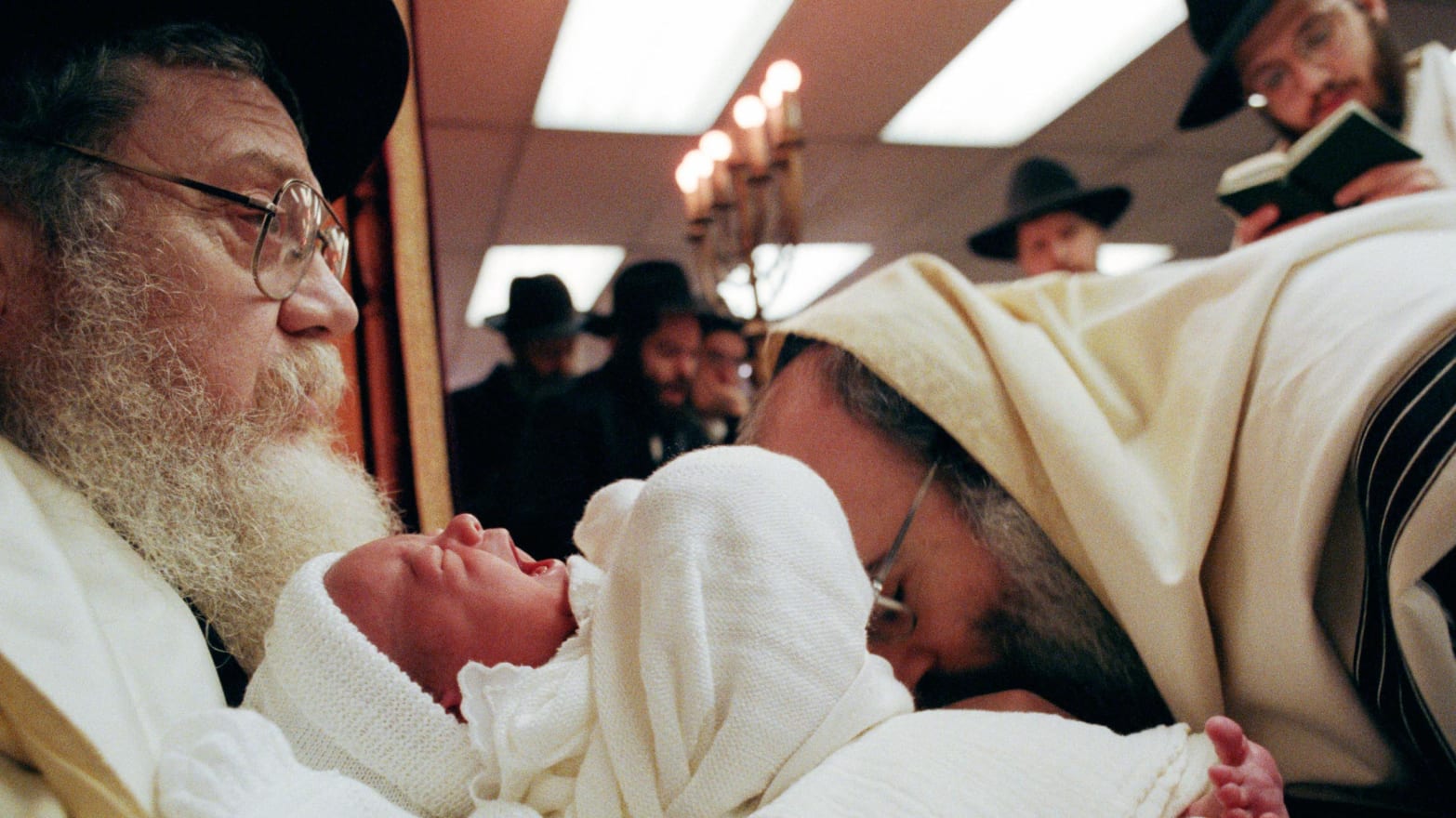
Circumcision is Nothing

audio

The Apostle Paul faced a severe dilemma in the early days of the Church; circumcision, commanded by God (Ge 17:10) as an expression of saving faith (Ro 4:11), and obediently observed by Abraham and the patriarchs, had also come to represent ritual conversion to Judaism (Ac 15:1), a religion teaching legalism: salvation by works (Ga 5:4), entirely contrary to justification by faith. (2-3)

Should Paul discourage obedience to one of God’s core commands (Mt 5:19) now that it’s been twisted into the foremost expression of rejecting God’s salvation? symbolic of earning salvation by works? (Ro 10:3) How could he neglect a plain command of God in good conscience, knowing saving faith establishes the law? (Ro 3:31) Yet how could he encourage obedience here without compromising the gospel? (1Co 9:22-23)

Paul circumcised Timothy (Ac 16:3), evidently not as a convert to Judaism, but to fulfill Torah as a good testimony to the Jews in his community, since Timothy would be a constant, faithful fellow worker with Paul throughout his ministry. (1Co 4:17)

However, when Titus was being pressured into ritual conversion to Judaism Paul objected fiercely, understanding this as a direct denial and corruption of the gospel. (Ga 2:3-5) Making a severe and costly break with the legalistic traditions of his people (5:11), Paul concluded those pushing Judaism on the Gentile saints as a condition of salvation were unsaved and cursed (1:10); he even wanted God to kill them. (5:12)

Paul clearly taught that those who converted to and depended on Judaism for salvation were not trusting Christ and were unsaved. (Ga 5:2-3) However, though he was accused of teaching the Jews to forsake circumcision (Ac 21:21), both by his public example (24) and testimony (25:8) it is clear Paul never did teach it was appropriate to neglect physical circumcision as an act of obedience to God.

If Paul didn’t discourage Jewish believers from circumcising their children, he wouldn’t have discouraged Gentiles from doing so either; circumcision was not a particularly Jewish thing (Jn 7:22); it existed in Abraham, the father of us all (Ro 4:16), long before the Jewish people.

So, Paul encourages circumcision in the context of obedience to God’s Law and forbids it when it is embedded in the larger context of ritual conversion to Judaism. Further, Paul teaches it is unnecessary for Jews to renounce their Jewishness by undergoing a formal act of becoming uncircumcised (1Co 8:18a), and encourages Gentiles to retain their ethnic and national identity rather than becoming Jewish. (18b) Effectively, he sees national identity as irrelevant in the context of defining a right relationship with God (19a); what’s important is staying true to the gospel while faithfully keeping God’s commands. (19b)

articles  ♦  blog

The Lord’s Day

When the Apostle John received the Revelation of Jesus Christ (Re 1:1), he tells us he was, “in the spirit on the Lord’s Day.” (10) This term, “the Lord’s day”, occurs only here in Scripture, and it’s nearly universally understood by Christians to be a reference to Sunday, the first day of the week, though there’s no indication of this in the immediate context.

Why would Christians insist John is referring to Sunday? Typical reasoning is since the saints in Troas assembled for a meal and teaching on a Sunday (Ac 20:7), the early Christians must already have been observing Sunday as their day of rest and worship since Christ rose from the dead on Sunday. (Mk 16:9)

However, it is reasonable to think this particular meeting in Troas occurred in the evening, just after sunset on Sabbath, since Paul’s speech continued until midnight (speaking 5-6 hours straight is much more likely than 12-15 hours). The evening is when the biblical new day begins, and it would be very convenient for believers to meet just after sabbath on the first day of the week at or near a synagogue where both Jews and believing Gentiles would already be gathering to hear Scripture read and expounded. (Ac 15:30)

Early believers only had the Tanakh (Old Testament, there was no formal New Testament yet), and copies were very expensive; the synagogue likely had the only Scripture in any given city. If one wanted regular access to the Word of God, synagogue was it. This is a very reasonable motivation for meeting on in the evening after Sabbath (Sunday evening); we need not assume early Gentile believers were arbitrarily fabricating a new holy day to supplant the sabbath, breaking with their Jewish brothers and sisters to despise a basic command of God observed by saints for millennia.

Sunday was a workday for Jews, so it would have been problematic for any congregation with a sizeable Jewish element to assemble during the day on Sunday. There is no indication in Scripture God told them to do so, there is no historical record of this practice during the apostolic era, and there is no clear motivation from their circumstances until quite late in the first century, so we may be confident they didn’t do this at first. The early disciples met daily, randomly, to eat and fellowship as much as they could, not just on Sundays (Ac 2:46), likely mostly informally in the evenings after work.

Paul’s instruction to Macedonian believers to allocate alms for poor Jewish saints (Ro 15:26) on the first day of the week (1Co 16:2) is also offered as evidence that early believers were meeting on Sunday and setting it apart as holy. However, the text does not indicate this was a collection taken up in the assembly but dedicated privately at home.  So, this text also does not indicate believers were setting aside Sunday as holy.

Finally, since the disciples assembled in unity on the day of Pentecost (Ac 2:1), when the Holy Spirit was poured out on them (2-4), is taken as evidence that Sunday was already of extreme importance to the saints since it was Christ’s resurrection day. However, the Israel of God is commanded to assemble on the Day of Pentecost (De 17:16), which always occurs on a Sunday. So, the disciples were evidently simply obediently observing this biblical feast according to the commandment.

The above comprises the sum total of evidence from Scripture suggesting Sunday is the Lord’s Day, and it’s not evidence at all, not even close. Christianity’s insistence on Sunday must be driven by something other than Scripture, by tradition starting well after the apostolic period as believers were desperately trying to distance themselves from Judaism and the burdensome Jewish Tax imposed by Rome. The eventual result was a new religion which was foreign to the apostles, corrupted from the true (Is 8:20), an imitation and counterfeit using all the same words and phrases, but fundamentally different, with new traditions and practices, often deeply antisemitic.

There’s only one reasonable choice for the Lord’s Day, it’s the day God Himself blessed and sanctified, the day He rested from His creative work: the seventh day. The sabbath days are His (Le 19:30), (Ge 2:4)[/simple_tooltip], in other words, belonging to Him; it is the sabbath of the LORD thy God (Ex 20:10), that is … the Lord’s day.

articles  ♦  blog

If We Sin Willfully

God warns the saints to not sin willfully: He threatens severe chastening if we do. (He 10:26-27) What types of sins does this include? How do we avoid committing them?

The Greek is Ἑκουσίως (Hekousiōs), appearing only here and (1 Peter 5:2); it means deliberately, willingly, as opposed to thoughtlessly, instinctively, or from ignorance, weakness or under duress. It modifies the Greek ἁμαρτανόντων (hamartanontōn), to go on sinning. The thought is that the sinful action is habitual, premeditated, intentional, brazen, defiant … knowing the law of God and despising it. (Ro 1:32)

Biblical examples would include the sanctimonious lying of Ananias and Saphira, claiming to donate all the proceeds from the sale of their land while they were keeping back some for themselves (Ac 5:1-2), who were immediately and supernaturally slain. (Ac 5:5,10) The Corinthian who took his father’s wife (1Co 5:1) was delivered over to Satan by the church for the destruction of his earthly body so his spirit would be saved (1Co 5:5), and a man gathering sticks on sabbath (Nu 15:32) was promptly stoned to death. (Nu 15:35-36)

The context of God’s warning refers back to the precedent He sets in Torah: anyone in Israel caught despising Torah would be executed without mercy. (He 10:28) Mercy was available for those who sinned ignorantly (Nu 15:27-29), but there was no pity for those despised Torah and sinned presumptuously. (30-31)

If we find this harsh, inconsistent with the New Testament god of love and mercy, we’re trusting in another Jesus, one not found in scripture: the punishment for believers who sin willfully is not less severe but more. (He 10:29) Torah’s punishment was carried out by civil authority, but the punishment of believers is designed and carried out by God Himself and may very well be much worse than death. (30) Don’t go there; it won’t be worth it, not even close. (31)

David’s adultery with Bathsheba would certainly also fall into this willful category (2Sa 12:9); he didn’t die for it, but he may often have wished he had, for all the suffering and tragedy which followed because of it. (10-12)

It isn’t cruelty that drives God’s severity; God is good; there’s no malice in Him. God’s love moves Him to severity as appropriate. (Ro 11:22) The consequences of sin are simply too devastating to be left unchecked (Mt 5:29-30); God loves the saints way too much to let us go off and destroy ourselves and others. He will do whatever is needful to bring us back and keep us close because He loves us. (He 12:5-6)

When we’re tempted to sin presumptuously, we can ask God to keep us back from it and restrain us. (Ps 19:13) We can also assure ourselves that whatever it is that’s telling us it’s a good idea to sin willfully is lying; we can ask God to give us repentance to acknowledge the truth (2Ti 2:25-26), choose the fear of God and depart from evil. (Pr 3:7)

articles  ♦  blog

We Have an Altar

To establish the relevance of Torah for today we must consider the sacrificial system: would offering an animal sacrifice today dishonor the sacrifice of Christ in any way? If we are thus serving the earthly tabernacle, are we necessarily forsaking the cross of Christ? (He 13:10)

A key text here describes God’s peculiar interest in His earthly temple at the end of this present age; He has John measure the temple, the altar and those who worship and serve Him there. (Re 11:1)

Though the Jerusalem temple is dormant for now, it will evidently be rebuilt and re-established in all its glory in this present age by the miraculous hand of God (2Th 2:3-4), and the sacrificial offerings will evidently resume. (He 8:4-5) So, even after the atonement of Christ is complete, a functioning Levitical priesthood is evidently not offensive to God. (He 8:4) Why would it be? After all, He designed and ordained it to help us all understand redemption (Jn 1:29): it never was designed to take away or finally atone for any personal sin. (He 10:11)

Both the earthly temple and its sacrificial system remain a precious example and shadow of heavenly things (He 8:5); they are not the heavenly reality (He 10:8), but constantly and perfectly point us toward this reality. (Re 11:19)

So, as the Apostle Paul fully participated in the Levitical sacrificial system with burnt offerings, sin offerings and peace offerings (Nu 6:13-14) without dishonoring Christ (Ac 20:26), we may each do the same if we understand these as merely shadows of heavenly realities (He 10:1), and not the ultimate realities themselves. There can be no more dishonor to Christ in a New Testament believer participating in such divine rituals with proper understanding than it was for an Old Testament believer to do so.

It is no surprise then that we find the early Jewish believers, the Twelve Apostles taught by the Master Himself, along with their faithful disciples, all zealously keeping Torah, including the sacrificial system, long after the sacrifice of Christ. (Ac 20:20) As they ministered powerfully in the Holy Spirit, they saw no inconsistency, knowing animal sacrifices never have taken away sins (He 10:4) but have always perfectly illustrated Christ’s redemptive work (1Co 5:7-8), reflecting the eternal mystery of divine atonement for sin in Christ. (He 10:14)

If it isn’t a problem for Jewish believers to participate in the sacrificial system today, if this type of worship brings no dishonor to the work of Christ and is perfectly consistent with the sanctifying work of the Holy Spirit (Ro 7:22-25), then it is so for the Gentile as well (Ep 2:12-14): we may all continue to enjoy the beauty and mystery of temple worship on Earth so long as Heaven and Earth stand. (Mt 7:18)

So, while John doesn’t officially measure the court of the Gentiles (Re 11:2), God at least mentions it — that there is a special place for all of us at the altar of God, even in these last days, an open invitation to all to come, remember, understand and rejoice in the redemptive work of Christ.

There will come a day when this type of worship is no longer possible, or even helpful; when the earthly temple is no more, only a heavenly tabernacle will remain. (Re 21:22) In that day the Levitical priesthood will finally be obsolete (He 7:12), and thus the related ceremonial laws of Torah abolished (18-19), replaced by the Melchisedek priesthood of Christ (11), Who serves the saints eternally in the Heavenly temple. (He 8:1-2)

articles      blog

Let No Man Judge You

There are certain parts of scripture which seem to say, on first reading, that certain parts of the Law have been abolished, rendering them obsolete, no longer binding or relevant for us today.

For example, when Paul says, “let no man judge you in food, or in drink, or in respect of an holy day, or of the new moon, or of the sabbath” (Co 2:16-17), it’s very easy to conclude he’s giving us freedom to ignore some of these old Jewish laws. Is this because we’re already inclined to think this way? Are we imposing our view on the text? or is the text actually saying this?

Let’s consider it carefully: What does “let no man judge you” have to do with our own, personal moral responsibility before God? or with what God Himself expects of us? or with our own obligation to obey His Law?

Nothing, actually: this is about how others assess how we’re obeying certain parts of Torah, how they think we’re supposed to observe God’s dietary laws, festivals, holy days and sabbaths.

When others accuse us of not doing it right, trying to impose their man-made traditions on us (Co 2:20-22), we shouldn’t be intimidated into trying to appease them. We should only be concerned with what God says, not the customs, traditions and commandments of men. (Co 2:8)

This is how Paul lives generally, not placing much stock in how others judge and evaluate his earnest walk with God (1Co 4:3), and this is how he encourages us: search out truth for ourselves (Ac 17:11) and obey it all as well as we can, as unto God. (Ro 14:4)

So, how is a text which has absolutely nothing to do with our personal responsibility to keep Torah so easily misread as permission to break it? Our presuppositions can easily blind us to what the Word actually says; they are much more powerful than we might think. (Ro 8:7)

When error is common, taught us right from the start of our spiritual journey, it may take the special intervention of God to set us free (2Ti 2:25-26), even when He’s laid it all out there right in front of us. Our teachers probably mean well, but at times we all regurgitate what we’re taught, failing to think it through and discern the truth for ourselves. (Ps 119:99)

So, what does Christ Himself say about the continuity of Torah, and about our responsibility to keep it today? First, He says we’re not to think He came to abolish any part of Torah; He came to fulfill it: to honor it, obey it perfectly and complete all the prophesies related to His first coming. (Mt 5:17)

He then confirms that all of Torah, every single law, will be relevant as long as Heaven and Earth stand — until all be fulfilled: Torah is God’s standard of holiness until every single prophecy in the Bible has come true. (18)

Then He says, in no uncertain terms, that we’re all to be delighting in, respecting, keeping, observing, obeying and doing all of Torah that we can, including what we might consider the least of His commands, and teaching others to do the same. He even affirms that our obedience to Torah defines how we’ll each be esteemed and rewarded in His kingdom. (19)

That’s about as plain as it gets. How could He say this any more clearly, simply and directly?

articles  ♦  blog

The Everlasting Gospel

Clearly and accurately identifying Christ, the Holy Spirit and His eternal Gospel (Re 14:6-7) is central to the Christian faith, yet given the many attractive counterfeits (2Co 11:4), it’s evidently no easy task.

Consider the claim that repentance, turning from our sin, is optional, that one may receive the gift of free grace in Christ with no strings attached. The claim is that God offers forgiveness to those who remain hardened against Himself, who intend to continue in rebellion against Him, who will not submit to Him as Lord. It’s claiming we can receive the gifts of Christ without receiving Christ Himself (Jn 1:12), that we may have eternal life without giving up our own life (Jn 12:25), without offering up ourselves to the Son in Whom this eternal life resides. (1Jn 5:11-12) Is this a false gospel, or the true?

It’s true we’re not saved by our works; there’s nothing we can do to earn salvation, or to add to what Christ has done to save us: justification has nothing to do with our obedience to God. But it’s also true that all who don’t love Jesus Christ will be cursed at His coming. (1Co 16:22) Those who pursue sin as a manner of life don’t yet know God (1Jn 2:4) and are heading for eternal damnation. (Ro 2:8-9)

So, offering unrepentant sinners a get-out-of-jail-free card may seem like free grace, but it’s a misunderstanding and misapplication of the Gospel: that would give us a license to sin and make Christ a minister / enabler of sin, and this isn’t Love. (Ga 2:17) Yet we don’t need to clean up our act before we come to Christ either: Christ didn’t come to call the righteous, but sinners to repentance. (Lk 5:31-32)

The biblical Gospel isn’t merely an offer of forgiveness, it’s an offer of holiness, without which we’ll never see God. (He 12:14) God’s inviting us not only to justification, but also to sanctification: He’s offering to transform us from rebels into saints. (Ro 8:29-30) The redeemed are elect unto obedience (1Pe 1:2), predestined to good works. (Ep 2:10)

The New Covenant in Christ writes God’s Law into the very fabric of our minds and hearts (He 8:10), equipping us to obey and honor Him: receiving Christ involves pursing this transformational relationship, in which He starts cleaning us up and making us more like Himself. (Ti 2:11-14) He enables us to start submitting to and obeying God from the heart so we can walk in fellowship with Him, in more and more alignment with Him. (He 12:28) If we aren’t interested in that good news, we aren’t interested in the Gospel at all. (Ps 119:155)

If we have faith to believe God is Who He says He is, and that He rewards those who diligently seek Him by enabling us to find Him, then the Gospel invites us to come (Re 22:17); it’s the only way we can come to God. (He 11:6) Saving faith works in us not only to rest in God (He 4:10-11) but also to pursue God. (Php 2:12-13)

We’re to seek first God’s kingdom and righteousness (Mt 6:33), believing Christ is both our righteousness and our sanctification (1Co 1:30), obeying Him with what strength He’s already giving us as we rest in Him, trusting He will deliver us yet more and more from our sin (Ga 1:4), confident in His promise to ultimately present us faultless before Himself with exceeding joy. (Ju 24)

This is the Good News, the everlasting Gospel; it has never changed, and it never will.

articles  ♦  blog